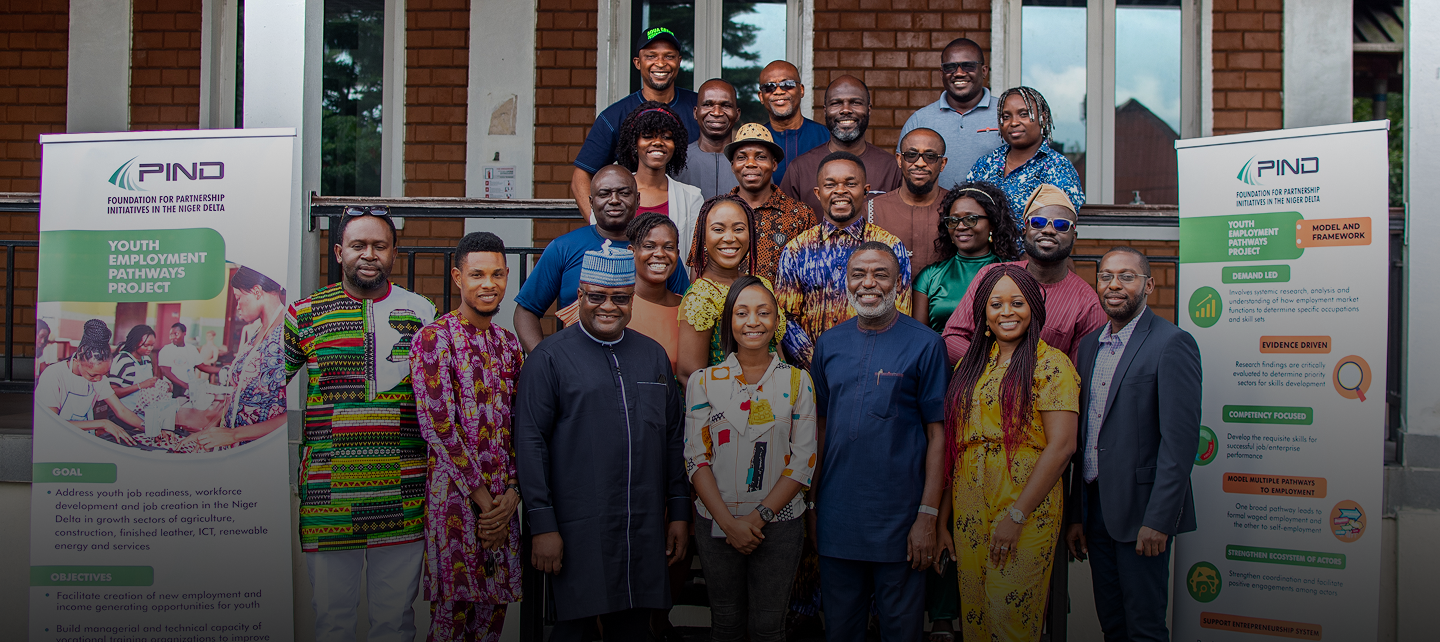
That’s what PIND is focusing on. PIND has chosen agriculture or agrobusiness as a focus area to get away from the magnet of oil and let people see the other side. And our first major contract was the issue of the fish feed meal in aquaculture. PIND can relate with the people and is research-based. The issue of fish feed meal cropped up. And they had to do research on what are the challenges that our farmers truly face–in order of ranking. They saw that feed was the biggest challenge. And a study was carried out that helped us in developing the blueprint for fish feed meals…modular fish feed meals. And that has been of great value to our people. They have helped us put up our agriculture policy. Our agriculture policy is one of the biggest things if you ask me because if you don’t have a proper policy, the policy expires. And we are one of the few states in the country that has an agricultural policy, and that has helped us tremendously. Sixty percent of our state is on land, but we have challenges with planning, and that led us to the land bank issue–to be able to provide land for those areas. Now that we are talking about the land bank, they are going to put strong professional backing and a proper structure to what the state is doing. So, as technical partners, PIND is very beneficial to us, exceedingly beneficial to us. I am also aware that they are playing in the Niger Delta, but I need to narrow it down to the benefits to Delta State, so we are happy. If you look at our gross domestic product (GDP), non-oil GDP is way higher at 52.3%, while oil GDP is 47.1%. That tells you the trajectory. Agriculture has grown.”