PIND 2021 Q3 PROGRESS REPORT

July – September 2021

This report highlights the achievements of PIND’s program interventions in the Niger Delta from July – September 2021 (Quarter 3 of 2021), and cumulatively (Q1-Q3, 2021). It also provides relevant information about program management, lessons learned, and plans for the next quarter. The report demonstrates how PIND is driving change, to ensure broad-based economic growth in the Niger Delta.

PIND’s activities are designed to promote and sustain a culture of learning and adaptation, to build a process where evidence plays a significant role in determining policy direction and interventions in economic development, peace building, advocacy, and capacity building of both government institutions and civil society in the Niger Delta.

PIND made significant progress in its initiatives this quarter. The following are highlights of its achievements in Q3, 2021 and cumulatively (Q1-Q3, 2021):

SUMMARY OF PROGRESS
  • Market Systems Development

    PIND’s market development projects continue to demonstrate progress towards widespread change. During the quarter, 26,038 farmers and agricultural entrepreneurs (37% women), were reached with information and knowledge on best practices and efficient technologies in the crop and non-crops sectors, making the total outreach for the period (Q1-Q3), 55,955 farmers and agricultural entrepreneurs. These farmers earned an estimated N12.5 billion in additional income in 2021 so far and enabled the creation of 8,734 full time equivalent jobs between Q1-Q3, 2021.

  • Economic Development

    PIND incentivized private investors and participating farmers to invest N5.76 billion to implement good agricultural practices, technological innovations, purchase inputs and other capital expenditures. Majority of the investments this quarter (91%) were equity investments by these farmers in PIND’s interventions (to implement best management practices and purchase improved agricultural technology and inputs). The total funds leveraged from Q1-Q3, 2021 by these actors is N8.93 billion (N5.5 billion – Equity and N3.4 billion – debt).

  • Sombriero Kapital

    In the GMoU communities, 15 fish processors who were screened and recommended to Sterling Bank by Sombreiro Kapital last quarter, accessed loans worth N3 million, in Q3, 2021, at an average of N200,000 per processor. The funds were given to improve the processors’ working capital and for technology upgrade. Also, 88 fish farmers received loan disbursements and input credit worth N27.1 million in Delta and Ondo states, through Sombreiro Kapital’s collaboration with input dealers and Sterling Bank. 10 smoking technologies (Chorkor ovens) were also purchased in Delta and Ondo States. A total of 36 chorkor ovens have been purchased in 2021.

    Also, to support the GMoU communities, PIND trained various committees and leadership of the Regional Development Committees (RDCs) on video production and photography, gender & social inclusion and sustainable project management in Q3, 2021. These training areas were chosen to bridge the gaps identified by the Organizational Capacity Assessment (OCA) of the Regional Development Committees (RDCs) conducted in 2018.

  • Access to Energy

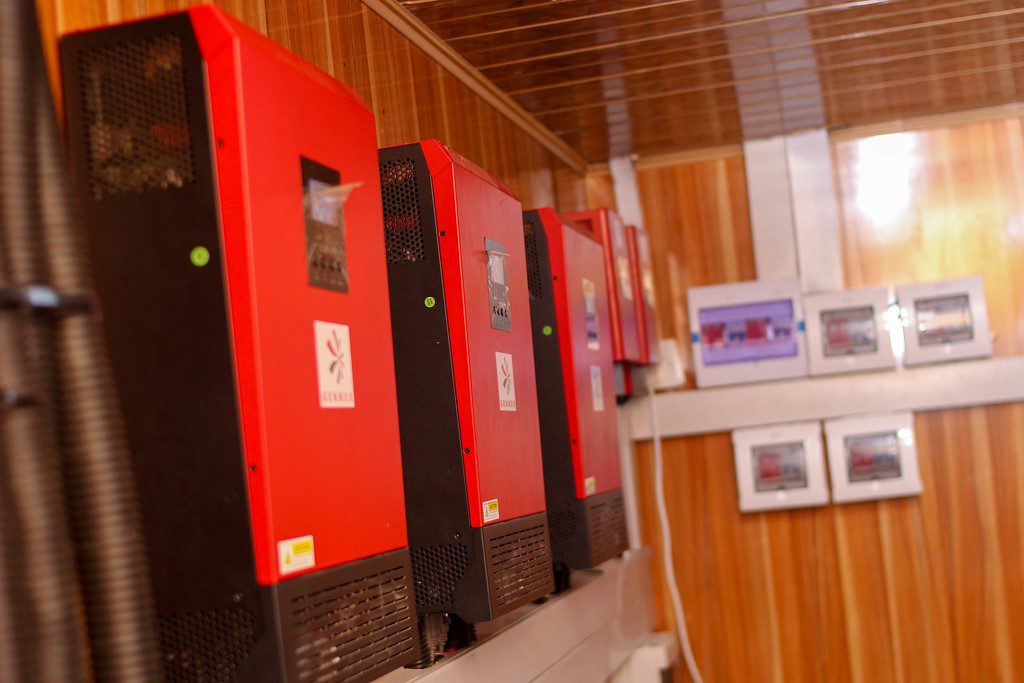
    PIND also played a significant role in driving the market for low–carbon, low–cost solutions that offer high-quality energy access to coastal communities. Community–centered initiatives which PIND has championed, including the environmentally-friendly solar energy mini grids and solar–powered freezers, have addressed the challenges of energy access directly via an improved off–grid energy access to the poorest populations and businesses that operate in under-served or off-grid communities in the Niger Delta. In Q3, 2021, 126 people from 20 households and 6 businesses were provided with access to clean energy from new connections to the existing mini grid at Gbokoda community. A total of 860 people from 134 households and 56 businesses now have access to clean energy because of the operationalization of solar interventions in various communities, from Q1-Q3, 2021.
    An assessment of the solar refrigerators and solar mini grid energy solutions facilitated by PIND, revealed that beneficiary households and businesses experienced a total energy cost savings of N342 million between Q1- Q3, 2021.

  • Skills Development for Youth Employment

    PIND continues to work with State governments, the private sector, and local partners to improve the quality of capacity building and vocational training and to expand access to financial services for entrepreneurs. Following the redesign of the Delta Youth Employment Program (DYEP), informed by data from the Delta State labor market assessment and the scoping study carried out in selected coastal communities, in Q3, 2021, nine organizations were selected to provide technical vocational and soft skills training to youth in four sectors: ICT, Construction, and Services. Training will commence in Q4,2021.

  • Peacebuilding

    Shifting its strategy from growing the membership of the P4P Network to intensely activating its thousands of members/peace actors and deepening their work in peacebuilding by tackling conflict situations in their communities, PIND facilitated targeted peace building and conflict mitigation interventions to lessen the levels of conflict risk and lethal violence in the Niger Delta. In Q3, 2021, PIND produced a total of 9 weekly updates that provided a data-driven analysis of the dynamics of violent criminality and solicited the intervention of relevant stakeholders during the period. Also, PIND assisted 181 peace actors to constructively resolve emerging conflicts in various communities in the Niger Delta. This led to 35 quality actions2 being taken to mitigate conflict in different locations across the region. Consequently, data from the Peace Map (www.p4p- nigerdelta.org/peace-map) show that there was a decrease in violent criminality from 151 incidents and 366 fatalities in Q2, to 60 incidents and 121 fatalities in Q3 (60% and 67% reduction in violent criminality and fatalities, respectively) across the Niger Delta states.

  • Communications

    By amplifying PIND’s communications efforts during the third quarter of the year, 3,337,673 people (10,217,573, so far in 2021) gained new or increased awareness about PIND, through its platforms: newsletters, social media, website, email inquiries, forums and traditional mainstream media. Also, PIND garnered 39 positive media mentions of its work and activities in the third quarter of 2021 and attracted eight (8) public endorsements from stakeholders who interacted with its content on the website, newsletters, and social media posts during the same period.

  • Advocacy

    In addition, to ensure the sustainability of the economic development and peacebuilding interventions in the region, in Q3, 2021, the study/assessment of multiple taxation and illegal levies in the Niger Delta continued with Key Informant Interviews (KIIs) and Focus Group Discussions (FGDs) held with stakeholders in Abia, Delta, and Rivers States. Initial study findings reveal that many businesses in the region are struggling with illegal levies and multiplicity of legal taxes, which have hampered their productivity and growth. In addition, PIND held meetings with high- level government stakeholders in Delta, Edo, and Ondo States in a bid to establish committees that will help to articulate policies on access to agricultural land for smallholder farmers in the three pilot States. It is expected that these committees will move the recommendations from the high-level forum organized in Asaba in quarter one, forward and ensure that state governments develop policies that will improve access to land for agriculture in the respective States. Similarly, PIND held extensive meetings with the Ministry of Niger Delta Affairs (MNDA), culminating in an agreement on the terms of collaboration, as well as timelines for the collaborative activities, between the Ministry and PIND for setting up a Peace and Security Architecture for the Niger Delta region.

ECONOMIC DEVELOPMENT

The economic development program comprises three projects: Market Systems Development, Access to Energy, and the Youth Employment Pathways (YEP).
The overarching objective of the program is poverty reduction through increases in the number of men and women experiencing positive changes in income and attaining gainful employment. This is achieved through the facilitation of interventions with sustainable outcomes.

The market systems development project portfolio is made up of five agricultural value chains (aquaculture, cassava, cocoa, palm oil, and poultry) and three cross-cutting interventions (access to finance, access to inputs, and business linkages). The project aims to identify binding constraints in the sectors and seek sustainable solutions that can increase the income of thousands of poor men and women.

The Access to Energy project focuses on energy efficiency and renewable energy such as the energy cabin and solar refrigeration. While Access to Energy identifies and tests technological solutions, the market development project facilitates activities to develop market systems for uptake and adoption of such technologies.

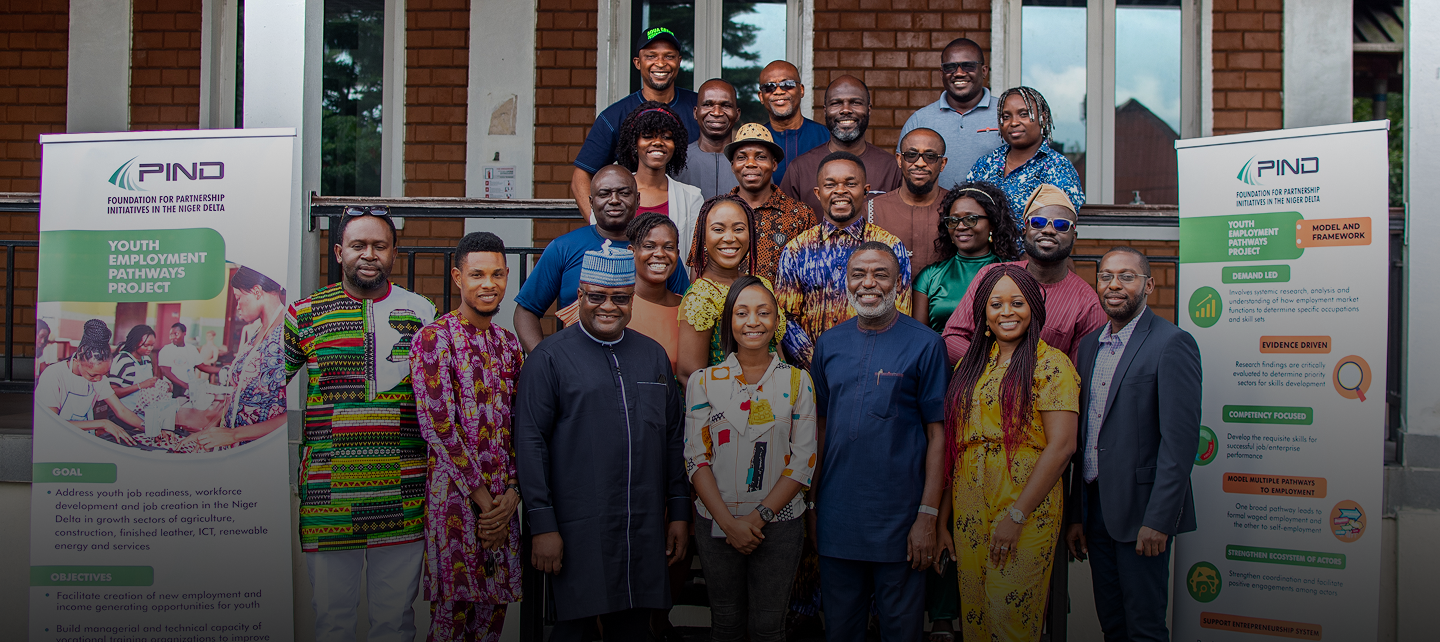
The Youth Employment Pathways featured the Niger Delta Youth Employment Pathways (NDYEP) project between 2018 and 2021. Funded by the Ford Foundation and implemented in Abia, Akwa Ibom, and Rivers States, it focused on agriculture, construction, finished leather goods and ICT sectors, and was built on PIND’s economic development strategy, which emphasizes sustainable interventions that result in full-time employment for youths.

Following its successful piloting of being market-led, and demand-driven, the NDYEP model is being scaled up to other states and kicked off in Delta State in January 2021. This edition under the name, Delta Youth Employment Pathways project is funded by the Chevron Corporation.

[dt_fancy_separator separator_color=”accent” line_thickness=”10″ el_width=”120px”]
Key Achievements for All Initiatives Implemented Under the Market Systems Development (MSD) Project, in Quarter 3, 2021.
This project supports farmers and small enterprises in key agricultural sectors in the Niger Delta to improve their productivity, leading to an increase in income and reduction of poverty.

For the year 2021, the project has focused on further strengthening the adaptation strategies developed by its network of market actors to increase its reach to 60,800 additional farmers and SMEs, out of which 43,938 are expected to experience an increase in income. It also plans to collaborate with the Peacebuilding team to design and implement interventions aimed at supporting individuals in remote coastal communities to address opportunities for improved livelihoods. Another key area of focus for PIND in the operating year has been to implement interventions that improve smallholder farmers’ access to finance through its Special Purpose Vehicle (SPV), Sombreiro Kapital.

In this reporting period (Q3 2021), the Market Systems Development (MSD) Project continued its work with service providers and other key market actors (fabricators, agricultural-input and equipment companies, farmers’ associations, financial institutions, etc.) to improve the performance of farmers.

[dt_vc_list]

  • As a result, 16,771 new farmers and enterprises were reached directly with information and knowledge on best practices and efficient technologies by the end of the quarter. In addition, to the direct outreach, a total of 9,265 indirect cassava farmers copied from the ‘direct’ participating farmers at a copying ratio of 1:1, making the total farmers reached to be 26,036.

  • The outcome monitoring exercise revealed that 87.3% of the farmers/MSMEs who had been reached directly by the program, adopted improved practices. Consequently, 40,746 ‘direct’ farmers/MSMEs have adopted improved practices, out of a total 46,690 farmers/MSMEs directly reached by the program from Q1-Q3, 2021.

  • The cumulative net additional (attributable) income of the adopting ‘direct’ farmers was estimated to be N12.5 billion, by Q3, 2021.

  • The project facilitated 8,734 Full Time Equivalent (FTE) jobs, by Q3 2021.
  • Also, within the quarter, PIND leveraged N5.76 billion from direct farmers and MSMEs investing in the adoption of intervention activities through equity/debt financing. This makes the annual funds leverage as at Q3 2021 N8.93 billion (N5.5 billion – Equity and N3.4 billion – debt), representing 102% of the 2021 annual target of N8.73 billion.

[/dt_vc_list]

KEY ACHIEVEMENTS: AQUACULTURE

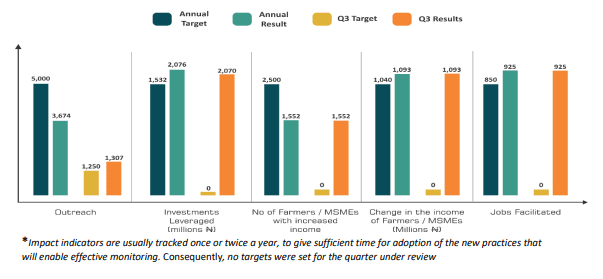
PIND’s interventions in the aquaculture sector focus on improving the efficiency and productivity of fish farmers and processors, through improved knowledge of best fish farming practices, access to improved processing technology, as well as access to quality input, market, and finance for farmers. The sector’s activities are driven by aquaculture service providers working with input companies, fabricators, and other market actors. In 2021, the aquaculture interventions plan to reach an additional 5,000 fish farmers and processors through the promotion of improved technology in the coastal communities, adoption of improved practices amongst fish farmers in the region, and facilitating access to quality fish seeds and finance for farmers and processors in the coastal communities of the Niger Delta.

In 2021, the high rate of inflation in Nigeria and the naira devaluation continued to impact the aquaculture sector. This was evidenced in the continuous rise in the cost of fish feed which constitutes over 70% of the cost of production. The cost of fish feed increased by 34% over the last eight months with a concurrent increase in the price of fish by 29%. This further increased farmers’ production costs, necessitating access to finance/input credit for farmers and more efficient farm practices.

In the quarter under review, PIND deepened its work with the network of aquaculture service providers to further create awareness on the use of quality inputs and to build the capacity of fish farmers/processors, particularly in the GMOU communities to access funds for equipment and input purchase. PIND also continued to provide support to selected hatchery operators to produce and promote quality fish seeds for farmers, in addition to overseeing and tracking the expansion of the training on good pond management and business practices to more farmers and processors, through service providers and input companies in the region.

Increasing Outreach to more farmers on pond management practices

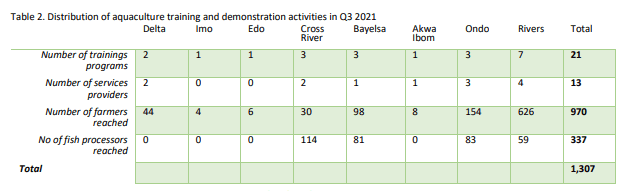
This quarter, PIND continued to support service providers to provide pond management practices and business skill training to build the capacity of fish farmers and processors to access finance, and improve their productivity and efficiency. As a result, a total of 970 (297 Females and 673 Males) fish farmers were reached by 13 service providers. See annex 1 for details.

In addition, five (5) demonstrations to promote the adoption of improved smoking technology (smoking kiln and chorkor ovens) were carried out, reaching 184 processors in Cross River, Bayelsa, and Rivers States. Also, three demonstrations were carried out in three GMOU communities in Ondo (Awoye) and Delta (Bateren and Usor) States, reaching 153 fish processors and making the total outreach for the quarter 1,307.
DOWNLOAD THE FULL 2021 QUARTER 3 REPORT” dt_text_title_bottom_margin=”10px

dt_text_content_bottom_margin=”5px” button_text=”File Below” btn_animation=”rollIn” icon_picker=”dt-icon-the7-menu-007″ dt_text_icon_paddings=”0px 0px 10px 0px” dt_text_icon_color=”#e8e8e8″]
Facilitating Linkage to Finance and input Loan for fish farmers

As part of its strategy to deepen the activities in the riverine communities through financial inclusion and access to finance, PIND in collaboration with Sombreiro Kapital expanded its access to finance activities to the GMOU communities in Delta and Ondo States. Within the quarter, 15 fish processors who were screened and recommended to Sterling Bank by Sombreiro Kapital last quarter, accessed loans worth N3 million at an average of N200,000 per processor. The funds were given to improve the processors’ working capital and for technology upgrade.

Furthermore, Sombreiro Kapital collaborated with input dealers and Sterling Bank to provide opportunities for more farmers to access loans. Subsequently, 224 of the 1307 farmers reached were profiled and by the end of the quarter, a total of 88 fish farmers out of the 224 presented got loans worth N27.1 million in Delta and Ondo States.

Increasing uptake of Fish Processing technologies

The chorkor oven and smoking kiln technologies were introduced by PIND as part of the effort to improve the efficiency of fish processors in the Niger Delta region. To sustainably promote the adoption of the technologies, PIND built the capacity of masons and fabricators to enable them to produce and market them commercially. PIND also worked with the masons and other service providers to carry out demonstrations to stimulate the adoption of the technologies, particularly in the coastal (GMOU) and riverine communities.

This quarter, PIND continued to provide support to the Service Providers, masons, and fabricators (whose capacities have been built) to drive the uptake of chorkor ovens and smoking kiln technology to improve the efficiency of fish processors in the Niger Delta region. Three promotional activities using the smoking kiln and chorkor oven were carried out by four service providers in Rivers, Bayelsa, and Cross River States, reaching 184 processors. As a result of these activities, and those carried out in the previous quarter, a total of 17 smoking technology (12 smoking kilns and 5 chorkor ovens) were purchased in Rivers (10), Delta (2), Cross River (4), and Imo (1). Similarly, two service providers, organized demonstrational activities to promote the chorkor oven in three GMOU communities in Delta (Bateren and Usor) and Ondo States (Awoye), reaching 153 fish processors. This resulted in the purchase of 10 smoking technology in the communities, making a total of 36 Chorkors purchased/adopted in GMOU communities in 2021 so far. Overall, the total number of technologies purchased/adopted- Chokor and Kilns so far in 2021 is 82 (27 in Q3) against the target of 150 for the year. The low rate of adoption is due to the increase in the cost of the technology brought about by the high inflation rate and the naira devaluation.

Expanding interventions to reach more community members in the GMOU communities

In the previous quarter, PIND carried out a scoping study in four GMOU communities (Tsekelewu, Opuama, Awoye, and Ogidigben) to identify opportunities to improve livelihood of individuals in the GMOU communities. Following the study, an intervention was designed to increase the productivity of fisherfolks in the target communities through the adoption of improved practices and technologies.

This quarter, PIND engaged Yamaha, a producer of outboard engines for fishing, and the Nigeria Institute for Oceanography and Marine Research (NIOMR) as potential partners for implementing the identified interventions in the GMOU areas. PIND also identified interested service providers who are willing to expand their service provision to these communities. In subsequent quarters, PIND will finalize the engagement of technical partners and onboard new service providers to drive pilot intervention activities in the target communities in the GMOU areas. PIND will also facilitate capacity-building training programs for identified service providers and fisherfolk groups/associations.

DOWNLOAD THE FULL 2021 QUARTER 3 REPORT” dt_text_title_bottom_margin=”10px

dt_text_content_bottom_margin=”5px” button_text=”File Below” btn_animation=”rollIn” icon_picker=”dt-icon-the7-menu-007″ dt_text_icon_paddings=”0px 0px 10px 0px” dt_text_icon_color=”#e8e8e8″]
Improving Access to Quality Fish Seeds for Niger Delta Fish farmers

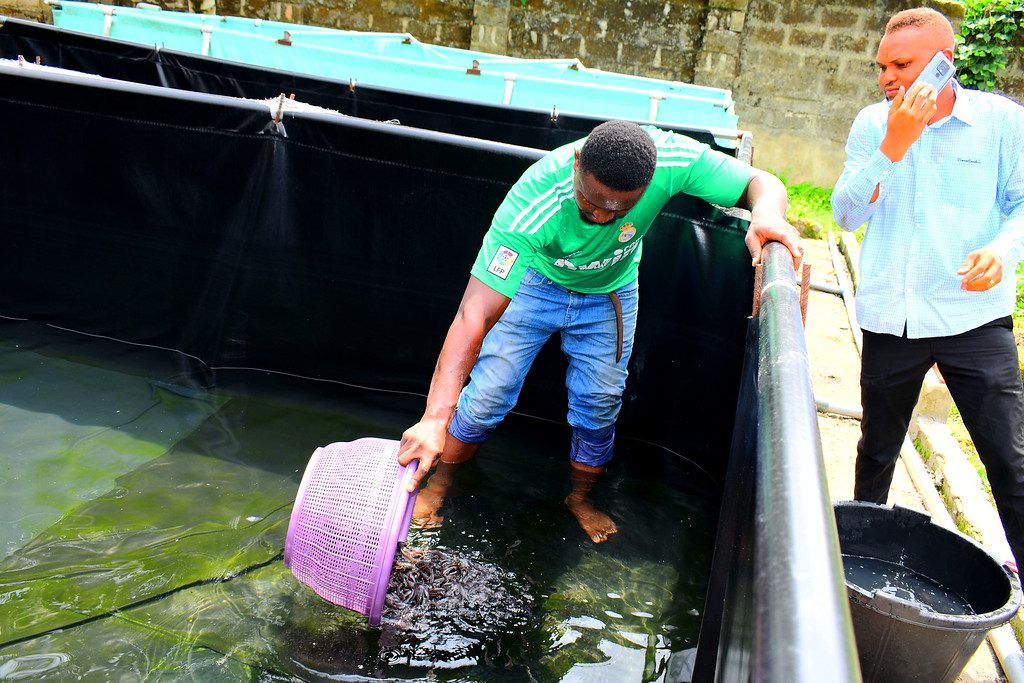
The use of quality fish seeds/fingerlings is one of the major contributors to good yield and improved productivity of farmers in the aquaculture sector. In 2019, PIND Collaborated with FISON, to develop quality broodstock banks for catfish with selected hatcheries in the region. PIND also identified and partnered with six private hatchery operators from Delta, Ondo, and Rivers States to raise broodstock banks from the pure lines produced by FISON. In 2020, the hatchery operators commenced the production of fish seeds from the broodstock, and over 515,000 fish seeds were produced by them.

This quarter, PIND continued to work with the selected hatchery operators to promote quality fish seeds to farmers in the region. This quarter, 420,000 fish seeds were produced from the broodstock by five of the hatchery operators compared to 300,000 targeted for the quarter, resulting in sales of N9.6 million at an average sale of N25 per seed. 154 farmers purchased these improved fish seeds.
PIND’s partnership with the USAID Feed the future Ag-Extension activity in Delta and Cross River State is also complementing the promotion and use of quality fish seeds by farmers in the states. 4 cohorts comprising of over 40 hatchery operators were formed and trained on hatchery management and business development. These hatcheries are beginning to adopt and promote the adoption of quality fish seeds to farmers.

Improving the productivity and income of fish farmers and processors through the adoption of improved practices and technology

As farmers adopt the improved practices from the various demonstrations and training programs, they are expected to experience a better feed conversion ratio and reduced mortality leading to improved productivity and income. In 2020, PIND developed a framework for tracking and projecting the impact of the intervention activities on the farmers using multipliers obtained from previous impact assessments, complemented with outcomes data from field monitoring visits.

Due to the market dynamics and macro-economic impact of COVID-19 on the 2020 results, an outcome monitoring exercise was carried out this quarter to re-evaluate the parameters applied in estimating the impact of the interventions.

Of a total of 2,561 fish farmers reached so far in 2021 (January to September) study findings showed that 1,470 of the farmers experienced an increase in income. These 1,470 had a Net additional income of N1,076,160,333, at an average of N731,989/farmer. This income was estimated for production on 3 ponds for one cycle carried out within the year.

Similarly, of the 1,113 processors reached, 82 adopted smoking technologies- chorkor ovens (55) and smoking kilns (27).
The additional income earned by the 55 processors adopting the chorkor ovens so far in 2021 is estimated to be N5,744,2599. Also, a total of N11,295,36210 was earned by the 27 processors who adopted the Kiln so far in 2021.

The total value of Net Additional Income earned by adopting farmers and processors is N1,093,199,955 so far in 2021, against a target of N1,039,706,390 for the year. Similarly, the total number of farmers and processors with increased income in 2021 so far is 1,552, compared to a target 2,500 for the year.

Contribution to Jobs

As farmers adopt improved practices and expand production, they engage more labor to carry out various pond management activities such as pond preparation, stocking, sorting, and harvesting of the ponds. It was estimated that about 782 new Full-Time Equivalent (FTE) jobs were created by the 2,023 farmers who adopted improved practices in 2021. Similarly, it was estimated that the 82 fish processors who adopted the chorkor oven and smoking kiln technology employed 143 labor to support the operation of the technologies. This makes a total of 925 jobs facilitated so far by the project in 2021, against a target of 850 for the year.

Leveraging investments for the adoption of improved practices and technologies

As market actors see the benefits derived from various economic activities in the sector, they make investments to maximize such opportunities. This enables them to expand their business and increase their income, PIND’s analysis showed that the 2,023 farmers who adopted improved practices between Q1 to Q3 invested an average of N1,023,238, per farmer at N341,079/pond for the three ponds stocked.

This makes the equity invested by the farmers during the period, N2,070,206,176. The increased investment was mainly due to the 34% increase in the cost of fish feed when compared to 202011. The outcome monitoring found that the spend was mostly for the purchase of improved feeds, nets, fish seeds and conditioning of the level of water pH.

KEY ACHIEVEMENTS: CASSAVA

The Cassava value chain interventions are designed to improve the productivity and incomes of actors in the cassava sector. This is achieved by incentivizing partners to invest in activities that will improve access to information and quality inputs as well as markets for cassava farmers. Since 2015, PIND has partnered with key market actors like input companies and agro-dealers to embed demonstrations and training into their marketing and sales models. These partners have continued to report increased sales because of this collaboration.
In this new strategic phase, which commenced last year, PIND continued to leverage the network of input companies, agro-dealers, Farm Service Providers (FSPs) and the Cassava Seed Entrepreneurs (CSEs) it has strengthened, to drive and expand activities in the sector to reach more farmers with information and quality agro-input.

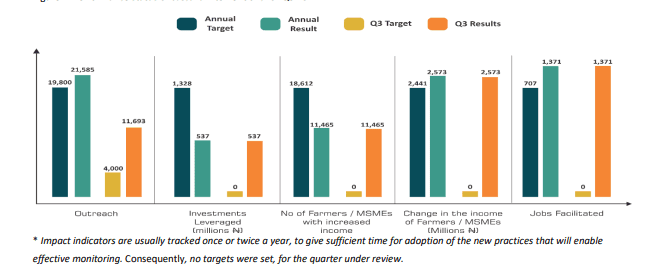
This year, PIND’s target is to reach an additional 19,800 farmers. This will be achieved through the expansion of its work across the region, by partnering with service providers to establish demonstration plots aimed at promoting the adoption of Good Agricultural Practices (GAP) in more communities in the Niger Delta. PIND will also increasingly leverage platforms to train and increase farmers’ access to agro-inputs including stems, fertilizers, and other crop protective products, CPPs. Also, PIND will support investors to establish Cassava out-grower and aggregation programs in target locations.

In Q3, 2021 PIND continued the implementation of activities for the remainder of the main cassava planting season, while identifying and selecting partners and potential grantees for collaboration to ramp up activities in the sector in 2021, for the late planting season. PIND also intensified monitoring of CSEs trained in May as they establish multiplication plots across their various locations and step down the technical training received last quarter. With the increased rate of vaccination against Covid-19, there was an observed relaxation in COVID restrictions allowing more physical engagements involving larger numbers of people.

The project management unit of BASICS II visited PIND during the quarter for a joint review of the ongoing collaboration between PIND and BASICS II. Both organizations expressed satisfaction with the collaboration and results so far and encouraged both work teams to continue joint activities.
DOWNLOAD THE FULL 2021 QUARTER 3 REPORT” dt_text_title_bottom_margin=”10px

dt_text_content_bottom_margin=”5px” button_text=”File Below” btn_animation=”rollIn” icon_picker=”dt-icon-the7-menu-007″ dt_text_icon_paddings=”0px 0px 10px 0px” dt_text_icon_color=”#e8e8e8″]
Increasing Outreach to more Farmers on good Agronomic Practices

Access to information about improved agronomic practices and quality inputs enable cassava farmers to improve their productivity and income. Private service providers continue to bridge the gap created by limited government extension services, by the providing this information directly to farmers through training and demonstrations embedded in the sale of agro-inputs; thereby ensuring that farmers can immediately implement these practices in their farms.

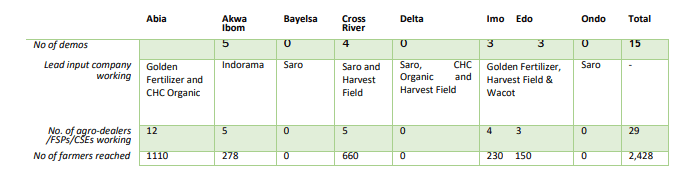
In Q3, following the major planting season last quarter, PIND supported its partners to strengthen their relationships and linkages with farmers, to guarantee continuous access to quality inputs such as stems, fertilizer, and Crop Protective products (CPPs) required for production. Expectedly, fewer field activities and farmer outreaches were achieved this quarter as the major planting season gradually wore off. Nevertheless, a total of 1,342 (647 females) cassava farmers, directly, across the region, while an additional 1,086 (660 Females) farmers were reached via CSEs, making the total farmer outreach for Q3, 2,428 (1,307 females) against this quarter’s direct outreach target of 4,000. The total outreach so far in 2021 is 12,320 surpassing the years’ direct farmer outreach target of 11,000. See annex 1 for details.

The results from the outcome monitoring exercise confirm a 1:1 copying ratio for farmers. This result was further discounted by 20% to account for overlaps, thus bringing the total copiers as of Q3,2021 to 9,265. These copiers are the indirect outreach and form part of the sector’s outreach for the year. Consequently, the overall outreach for the year as of Q3 2021 is 21,585 against the years’ target of 19,800.
Scaling up partnership to establish a viable Cassava Seed System in the Niger Delta

PIND is partnering with the BASICS II, funded by the Bill and Melinda Gates Foundation, and the International Institute for Tropical Agriculture (IITA), as well as the National Root Crops Research Institute (NRCRI) to implement interventions to increase access to improved Cassava stem varieties that are high-yielding and disease-resistant in the Niger Delta, through the Cassava Seed Entrepreneurship (CSE) program, formerly called Village Seed Entrepreneurship (VSE) program.

The program aims to establish a commercial seed system in the region. PIND believes this model implemented with CSEs is sustainable because the CSEs are found across the various Cassava farming clusters in the region and are encouraged to establish stem multiplication plots with which they train farmers within their clusters and from which they hope to sell quality cassava stems at maturity.

This quarter (Q3), many of the CSEs trained in Q2 established multiplication plots using foundation stems procured from NRCRI and other CSEs and organizing step-down trainings for farmers within their communities.

Also, in Q3 the project management unit of BASICS II visited PIND the quarter for a joint review of the ongoing collaboration between PIND and BASICS II. Both organizations expressed satisfaction with the collaboration and results so far and encouraged both work teams to continue joint activities. The BASICS II team also presented a proposal for collaboration with PIND to host a National Cassava Summit, similar to the one supported by PIND in 2016. PIND leadership confirmed PINDs interest to collaborate to host the National Summit, which is focused on stimulating the power of Private Sector-Led Cassava Seed Development in Nigeria. The summit is scheduled to hold in Abuja in Q4.

Cassava Farmers’ Productivity and Income

94% (11,581) of the 12,320 farmers trained, applied these improved practices on their farms. Although these direct farmers are expected to experience increased yields at harvest next year, the outcome monitoring exercise collected metrics with which to estimate income increases for adopting farmers, thus the projected net attributable income for these farmers is N2,573,752,285, at an average of N224,488 per farmer.


Contribution to jobs by farmers

It was found that the adopting farmers engaged labor to implement improved practices such proper spacing, application of fertilizers etc. On average, each adopting farmer created 0.07 FTE jobs, and as such the 11,581 direct adopting farmers in 2021, had enabled the creation of 762 net additional FTE jobs. Similarly, the 9,265 indirect farmers, who copied improved practices in their farms, created 609 FTE jobs. In summary, as at Q3 2021, the net attributable job estimated for cassava farmers was 1,371, compared to the annual target of 707 jobs.

Leveraging investment through the adoption of improved practices and technologies

The adoption of improved practices comes with additional production costs for farmers. The cost of adopting the innovations introduced by PIND was also verified during the monitoring exercise, revealing average additional production costs of N26,987.07 per hectare, for each direct farmer. Thus, the estimated equity spend for farmers adopting improved practices with average farm size of 0.95 ha, is N25,739 per farmer. Therefore, the projected cost of production for 11,581 direct farmers in 2021 is N298,077,297, while the additional cost of production for the 9,265 indirect farmers’, is N238,461,837.The total additional equity spend on improved practices by farmers so far in 2021, is projected to be N536,539,134 as at Q3, compared to the annual target of N1.32 billion, which is 41% of the annual target.

KEY ACHIEVEMENTS: COCOA

PIND’s Cocoa value chain interventions are designed to improve the productivity and income of cocoa farmers through the adoption of improved farming practices in planting/re-planting, pruning, weed management, pest and disease management, and harvest and post-harvest operations. The main intervention areas are productivity improvement and quality enhancement. To achieve this, PIND is working with business partners to invest in the promotion of good agricultural practices and technologies by providing quality agricultural information and access to quality agro-inputs and technologies to farmers. In the last two years, PIND has on-boarded and supported input suppliers, equipment dealers/promoters, output buyers (off- takers), and farm service providers to conduct a series of training programs and demonstration/promotional activities, towards stimulating the adoption of good agricultural practices and technology by farmers.

Since 2019, PIND has onboarded and partnered with 44 different support market actors12 to promote productivity improvement and quality enhancement practices and technologies among cocoa farmers. These partners have reached over 18,000 farmers with agriculture information, quality agro-inputs, and technologies in five cocoa-producing states of Abia, Akwa Ibom, Cross River, Edo, and Ondo.

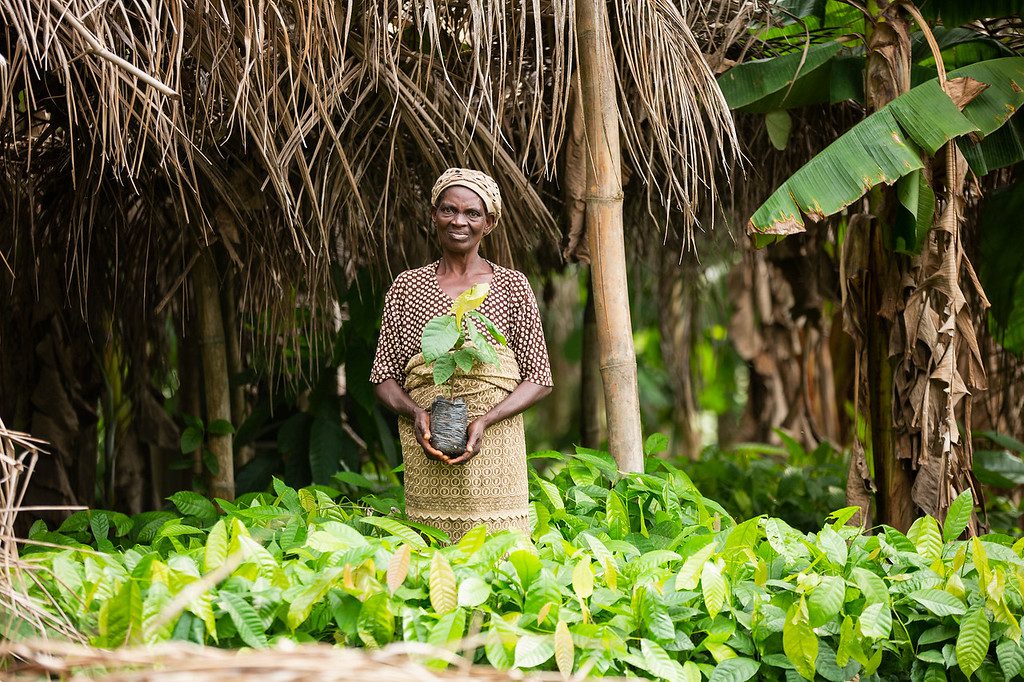
In 2021, PIND’s plan is to reach a further 12,000 farmers through a series of interlinked activities aimed at deepening the solutions it has introduced and expanding them to all the cocoa-producing states in the Niger Delta. To achieve this, PIND is working with both new and existing partners to upscale the solutions in the operating year. This quarter (Q3), PIND continued to expand its outreach to more cocoa farmers by working with new and existing partners to conduct training programs and demonstrations on good agricultural practices for farmers. Also, PIND’s partnership with the Cocoa Research Institute of Nigeria (CRIN) organized its first set of training for selected nursery operators, on best nursery management practices.
DOWNLOAD THE FULL 2021 QUARTER 3 PROGRESS REPORT” dt_text_title_bottom_margin=”10px

dt_text_content_bottom_margin=”5px” button_text=”File Below” btn_animation=”rollIn” icon_picker=”dt-icon-the7-menu-007″ dt_text_icon_paddings=”0px 0px 10px 0px” dt_text_icon_color=”#e8e8e8″]
Expanding Outreach to More Farmers through Good Agricultural Practices (GAP)

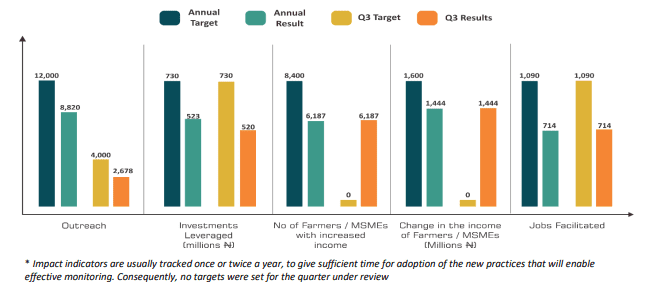
The promotion of Good Agricultural Practices (GAP) was introduced by PIND in 2019 as a strategy to improve farmers’ access to information, quality inputs, and technologies necessary to increase their yield and productivity. In Q3 2021, PIND worked with five farm service providers to organize demonstration activities, train and provide farm services to farmers on good agricultural practices. The project partnered with three off-takers (companies) to provide quality improvement training and agro-input support to farmers. Also, PIND supported three trained nursery operators to undertake awareness campaigns on the benefits of planting quality seeds. These led to PIND reaching an additional 2,67813 (674 females) farmers in Q3, out of a target of 4,000 farmers set for the period making the total outreach for 2021, 8,820; which is 74% of the targeted outreach of 12,000 for the year. 

 

Increasing Cocoa Farmers’ Productivity and Income

70% (6,187) of the 8,820 reached directly, adopted the improved practices/technologies on their farms. These 6,187 farmers earned net attributable income increases of N1,444,462,017, at an average of N233,459 per farmer.
The 6,187 farmers with increased additional income represent a 74% performance of the 8,400-target for 2021. Also, the N1,444,462,017 net additional income is 90% of the N1,600,000,000 target for the year.

Leveraging investment through the adoption of improved practices and technologies

As farmers see benefits in terms of increased yield and income from adopting the improved practices, they continue to invest in the products and technologies promoted by the partner market actors. PIND has been working with agro-input suppliers, service providers, and agro-technology and equipment dealers to introduce and promote appropriate productivity improvement technologies (such as mechanical pruners, motorized sprayers and brush cutters) and quality enhancement technologies (fermentation boxes, and Pelle bongo) to farmers.

In Q3, PIND leveraged new investments worth N870,000 from three service providers who invested in the purchase of spraying and pod-breaking technologies, promoted by partner equipment dealers. The N870,000 invested by farmers in Q3, along with N2,400,000 leveraged in Q1+Q2 make the total amount leveraged so far in 2021 by market actors, N3,270,000. Also, in Q3, each adopting farmer invested an average of N83,666 in their farms. This gives a total of N517,660,185 worth of investments made by the 6,187 farmers who adopted improved practices and technologies from Q1 to Q3, 2021. Cumulatively the total equity investment leveraged by the sector is N520,930,185 in 2021. This is 71.4% of the N730,000,000 target for 2021.

Contribution to job creation through the adoption of improved practices and technologies

As farmers adopt improved practices and technologies and expand production, they engage more labor to carry out various improved farm management activities. The average additional job created by each adopting farmer is 0.12 FTE.
As such the 6,187 farmers who adopted improved farm practices, created a total of 714 new FTE jobs between Q1-Q3, 2021. This is 66% of the 1,090 target for 2021.

Strengthening relationships between actors to improve access to quality seeds for cocoa farmers

PIND’s cocoa value chain study (2018) revealed that about 90% of cocoa beans harvested in the Niger Delta are from older trees with low-yielding potential. Also, over 70% of farmers who are planting new trees either plant old seed varieties with low-yielding capacity or take cocoa seeds from their old farms and nursed them as seedlings for planting.

For farmers interested in planting new varieties with high-yielding potential, accessing these varieties was a big challenge due to limited information and unavailability. Ultimately, this resulted in the low yield (between 350 to 420 kg per hectare) and productivity experienced by farmers in the Niger Delta compared to about 1,000kg obtainable in neighboring countries like Ghana and Cote d’Ivoire. To address this, PIND designed the access to quality (high-yielding) seedlings intervention as a strategy to improve access to improved seedlings for cocoa farmers. The intervention aims to strengthen the relationship between entrepreneurial nursery operators and seed producers as a mechanism to increase the distribution network for improved seeds in the Niger Delta.

This quarter (Q3), PIND partnered with CRIN to carry out the first set of training for 31 entrepreneur nursery operators from Ondo, Edo, Abia, and Cross River states. The training program aimed to improve the technical knowledge and skills of the nursery operators on seed handling and nursery management, as well as provide an opportunity for CRIN to interact with the nursery operators towards expanding their distribution network. Following the training, the nursery operators commenced promotional/awareness campaigns on quality seed. Specifically, three nursery operators organized access to quality seed awareness campaigns to improve farmers’ knowledge on the availability and benefits of planting quality seeds. In subsequent quarters, PIND will further support the entrepreneurial nursery operators to carry out more awareness and sensitization programs, access the TC 1-8 series from CRIN, raise these seedlings in their nursery, and supply to farmers commercially and sustainably.

KEY ACHIEVEMENTS: PALM OIL

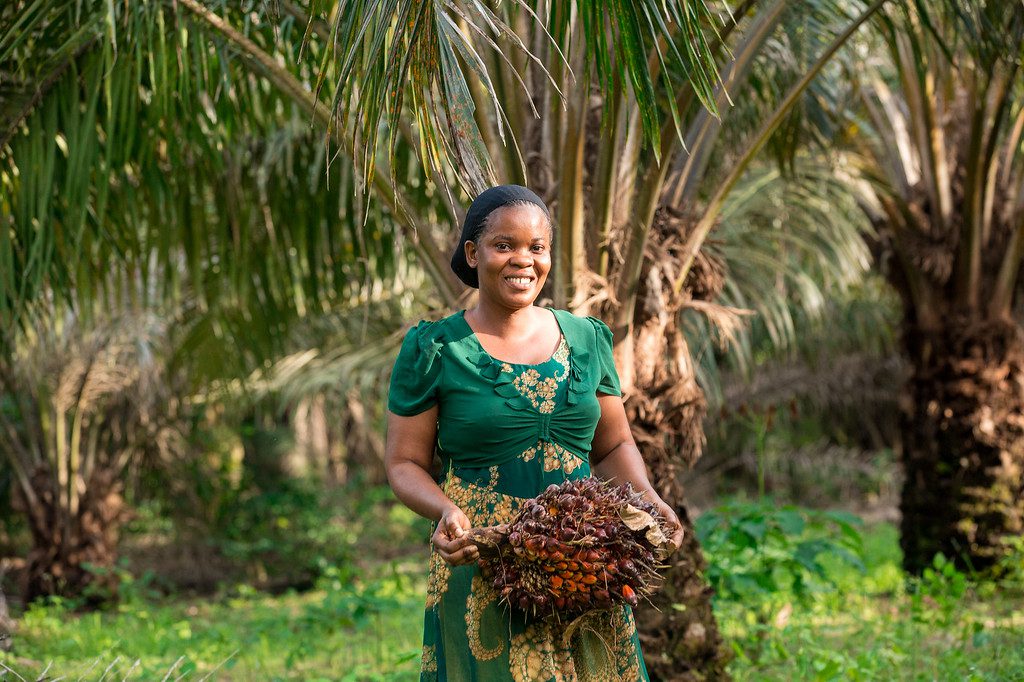
PIND’s interventions in the palm oil sector focus on stimulating best management practices (BMPs) among farmers and improving access to palm oil seedlings. These interventions aim to increase the productivity and income of farmers and small processors in the region. The interventions utilize the market systems development approach and are driven by agro-dealers, fabricators, input companies, and palm seed nursery operators and producers who have the incentives to provide a range of services and products that improve the productivity of farmers and processors. Previous interventions included stimulating the use of harvesting technologies and improved processing equipment.

In 2021, PIND plans to further expand its outreach in the Palm Oil sector to 14, 000 farmers, through the network of both the existing service providers whose capacity were built, and new partners. This will deepen access to improved seeds, and adoption of best management practices by farmers, individually or through oil palm business membership organizations for inclusivity. Emphasis will be on stimulating collaboration and coordination amongst different value chain actors in the sector by facilitating linkage activities to expand the field activities of the market actors.

Specifically, for the access to improved seeds intervention, PIND plans to expand its reach by strengthening the collaboration between seed producers and nursery operators in the region. It also intends to scale up the business finders’ model with new seed producers willing to increase their distribution network across the Niger Delta. Through these activities, oil palm farmers are expected to have increased access to improved and affordable seeds. In Q3, the focus was on working with intervention partners to expand intervention activities and strengthen the relationship between value chain actors in the agricultural input industry. PIND leveraged its relationships with oil palm Business Membership Organizations to onboard new farm services providers who are interested in using the BMP model to reach more farmers in the region.
DOWNLOAD THE FULL 2021 QUARTER 3 PROGRESS REPORT” dt_text_title_bottom_margin=”10px

dt_text_content_bottom_margin=”5px” button_text=”File Below” btn_animation=”rollIn” icon_picker=”dt-icon-the7-menu-007″ dt_text_icon_paddings=”0px 0px 10px 0px” dt_text_icon_color=”#e8e8e8″]
Improving the relationships between support market actors to broaden outreach to farmers

During the quarter, PIND held meetings with the Oil Palm Grower’s Association of Nigeria (OPGAN), an oil palm business membership organization that works across the Niger Delta to agree on a strategy to deepen the BMP intervention in the region and expand outreach activities to farmers. The partnership activities commenced with an Organizational Capacity Assessment (OCA) in Akwa Ibom state. This was to support the team to identify improvement areas within management systems, and to reinforce healthy organizational practices. After the training, an action plan was developed to identify areas of high priority. One key area in the action plan was for PIND to onboard new Farm Service Providers and support the training of farmers. In August, PIND and OPGAN identified four champion farm service providers who were onboarded to provide services to farmers in Akwa Ibom state.

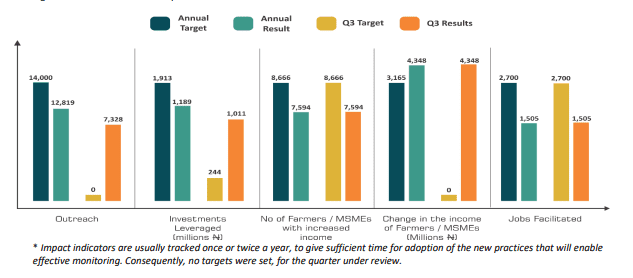
In Q3 2021, 7,328 compared to the Q3 target of 6,814 farmers; and cumulatively 12,819 farmers reached (92%) compared to the annual target of 14,000.

Increased Income and Jobs in the palm oil sector

Income and jobs for the palm oil sector as at Q3, were estimated under for three intervention areas – improved productivity of farmers through adoption of best management practices; increased harvest of fresh fruit bunches through adoption of improved harvesting tools; and increased volume of oil through adoption of improved processing tool – the small-scale processing equipment (SSPE). See annex 1 for details.

Increased income and Jobs under BMP: 4,039 of the 8,413 trained experienced improved productivity. These farmers earned total net attributable income of N1,792,685,814. Regarding jobs facilitated, the average FTE job contributed by 1 farmer was 0.096 which makes the total jobs created by the intervention, 731.

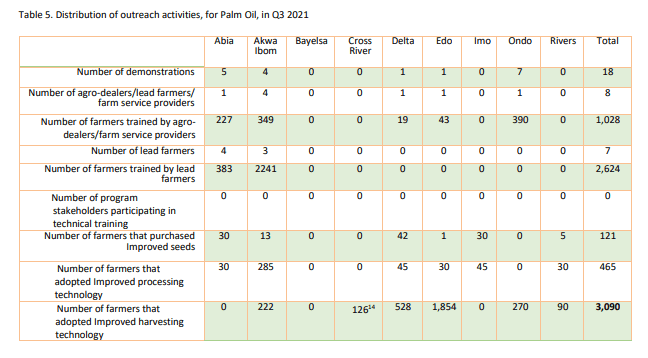
Increased income and Jobs under Improved harvesting tools (IHT): Farmers who adopt the improved harvesting technology, increase the quantity of fresh fruit bunches (ffbs) harvested from their farms, which reduces the losses experienced due to scarcity of climbers, and delayed harvesting. As shown in Table 5 (last row), between January and September 2021, 3,090 oil palm farmers adopted 1,030 improved harvesting technologies (Malaysian Knife and Mechanical Adjustable Harvesters) at an average of 3 farmers per technology. On average the use of improved harvesting technology led to a 32% increase in the quantity of ffb harvested. Consequently, the net attributable income from the additional ffbs harvested by 3,090 adopting farmers so far, is N2,095,268,328.99.

Regarding the jobs facilitated, the average FTE job created by 1 farmer was 0.17 making the total jobs created by the farmers who adopted the improved harvesting technologies, 519 FTE jobs so far in year 2021.

Increased income and Jobs under Improved processing tools (SSPE): 31 improved processing technologies were adopted between January to September 2021. On average 15 processors jointly use each improved technologies, making the total number of processors using the technologies, 465.The projected income earned by the 465 processors adopting improved processing technology during the peak season in 2021, is N416,478,830.50. On the other hand, the projected income earned by these processors during the off-peak season is N459,562,304.27. Regarding jobs facilitated, the processors who adopt the improved processing equipment hire additional hands to help separate the fruits from the palm bunches, sieve the loose fruits, load the sterilizers, and separate the nuts from the fiber. One processor creates 0.55 FTE, making the total jobs created by the 465 processors who adopted the improved technologies so far, 255 FTE jobs.

Overall, the total number of farmers/processors with increased income, because of interventions in the palm oil sector is 7,594, while the estimated value of increased income for actors adopting these interventions is N4.347 billion. The performance exceeds the 2021 target of 8, 666 farmers earning additional N3.164 billion in income. The total number of jobs created in the sector from Q1-Q3, was 1,505 against the 2021 target of 2,700. The shortfall in the target for jobs was due to the high cost of adoption of BMP activities by farmers. For example, the additional cost of maintaining one hectare of farmland increased by 146% due to the high cost of inputs.

Leveraging investment through the adoption of efficient technologies and quality seeds

The investments in the sector in Q3, 2021 resulted from the adoption of improved seeds, and the purchase of improved harvesting and processing technology. In the quarter under review, N82,590,400 was leveraged through private sector investment in the sector. Also, the 7,572 adopting farmers invested in the purchase of fertilizer, and engagement of labor for pruning and fertilizer application and palm circle weeding, estimated at N929,651,476 in total. In total the investment leveraged by actors adopting improved practices is N1,012, 241,876.
Cumulatively, the total Investment leveraged in 2021 so far is N1.2 billion against the 2021 target of N1.9 billion. The major reason for the shortfall is reduction in equity investments due to the high cost of labor and other farm inputs.

Strengthening coordination between market actors to increase access to improved Seeds for Palm Oil Farmers

From the sector scoping study, PIND identified the sale and use of adulterated planting materials as a major cause of low yield among smallholder oil palm farmers in the Niger Delta. A typical farm with improved seeds produces 16 tons of fresh fruit bunches per hectare but farmers in the region only produce 4 tons of fresh fruit bunches per hectare. This has resulted in a high demand-supply gap of palm oil in the sector and low income for oil palm farmers. To address this, PIND is strengthening the capacity of private nursery operators, and improving the distribution channel for improved planting materials the Niger Delta through linkages to sprouted nut-producing companies. This is to ensure quality control and the provision of improved seeds for oil palm farmers. So far, 147 nursery operators have been trained and linked to seed producers including PalmElit CIRAD, NIFOR, and ALLISSEE Seed Company. These linkages have strengthened the relationship among the actors and led to the availability of improved seeds for smallholder farmers.

In Q3, PIND trained 11 nursery operators on nursery management, from Ondo (4), Bayelsa (1). Akwa Ibom (2), Edo (2), and Delta (2). Consequently, 81,378 seedlings were purchased by 121 farmers across Delta (42), Edo (1), Rivers (5), Akwa Ibom (13), Abia (30), and Imo states (30). These bring the total number of seedlings purchased in the year to 228,628 seedlings, by 202 farmers against the annual target of 210, 000 seedlings by 500 farmers.

KEY ACHIEVEMENTS: POULTRY

The poultry value chain interventions are designed to improve the productivity and income of poultry farmers in the Niger Delta through the adoption of good poultry practices and linkages to quality inputs (vaccines and feeds). Other intervention activities focus on improving access to market and finance to aid the growth and expansion plans of farmers.

The sector’s activities are driven by Poultry Service Providers (PSPs) and Village Level Dealers (VLDs) working with input companies, chicken processors, and other market actors, who see the incentive to make more money by providing their services and products commercially to farmers, to improve their productivity.

PIND’s target for 2021 is to reach 7,000 farmers with information on good poultry practices (GPP), quality inputs (Vaccine and Feed) and facilitate access to market and finance in the Niger Delta region. GPP leads to a reduction in mortality and a good feed conversion ratio, meaning that farmers can have more birds at maturity and achieve the ideal 2-3kg life weight in less than eight weeks, instead of the typical 9 weeks spent; thus saving money on feed and other inputs.

In Q3, 2021, 12 additional poultry service providers (PSPs) were trained to complement the existing 32 PSPs making the total number PSPs trained by PIND, 44. PIND will continue to mentor the new PSPs and facilitate linkages between them and other actors, including farmers’ associations. PIND also began engaging day-old chick (DOC) producers to begin the process of improving access to quality DOCs to farmers. The team also facilitated linkage forums and promotional workshops aimed at linking farmers to service providers and exposing them to the importance of vaccination to chicken and egg production.
DOWNLOAD THE FULL 2021 QUARTER 3 PROGRESS REPORT” dt_text_title_bottom_margin=”10px

dt_text_content_bottom_margin=”5px” button_text=”File Below” btn_animation=”rollIn” icon_picker=”dt-icon-the7-menu-007″ dt_text_icon_paddings=”0px 0px 10px 0px” dt_text_icon_color=”#e8e8e8″]
Expanding outreach on good poultry practices to more farmers.

Improving the productivity of poultry farmers is one of PIND’s strategies to increase farmers’ income and jobs creation in the Niger Delta region. The 12 newly-trained service providers were strategically targeted to enable PIND to reach more farmers in new locations with knowledge on good poultry practices, access to improved inputs (vaccine, feed, DOCs, etc.), and access to markets and funding opportunities. Also, this quarter, PIND worked with eight PSPs, 4 Village Level Dealers (VLDs), one input company, and 2 institutional buyers, to reach poultry farmers in Imo, Ondo, Delta, Rivers, Edo, and Cross Rivers with knowledge on good poultry practices, and access to the quality vaccine, market & funding opportunities.

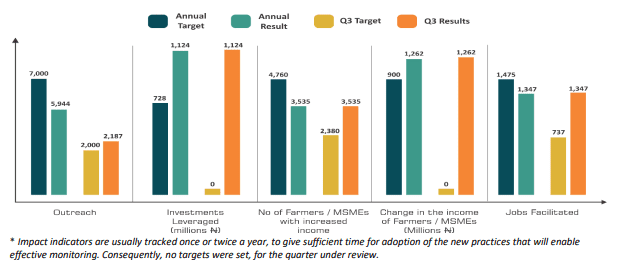
Overall, a total of 59 training activities were carried out to reach 2,187 (749 females) poultry farmers in Ondo, Delta, Rivers, Imo, Edo, Akwa Ibom, and Cross Rivers states. Some of the farmers were further supported with linkages to inputs (feed & vaccines), and finance.

Change in the income of Poultry farmers

Farmers’ income in the Poultry sector were estimated for the two intervention areas: Improved productivity of farmers through adoption of good poultry production practices (GPP) and the adoption of Vaccines for backyard poultry farmers promoted by the Village level dealers (VLDs). As poultry farmers adopt the improved practices and quality vaccines from the various promotional forums and training programs, they experience a better feed conversion ratio and reduced mortality leading to improved productivity and income. A total of 3,535 (74% performance against the target of 4,766 for the year) increased their incomes between January to September from the adoption of GPP and vaccines for backyard poultry farmers. This led to a total value of N1.26 billion, net additional income, earned by these farmers; exceeding the target of N900,000,000 for the year.

Contribution to jobs

As farmers adopt improved practices and expand production, they engage additional labor to carry out various poultry farming activities such as feeding, vaccination, debeaking, daily record keeping, etc. About 1,347 FTE jobs were created by the 3,858 adopting farmers reached by the PSPs from Q1- Q3, 2021. Jobs were not created by the farmers reached by the VLD farmers as most of them do the work themselves due to their small bird holding sizes.

Investment Leveraged

As market actors continue to experience the benefits derived from various economic activities in the sector, they make some investments to maximize such opportunities. This enables them to expand their business and increase their income.

Using metrics from previous studies, complemented with data from the outcomes assessment during the quarter, PIND estimated that the 3,858 farmers who adopted good poultry practices invested an average of N275,649 per farmer at N137,824 naira per cycle. This brings the total investment leveraged by farmers reached through the poultry service providers (PSPs) to N1,063,348,269.64.

For farmers reached by VLDs, the 912 farmers who adopted the use of quality vaccine and drugs invested an average of N67,206, at N33,603 per cycle. This brings total investment leveraged by farmers reached by village level dealers to N61,292,148.99. Overall, the total investment recorded for the sector from Q1- Q3, 2021 is N1,124,640,418.63.

KEY ACHIEVEMENTS: MSME DEVELOPMENT AND LINKAGES

The PIND MSME Development and Linkages project aims to stimulate a market that creates a dynamic and diversified set of strong local enterprises that can meet the demand created by large buyers operating within the Niger Delta. This, in turn, strengthens the local economic environment capable of driving economic growth and job creation. The project also strengthens platforms that enable micro, small, and medium enterprises (MSMEs) to access quality business support services, market, and funding opportunities that enable enterprises to grow and be more competitive in both local and global markets.

The project activities are driven by business service providers (BSPs) strengthened by PIND, to enhance the growth of local enterprises. These BSPs work in partnership with private and public stakeholders, to organize business linkages and investment forums, as well as to access new market and funding opportunities necessary for MSME development.

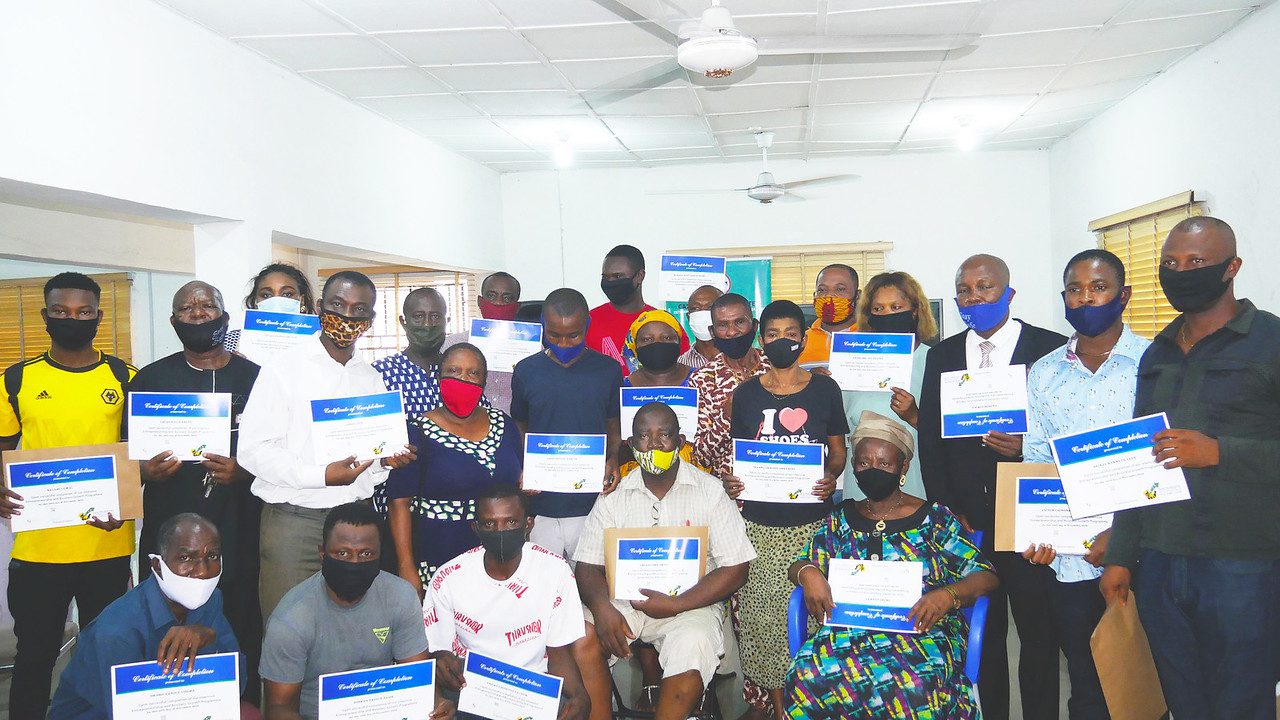
In Q3 2021, PIND focused on supporting the BSPs to organize business linkages forums and clinics, provide business development services and facilitate access to finance for MSMEs through the Central Bank of Nigeria Agri-Business/Small and Medium Enterprise Investment Scheme (AGSMEIS). The scheme is an initiative to support the Federal Government’s efforts and policy measures for the promotion of agricultural businesses and small and medium enterprises as vehicles for sustainable economic development and employment creation.
DOWNLOAD THE FULL 2021 QUARTER 3 PROGRESS REPORT” dt_text_title_bottom_margin=”10px

dt_text_content_bottom_margin=”5px” button_text=”File Below” btn_animation=”rollIn” icon_picker=”dt-icon-the7-menu-007″ dt_text_icon_paddings=”0px 0px 10px 0px” dt_text_icon_color=”#e8e8e8″]
Reaching more MSMEs through access to business information, new markets and finance

Business Service Providers (BSPs) provide a variety of services to MSMEs to improve their competitiveness and growth. This variety of services includes but is not restricted to business management training, business diagnostics and upgrading, business plan development, marketing strategy development, and linkages to finance and market.

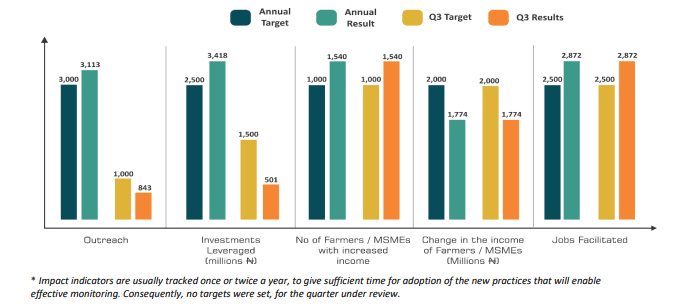
In Q3, seven BSPs organized outreach events and support to MSMEs reaching 843 enterprises (including 302 womenowned), exceeding the target of 500 for the quarter. This makes the total outreach for the year to 3,113 MSMEs against the target of 3,000 for 2021.

Increased Sales and Income for Enterprises

PINDs work in the MSME landscape focuses on improving business efficiencies by enhancing MSME’s business management and technical skills and supporting them to access new markets and funding opportunities. With improved business skills they can increase business efficiency while the funding and market opportunities enable them to expand and sell into new viable markets. All these lead to growth and an increase in net profit for the enterprises.

49% of the micro-enterprises, 57% of small enterprises, and 67% of medium enterprises who receive business information, training, and access to new markets and funding opportunities, witnessed significant changes in their business performance attributable to the support of PIND in collaboration with the BSPs. This translates to 1,540 MSMEs (1,445 micro, 86 small, and 9 medium businesses) with improved performance in 2021 out of the 3,113 that accessed various business support services. These MSME’s earned additional income of N1.77 billion, against the target of N2billion for the year. One of the major contributors to the improved performance of the businesses, is the access to funding, as most of the enterprises benefitted from the Federal Government financing Initiatives-AGSMEIS. Most of these enterprises were trained and supported by the BSPs to access loans from the AGSMEIS program which helped them expand their business operations. As at Q3 2021, over 1,270 enterprises had received loans worth N2.4 billion. Similarly, through the linkages support by the BSPs, over 200 businesses had been linked to large buyers like SPAR and Market Square.

Leveraging investment by MSMEs through the CBN AGSMEIS Program

One of PIND’s priorities in the MSME Development and Linkages project in 2021 is to deepen relationships between the business service providers and financial institutions, particularly the Central Bank of Nigeria to unlock access to capital for small enterprises under various financing schemes such as the Agri-Business/Small and Medium Enterprise Investment Scheme (AGSMEIS).

In Q3, 189 enterprises (77 women-owned) accessed loans worth N501,508,965 from the CBN AGSMEIS. These loans were given to fund the acquisition of new equipment and technologies, expand into new business lines and improve working capital. This enhanced the business performance of the enterprises to meet new market opportunities. Cumulatively, the total year-to-date investment leveraged through debt financing is N3.41 billion for 2021, exceeding the year’s target of N2.5 billion.

MSMEs Create more Jobs through Business Expansion

As enterprises expand by accessing new markets and funding opportunities, they engage more staff to support their increased business operations. An estimated 2,873 jobs16 were created by the 1,540 MSMEs reported to have experienced a significant increase in income in 2021. The 2,873 jobs exceed the target of 2,500 jobs for the year.

Aquaculture

KEY ACHIEVEMENTS: AQUACULTURE

PIND’s interventions in the aquaculture sector focus on improving the efficiency and productivity of fish farmers and processors, through improved knowledge of best fish farming practices, access to improved processing technology, as well as access to quality input, market, and finance for farmers. The sector’s activities are driven by aquaculture service providers working with input companies, fabricators, and other market actors. In 2021, the aquaculture interventions plan to reach an additional 5,000 fish farmers and processors through the promotion of improved technology in the coastal communities, adoption of improved practices amongst fish farmers in the region, and facilitating access to quality fish seeds and finance for farmers and processors in the coastal communities of the Niger Delta.

In 2021, the high rate of inflation in Nigeria and the naira devaluation continued to impact the aquaculture sector. This was evidenced in the continuous rise in the cost of fish feed which constitutes over 70% of the cost of production. The cost of fish feed increased by 34% over the last eight months with a concurrent increase in the price of fish by 29%. This further increased farmers’ production costs, necessitating access to finance/input credit for farmers and more efficient farm practices.

In the quarter under review, PIND deepened its work with the network of aquaculture service providers to further create awareness on the use of quality inputs and to build the capacity of fish farmers/processors, particularly in the GMOU communities to access funds for equipment and input purchase. PIND also continued to provide support to selected hatchery operators to produce and promote quality fish seeds for farmers, in addition to overseeing and tracking the expansion of the training on good pond management and business practices to more farmers and processors, through service providers and input companies in the region.

Increasing Outreach to more farmers on pond management practices

This quarter, PIND continued to support service providers to provide pond management practices and business skill training to build the capacity of fish farmers and processors to access finance, and improve their productivity and efficiency. As a result, a total of 970 (297 Females and 673 Males) fish farmers were reached by 13 service providers. See annex 1 for details.

In addition, five (5) demonstrations to promote the adoption of improved smoking technology (smoking kiln and chorkor ovens) were carried out, reaching 184 processors in Cross River, Bayelsa, and Rivers States. Also, three demonstrations were carried out in three GMOU communities in Ondo (Awoye) and Delta (Bateren and Usor) States, reaching 153 fish processors and making the total outreach for the quarter 1,307.

DOWNLOAD THE FULL 2021 QUARTER 3 REPORT” dt_text_title_bottom_margin=”10px

dt_text_content_bottom_margin=”5px” button_text=”File Below” btn_animation=”rollIn” icon_picker=”dt-icon-the7-menu-007″ dt_text_icon_paddings=”0px 0px 10px 0px” dt_text_icon_color=”#e8e8e8″]

Facilitating Linkage to Finance and input Loan for fish farmers

As part of its strategy to deepen the activities in the riverine communities through financial inclusion and access to finance, PIND in collaboration with Sombreiro Kapital expanded its access to finance activities to the GMOU communities in Delta and Ondo States. Within the quarter, 15 fish processors who were screened and recommended to Sterling Bank by Sombreiro Kapital last quarter, accessed loans worth N3 million at an average of N200,000 per processor. The funds were given to improve the processors’ working capital and for technology upgrade.

Furthermore, Sombreiro Kapital collaborated with input dealers and Sterling Bank to provide opportunities for more farmers to access loans. Subsequently, 224 of the 1307 farmers reached were profiled and by the end of the quarter, a total of 88 fish farmers out of the 224 presented got loans worth N27.1 million in Delta and Ondo States.

Increasing uptake of Fish Processing technologies

The chorkor oven and smoking kiln technologies were introduced by PIND as part of the effort to improve the efficiency of fish processors in the Niger Delta region. To sustainably promote the adoption of the technologies, PIND built the capacity of masons and fabricators to enable them to produce and market them commercially. PIND also worked with the masons and other service providers to carry out demonstrations to stimulate the adoption of the technologies, particularly in the coastal (GMOU) and riverine communities.

This quarter, PIND continued to provide support to the Service Providers, masons, and fabricators (whose capacities have been built) to drive the uptake of chorkor ovens and smoking kiln technology to improve the efficiency of fish processors in the Niger Delta region. Three promotional activities using the smoking kiln and chorkor oven were carried out by four service providers in Rivers, Bayelsa, and Cross River States, reaching 184 processors. As a result of these activities, and those carried out in the previous quarter, a total of 17 smoking technology (12 smoking kilns and 5 chorkor ovens) were purchased in Rivers (10), Delta (2), Cross River (4), and Imo (1). Similarly, two service providers, organized demonstrational activities to promote the chorkor oven in three GMOU communities in Delta (Bateren and Usor) and Ondo States (Awoye), reaching 153 fish processors. This resulted in the purchase of 10 smoking technology in the communities, making a total of 36 Chorkors purchased/adopted in GMOU communities in 2021 so far. Overall, the total number of technologies purchased/adopted- Chokor and Kilns so far in 2021 is 82 (27 in Q3) against the target of 150 for the year. The low rate of adoption is due to the increase in the cost of the technology brought about by the high inflation rate and the naira devaluation.

Expanding interventions to reach more community members in the GMOU communities

In the previous quarter, PIND carried out a scoping study in four GMOU communities (Tsekelewu, Opuama, Awoye, and Ogidigben) to identify opportunities to improve livelihood of individuals in the GMOU communities. Following the study, an intervention was designed to increase the productivity of fisherfolks in the target communities through the adoption of improved practices and technologies.

This quarter, PIND engaged Yamaha, a producer of outboard engines for fishing, and the Nigeria Institute for Oceanography and Marine Research (NIOMR) as potential partners for implementing the identified interventions in the GMOU areas. PIND also identified interested service providers who are willing to expand their service provision to these communities. In subsequent quarters, PIND will finalize the engagement of technical partners and onboard new service providers to drive pilot intervention activities in the target communities in the GMOU areas. PIND will also facilitate capacity-building training programs for identified service providers and fisherfolk groups/associations.

DOWNLOAD THE FULL 2021 QUARTER 3 REPORT” dt_text_title_bottom_margin=”10px

dt_text_content_bottom_margin=”5px” button_text=”File Below” btn_animation=”rollIn” icon_picker=”dt-icon-the7-menu-007″ dt_text_icon_paddings=”0px 0px 10px 0px” dt_text_icon_color=”#e8e8e8″]

Improving Access to Quality Fish Seeds for Niger Delta Fish farmers

The use of quality fish seeds/fingerlings is one of the major contributors to good yield and improved productivity of farmers in the aquaculture sector. In 2019, PIND Collaborated with FISON, to develop quality broodstock banks for catfish with selected hatcheries in the region. PIND also identified and partnered with six private hatchery operators from Delta, Ondo, and Rivers States to raise broodstock banks from the pure lines produced by FISON. In 2020, the hatchery operators commenced the production of fish seeds from the broodstock, and over 515,000 fish seeds were produced by them.

This quarter, PIND continued to work with the selected hatchery operators to promote quality fish seeds to farmers in the region. This quarter, 420,000 fish seeds were produced from the broodstock by five of the hatchery operators compared to 300,000 targeted for the quarter, resulting in sales of N9.6 million at an average sale of N25 per seed. 154 farmers purchased these improved fish seeds.
PIND’s partnership with the USAID Feed the future Ag-Extension activity in Delta and Cross River State is also complementing the promotion and use of quality fish seeds by farmers in the states. 4 cohorts comprising of over 40 hatchery operators were formed and trained on hatchery management and business development. These hatcheries are beginning to adopt and promote the adoption of quality fish seeds to farmers.

Improving the productivity and income of fish farmers and processors through the adoption of improved practices and technology

As farmers adopt the improved practices from the various demonstrations and training programs, they are expected to experience a better feed conversion ratio and reduced mortality leading to improved productivity and income. In 2020, PIND developed a framework for tracking and projecting the impact of the intervention activities on the farmers using multipliers obtained from previous impact assessments, complemented with outcomes data from field monitoring visits.

Due to the market dynamics and macro-economic impact of COVID-19 on the 2020 results, an outcome monitoring exercise was carried out this quarter to re-evaluate the parameters applied in estimating the impact of the interventions.

Of a total of 2,561 fish farmers reached so far in 2021 (January to September) study findings showed that 1,470 of the farmers experienced an increase in income. These 1,470 had a Net additional income of N1,076,160,333, at an average of N731,989/farmer. This income was estimated for production on 3 ponds for one cycle carried out within the year.

Similarly, of the 1,113 processors reached, 82 adopted smoking technologies- chorkor ovens (55) and smoking kilns (27).
The additional income earned by the 55 processors adopting the chorkor ovens so far in 2021 is estimated to be N5,744,2599. Also, a total of N11,295,36210 was earned by the 27 processors who adopted the Kiln so far in 2021.

The total value of Net Additional Income earned by adopting farmers and processors is N1,093,199,955 so far in 2021, against a target of N1,039,706,390 for the year. Similarly, the total number of farmers and processors with increased income in 2021 so far is 1,552, compared to a target 2,500 for the year.

Contribution to Jobs

As farmers adopt improved practices and expand production, they engage more labor to carry out various pond management activities such as pond preparation, stocking, sorting, and harvesting of the ponds. It was estimated that about 782 new Full-Time Equivalent (FTE) jobs were created by the 2,023 farmers who adopted improved practices in 2021. Similarly, it was estimated that the 82 fish processors who adopted the chorkor oven and smoking kiln technology employed 143 labor to support the operation of the technologies. This makes a total of 925 jobs facilitated so far by the project in 2021, against a target of 850 for the year.

Leveraging investments for the adoption of improved practices and technologies

As market actors see the benefits derived from various economic activities in the sector, they make investments to maximize such opportunities. This enables them to expand their business and increase their income, PIND’s analysis showed that the 2,023 farmers who adopted improved practices between Q1 to Q3 invested an average of N1,023,238, per farmer at N341,079/pond for the three ponds stocked.

This makes the equity invested by the farmers during the period, N2,070,206,176. The increased investment was mainly due to the 34% increase in the cost of fish feed when compared to 202011. The outcome monitoring found that the spend was mostly for the purchase of improved feeds, nets, fish seeds and conditioning of the level of water pH.

Cassava

KEY ACHIEVEMENTS: CASSAVA

The Cassava value chain interventions are designed to improve the productivity and incomes of actors in the cassava sector. This is achieved by incentivizing partners to invest in activities that will improve access to information and quality inputs as well as markets for cassava farmers. Since 2015, PIND has partnered with key market actors like input companies and agro-dealers to embed demonstrations and training into their marketing and sales models. These partners have continued to report increased sales because of this collaboration.
In this new strategic phase, which commenced last year, PIND continued to leverage the network of input companies, agro-dealers, Farm Service Providers (FSPs) and the Cassava Seed Entrepreneurs (CSEs) it has strengthened, to drive and expand activities in the sector to reach more farmers with information and quality agro-input.

This year, PIND’s target is to reach an additional 19,800 farmers. This will be achieved through the expansion of its work across the region, by partnering with service providers to establish demonstration plots aimed at promoting the adoption of Good Agricultural Practices (GAP) in more communities in the Niger Delta. PIND will also increasingly leverage platforms to train and increase farmers’ access to agro-inputs including stems, fertilizers, and other crop protective products, CPPs. Also, PIND will support investors to establish Cassava out-grower and aggregation programs in target locations.

In Q3, 2021 PIND continued the implementation of activities for the remainder of the main cassava planting season, while identifying and selecting partners and potential grantees for collaboration to ramp up activities in the sector in 2021, for the late planting season. PIND also intensified monitoring of CSEs trained in May as they establish multiplication plots across their various locations and step down the technical training received last quarter. With the increased rate of vaccination against Covid-19, there was an observed relaxation in COVID restrictions allowing more physical engagements involving larger numbers of people.

The project management unit of BASICS II visited PIND during the quarter for a joint review of the ongoing collaboration between PIND and BASICS II. Both organizations expressed satisfaction with the collaboration and results so far and encouraged both work teams to continue joint activities.

DOWNLOAD THE FULL 2021 QUARTER 3 REPORT” dt_text_title_bottom_margin=”10px

dt_text_content_bottom_margin=”5px” button_text=”File Below” btn_animation=”rollIn” icon_picker=”dt-icon-the7-menu-007″ dt_text_icon_paddings=”0px 0px 10px 0px” dt_text_icon_color=”#e8e8e8″]

Increasing Outreach to more Farmers on good Agronomic Practices

Access to information about improved agronomic practices and quality inputs enable cassava farmers to improve their productivity and income. Private service providers continue to bridge the gap created by limited government extension services, by the providing this information directly to farmers through training and demonstrations embedded in the sale of agro-inputs; thereby ensuring that farmers can immediately implement these practices in their farms.

In Q3, following the major planting season last quarter, PIND supported its partners to strengthen their relationships and linkages with farmers, to guarantee continuous access to quality inputs such as stems, fertilizer, and Crop Protective products (CPPs) required for production. Expectedly, fewer field activities and farmer outreaches were achieved this quarter as the major planting season gradually wore off. Nevertheless, a total of 1,342 (647 females) cassava farmers, directly, across the region, while an additional 1,086 (660 Females) farmers were reached via CSEs, making the total farmer outreach for Q3, 2,428 (1,307 females) against this quarter’s direct outreach target of 4,000. The total outreach so far in 2021 is 12,320 surpassing the years’ direct farmer outreach target of 11,000. See annex 1 for details.

The results from the outcome monitoring exercise confirm a 1:1 copying ratio for farmers. This result was further discounted by 20% to account for overlaps, thus bringing the total copiers as of Q3,2021 to 9,265. These copiers are the indirect outreach and form part of the sector’s outreach for the year. Consequently, the overall outreach for the year as of Q3 2021 is 21,585 against the years’ target of 19,800.

Scaling up partnership to establish a viable Cassava Seed System in the Niger Delta

PIND is partnering with the BASICS II, funded by the Bill and Melinda Gates Foundation, and the International Institute for Tropical Agriculture (IITA), as well as the National Root Crops Research Institute (NRCRI) to implement interventions to increase access to improved Cassava stem varieties that are high-yielding and disease-resistant in the Niger Delta, through the Cassava Seed Entrepreneurship (CSE) program, formerly called Village Seed Entrepreneurship (VSE) program.

The program aims to establish a commercial seed system in the region. PIND believes this model implemented with CSEs is sustainable because the CSEs are found across the various Cassava farming clusters in the region and are encouraged to establish stem multiplication plots with which they train farmers within their clusters and from which they hope to sell quality cassava stems at maturity.

This quarter (Q3), many of the CSEs trained in Q2 established multiplication plots using foundation stems procured from NRCRI and other CSEs and organizing step-down trainings for farmers within their communities.

Also, in Q3 the project management unit of BASICS II visited PIND the quarter for a joint review of the ongoing collaboration between PIND and BASICS II. Both organizations expressed satisfaction with the collaboration and results so far and encouraged both work teams to continue joint activities. The BASICS II team also presented a proposal for collaboration with PIND to host a National Cassava Summit, similar to the one supported by PIND in 2016. PIND leadership confirmed PINDs interest to collaborate to host the National Summit, which is focused on stimulating the power of Private Sector-Led Cassava Seed Development in Nigeria. The summit is scheduled to hold in Abuja in Q4.

Cassava Farmers’ Productivity and Income

94% (11,581) of the 12,320 farmers trained, applied these improved practices on their farms. Although these direct farmers are expected to experience increased yields at harvest next year, the outcome monitoring exercise collected metrics with which to estimate income increases for adopting farmers, thus the projected net attributable income for these farmers is N2,573,752,285, at an average of N224,488 per farmer.


Contribution to jobs by farmers

It was found that the adopting farmers engaged labor to implement improved practices such proper spacing, application of fertilizers etc. On average, each adopting farmer created 0.07 FTE jobs, and as such the 11,581 direct adopting farmers in 2021, had enabled the creation of 762 net additional FTE jobs. Similarly, the 9,265 indirect farmers, who copied improved practices in their farms, created 609 FTE jobs. In summary, as at Q3 2021, the net attributable job estimated for cassava farmers was 1,371, compared to the annual target of 707 jobs.

Leveraging investment through the adoption of improved practices and technologies

The adoption of improved practices comes with additional production costs for farmers. The cost of adopting the innovations introduced by PIND was also verified during the monitoring exercise, revealing average additional production costs of N26,987.07 per hectare, for each direct farmer. Thus, the estimated equity spend for farmers adopting improved practices with average farm size of 0.95 ha, is N25,739 per farmer. Therefore, the projected cost of production for 11,581 direct farmers in 2021 is N298,077,297, while the additional cost of production for the 9,265 indirect farmers’, is N238,461,837.The total additional equity spend on improved practices by farmers so far in 2021, is projected to be N536,539,134 as at Q3, compared to the annual target of N1.32 billion, which is 41% of the annual target.

Cocoa

KEY ACHIEVEMENTS: COCOA

PIND’s Cocoa value chain interventions are designed to improve the productivity and income of cocoa farmers through the adoption of improved farming practices in planting/re-planting, pruning, weed management, pest and disease management, and harvest and post-harvest operations. The main intervention areas are productivity improvement and quality enhancement. To achieve this, PIND is working with business partners to invest in the promotion of good agricultural practices and technologies by providing quality agricultural information and access to quality agro-inputs and technologies to farmers. In the last two years, PIND has on-boarded and supported input suppliers, equipment dealers/promoters, output buyers (off- takers), and farm service providers to conduct a series of training programs and demonstration/promotional activities, towards stimulating the adoption of good agricultural practices and technology by farmers.

Since 2019, PIND has onboarded and partnered with 44 different support market actors12 to promote productivity improvement and quality enhancement practices and technologies among cocoa farmers. These partners have reached over 18,000 farmers with agriculture information, quality agro-inputs, and technologies in five cocoa-producing states of Abia, Akwa Ibom, Cross River, Edo, and Ondo.

In 2021, PIND’s plan is to reach a further 12,000 farmers through a series of interlinked activities aimed at deepening the solutions it has introduced and expanding them to all the cocoa-producing states in the Niger Delta. To achieve this, PIND is working with both new and existing partners to upscale the solutions in the operating year. This quarter (Q3), PIND continued to expand its outreach to more cocoa farmers by working with new and existing partners to conduct training programs and demonstrations on good agricultural practices for farmers. Also, PIND’s partnership with the Cocoa Research Institute of Nigeria (CRIN) organized its first set of training for selected nursery operators, on best nursery management practices.

DOWNLOAD THE FULL 2021 QUARTER 3 PROGRESS REPORT” dt_text_title_bottom_margin=”10px

dt_text_content_bottom_margin=”5px” button_text=”File Below” btn_animation=”rollIn” icon_picker=”dt-icon-the7-menu-007″ dt_text_icon_paddings=”0px 0px 10px 0px” dt_text_icon_color=”#e8e8e8″]

Expanding Outreach to More Farmers through Good Agricultural Practices (GAP)

The promotion of Good Agricultural Practices (GAP) was introduced by PIND in 2019 as a strategy to improve farmers’ access to information, quality inputs, and technologies necessary to increase their yield and productivity. In Q3 2021, PIND worked with five farm service providers to organize demonstration activities, train and provide farm services to farmers on good agricultural practices. The project partnered with three off-takers (companies) to provide quality improvement training and agro-input support to farmers. Also, PIND supported three trained nursery operators to undertake awareness campaigns on the benefits of planting quality seeds. These led to PIND reaching an additional 2,67813 (674 females) farmers in Q3, out of a target of 4,000 farmers set for the period making the total outreach for 2021, 8,820; which is 74% of the targeted outreach of 12,000 for the year. 


Increasing Cocoa Farmers’ Productivity and Income

70% (6,187) of the 8,820 reached directly, adopted the improved practices/technologies on their farms. These 6,187 farmers earned net attributable income increases of N1,444,462,017, at an average of N233,459 per farmer.
The 6,187 farmers with increased additional income represent a 74% performance of the 8,400-target for 2021. Also, the N1,444,462,017 net additional income is 90% of the N1,600,000,000 target for the year.

Leveraging investment through the adoption of improved practices and technologies

As farmers see benefits in terms of increased yield and income from adopting the improved practices, they continue to invest in the products and technologies promoted by the partner market actors. PIND has been working with agro-input suppliers, service providers, and agro-technology and equipment dealers to introduce and promote appropriate productivity improvement technologies (such as mechanical pruners, motorized sprayers and brush cutters) and quality enhancement technologies (fermentation boxes, and Pelle bongo) to farmers.

In Q3, PIND leveraged new investments worth N870,000 from three service providers who invested in the purchase of spraying and pod-breaking technologies, promoted by partner equipment dealers. The N870,000 invested by farmers in Q3, along with N2,400,000 leveraged in Q1+Q2 make the total amount leveraged so far in 2021 by market actors, N3,270,000. Also, in Q3, each adopting farmer invested an average of N83,666 in their farms. This gives a total of N517,660,185 worth of investments made by the 6,187 farmers who adopted improved practices and technologies from Q1 to Q3, 2021. Cumulatively the total equity investment leveraged by the sector is N520,930,185 in 2021. This is 71.4% of the N730,000,000 target for 2021.

Contribution to job creation through the adoption of improved practices and technologies

As farmers adopt improved practices and technologies and expand production, they engage more labor to carry out various improved farm management activities. The average additional job created by each adopting farmer is 0.12 FTE.
As such the 6,187 farmers who adopted improved farm practices, created a total of 714 new FTE jobs between Q1-Q3, 2021. This is 66% of the 1,090 target for 2021.

Strengthening relationships between actors to improve access to quality seeds for cocoa farmers

PIND’s cocoa value chain study (2018) revealed that about 90% of cocoa beans harvested in the Niger Delta are from older trees with low-yielding potential. Also, over 70% of farmers who are planting new trees either plant old seed varieties with low-yielding capacity or take cocoa seeds from their old farms and nursed them as seedlings for planting.

For farmers interested in planting new varieties with high-yielding potential, accessing these varieties was a big challenge due to limited information and unavailability. Ultimately, this resulted in the low yield (between 350 to 420 kg per hectare) and productivity experienced by farmers in the Niger Delta compared to about 1,000kg obtainable in neighboring countries like Ghana and Cote d’Ivoire. To address this, PIND designed the access to quality (high-yielding) seedlings intervention as a strategy to improve access to improved seedlings for cocoa farmers. The intervention aims to strengthen the relationship between entrepreneurial nursery operators and seed producers as a mechanism to increase the distribution network for improved seeds in the Niger Delta.

This quarter (Q3), PIND partnered with CRIN to carry out the first set of training for 31 entrepreneur nursery operators from Ondo, Edo, Abia, and Cross River states. The training program aimed to improve the technical knowledge and skills of the nursery operators on seed handling and nursery management, as well as provide an opportunity for CRIN to interact with the nursery operators towards expanding their distribution network. Following the training, the nursery operators commenced promotional/awareness campaigns on quality seed. Specifically, three nursery operators organized access to quality seed awareness campaigns to improve farmers’ knowledge on the availability and benefits of planting quality seeds. In subsequent quarters, PIND will further support the entrepreneurial nursery operators to carry out more awareness and sensitization programs, access the TC 1-8 series from CRIN, raise these seedlings in their nursery, and supply to farmers commercially and sustainably.

Palm Oil

KEY ACHIEVEMENTS: PALM OIL

PIND’s interventions in the palm oil sector focus on stimulating best management practices (BMPs) among farmers and improving access to palm oil seedlings. These interventions aim to increase the productivity and income of farmers and small processors in the region. The interventions utilize the market systems development approach and are driven by agro-dealers, fabricators, input companies, and palm seed nursery operators and producers who have the incentives to provide a range of services and products that improve the productivity of farmers and processors. Previous interventions included stimulating the use of harvesting technologies and improved processing equipment.

In 2021, PIND plans to further expand its outreach in the Palm Oil sector to 14, 000 farmers, through the network of both the existing service providers whose capacity were built, and new partners. This will deepen access to improved seeds, and adoption of best management practices by farmers, individually or through oil palm business membership organizations for inclusivity. Emphasis will be on stimulating collaboration and coordination amongst different value chain actors in the sector by facilitating linkage activities to expand the field activities of the market actors.

Specifically, for the access to improved seeds intervention, PIND plans to expand its reach by strengthening the collaboration between seed producers and nursery operators in the region. It also intends to scale up the business finders’ model with new seed producers willing to increase their distribution network across the Niger Delta. Through these activities, oil palm farmers are expected to have increased access to improved and affordable seeds. In Q3, the focus was on working with intervention partners to expand intervention activities and strengthen the relationship between value chain actors in the agricultural input industry. PIND leveraged its relationships with oil palm Business Membership Organizations to onboard new farm services providers who are interested in using the BMP model to reach more farmers in the region.

DOWNLOAD THE FULL 2021 QUARTER 3 PROGRESS REPORT” dt_text_title_bottom_margin=”10px

dt_text_content_bottom_margin=”5px” button_text=”File Below” btn_animation=”rollIn” icon_picker=”dt-icon-the7-menu-007″ dt_text_icon_paddings=”0px 0px 10px 0px” dt_text_icon_color=”#e8e8e8″]

Improving the relationships between support market actors to broaden outreach to farmers

During the quarter, PIND held meetings with the Oil Palm Grower’s Association of Nigeria (OPGAN), an oil palm business membership organization that works across the Niger Delta to agree on a strategy to deepen the BMP intervention in the region and expand outreach activities to farmers. The partnership activities commenced with an Organizational Capacity Assessment (OCA) in Akwa Ibom state. This was to support the team to identify improvement areas within management systems, and to reinforce healthy organizational practices. After the training, an action plan was developed to identify areas of high priority. One key area in the action plan was for PIND to onboard new Farm Service Providers and support the training of farmers. In August, PIND and OPGAN identified four champion farm service providers who were onboarded to provide services to farmers in Akwa Ibom state.

In Q3 2021, 7,328 compared to the Q3 target of 6,814 farmers; and cumulatively 12,819 farmers reached (92%) compared to the annual target of 14,000.

Increased Income and Jobs in the palm oil sector

Income and jobs for the palm oil sector as at Q3, were estimated under for three intervention areas – improved productivity of farmers through adoption of best management practices; increased harvest of fresh fruit bunches through adoption of improved harvesting tools; and increased volume of oil through adoption of improved processing tool – the small-scale processing equipment (SSPE). See annex 1 for details.

Increased income and Jobs under BMP: 4,039 of the 8,413 trained experienced improved productivity. These farmers earned total net attributable income of N1,792,685,814. Regarding jobs facilitated, the average FTE job contributed by 1 farmer was 0.096 which makes the total jobs created by the intervention, 731.

Increased income and Jobs under Improved harvesting tools (IHT): Farmers who adopt the improved harvesting technology, increase the quantity of fresh fruit bunches (ffbs) harvested from their farms, which reduces the losses experienced due to scarcity of climbers, and delayed harvesting. As shown in Table 5 (last row), between January and September 2021, 3,090 oil palm farmers adopted 1,030 improved harvesting technologies (Malaysian Knife and Mechanical Adjustable Harvesters) at an average of 3 farmers per technology. On average the use of improved harvesting technology led to a 32% increase in the quantity of ffb harvested. Consequently, the net attributable income from the additional ffbs harvested by 3,090 adopting farmers so far, is N2,095,268,328.99.

Regarding the jobs facilitated, the average FTE job created by 1 farmer was 0.17 making the total jobs created by the farmers who adopted the improved harvesting technologies, 519 FTE jobs so far in year 2021.

Increased income and Jobs under Improved processing tools (SSPE): 31 improved processing technologies were adopted between January to September 2021. On average 15 processors jointly use each improved technologies, making the total number of processors using the technologies, 465.The projected income earned by the 465 processors adopting improved processing technology during the peak season in 2021, is N416,478,830.50. On the other hand, the projected income earned by these processors during the off-peak season is N459,562,304.27. Regarding jobs facilitated, the processors who adopt the improved processing equipment hire additional hands to help separate the fruits from the palm bunches, sieve the loose fruits, load the sterilizers, and separate the nuts from the fiber. One processor creates 0.55 FTE, making the total jobs created by the 465 processors who adopted the improved technologies so far, 255 FTE jobs.

Overall, the total number of farmers/processors with increased income, because of interventions in the palm oil sector is 7,594, while the estimated value of increased income for actors adopting these interventions is N4.347 billion. The performance exceeds the 2021 target of 8, 666 farmers earning additional N3.164 billion in income. The total number of jobs created in the sector from Q1-Q3, was 1,505 against the 2021 target of 2,700. The shortfall in the target for jobs was due to the high cost of adoption of BMP activities by farmers. For example, the additional cost of maintaining one hectare of farmland increased by 146% due to the high cost of inputs.

Leveraging investment through the adoption of efficient technologies and quality seeds

The investments in the sector in Q3, 2021 resulted from the adoption of improved seeds, and the purchase of improved harvesting and processing technology. In the quarter under review, N82,590,400 was leveraged through private sector investment in the sector. Also, the 7,572 adopting farmers invested in the purchase of fertilizer, and engagement of labor for pruning and fertilizer application and palm circle weeding, estimated at N929,651,476 in total. In total the investment leveraged by actors adopting improved practices is N1,012, 241,876.
Cumulatively, the total Investment leveraged in 2021 so far is N1.2 billion against the 2021 target of N1.9 billion. The major reason for the shortfall is reduction in equity investments due to the high cost of labor and other farm inputs.

Strengthening coordination between market actors to increase access to improved Seeds for Palm Oil Farmers

From the sector scoping study, PIND identified the sale and use of adulterated planting materials as a major cause of low yield among smallholder oil palm farmers in the Niger Delta. A typical farm with improved seeds produces 16 tons of fresh fruit bunches per hectare but farmers in the region only produce 4 tons of fresh fruit bunches per hectare. This has resulted in a high demand-supply gap of palm oil in the sector and low income for oil palm farmers. To address this, PIND is strengthening the capacity of private nursery operators, and improving the distribution channel for improved planting materials the Niger Delta through linkages to sprouted nut-producing companies. This is to ensure quality control and the provision of improved seeds for oil palm farmers. So far, 147 nursery operators have been trained and linked to seed producers including PalmElit CIRAD, NIFOR, and ALLISSEE Seed Company. These linkages have strengthened the relationship among the actors and led to the availability of improved seeds for smallholder farmers.

In Q3, PIND trained 11 nursery operators on nursery management, from Ondo (4), Bayelsa (1). Akwa Ibom (2), Edo (2), and Delta (2). Consequently, 81,378 seedlings were purchased by 121 farmers across Delta (42), Edo (1), Rivers (5), Akwa Ibom (13), Abia (30), and Imo states (30). These bring the total number of seedlings purchased in the year to 228,628 seedlings, by 202 farmers against the annual target of 210, 000 seedlings by 500 farmers.

Poultry

KEY ACHIEVEMENTS: POULTRY

The poultry value chain interventions are designed to improve the productivity and income of poultry farmers in the Niger Delta through the adoption of good poultry practices and linkages to quality inputs (vaccines and feeds). Other intervention activities focus on improving access to market and finance to aid the growth and expansion plans of farmers.

The sector’s activities are driven by Poultry Service Providers (PSPs) and Village Level Dealers (VLDs) working with input companies, chicken processors, and other market actors, who see the incentive to make more money by providing their services and products commercially to farmers, to improve their productivity.

PIND’s target for 2021 is to reach 7,000 farmers with information on good poultry practices (GPP), quality inputs (Vaccine and Feed) and facilitate access to market and finance in the Niger Delta region. GPP leads to a reduction in mortality and a good feed conversion ratio, meaning that farmers can have more birds at maturity and achieve the ideal 2-3kg life weight in less than eight weeks, instead of the typical 9 weeks spent; thus saving money on feed and other inputs.

In Q3, 2021, 12 additional poultry service providers (PSPs) were trained to complement the existing 32 PSPs making the total number PSPs trained by PIND, 44. PIND will continue to mentor the new PSPs and facilitate linkages between them and other actors, including farmers’ associations. PIND also began engaging day-old chick (DOC) producers to begin the process of improving access to quality DOCs to farmers. The team also facilitated linkage forums and promotional workshops aimed at linking farmers to service providers and exposing them to the importance of vaccination to chicken and egg production.

DOWNLOAD THE FULL 2021 QUARTER 3 PROGRESS REPORT” dt_text_title_bottom_margin=”10px

dt_text_content_bottom_margin=”5px” button_text=”File Below” btn_animation=”rollIn” icon_picker=”dt-icon-the7-menu-007″ dt_text_icon_paddings=”0px 0px 10px 0px” dt_text_icon_color=”#e8e8e8″]

Expanding outreach on good poultry practices to more farmers.

Improving the productivity of poultry farmers is one of PIND’s strategies to increase farmers’ income and jobs creation in the Niger Delta region. The 12 newly-trained service providers were strategically targeted to enable PIND to reach more farmers in new locations with knowledge on good poultry practices, access to improved inputs (vaccine, feed, DOCs, etc.), and access to markets and funding opportunities. Also, this quarter, PIND worked with eight PSPs, 4 Village Level Dealers (VLDs), one input company, and 2 institutional buyers, to reach poultry farmers in Imo, Ondo, Delta, Rivers, Edo, and Cross Rivers with knowledge on good poultry practices, and access to the quality vaccine, market & funding opportunities.

Overall, a total of 59 training activities were carried out to reach 2,187 (749 females) poultry farmers in Ondo, Delta, Rivers, Imo, Edo, Akwa Ibom, and Cross Rivers states. Some of the farmers were further supported with linkages to inputs (feed & vaccines), and finance.

Change in the income of Poultry farmers

Farmers’ income in the Poultry sector were estimated for the two intervention areas: Improved productivity of farmers through adoption of good poultry production practices (GPP) and the adoption of Vaccines for backyard poultry farmers promoted by the Village level dealers (VLDs). As poultry farmers adopt the improved practices and quality vaccines from the various promotional forums and training programs, they experience a better feed conversion ratio and reduced mortality leading to improved productivity and income. A total of 3,535 (74% performance against the target of 4,766 for the year) increased their incomes between January to September from the adoption of GPP and vaccines for backyard poultry farmers. This led to a total value of N1.26 billion, net additional income, earned by these farmers; exceeding the target of N900,000,000 for the year.

Contribution to jobs

As farmers adopt improved practices and expand production, they engage additional labor to carry out various poultry farming activities such as feeding, vaccination, debeaking, daily record keeping, etc. About 1,347 FTE jobs were created by the 3,858 adopting farmers reached by the PSPs from Q1- Q3, 2021. Jobs were not created by the farmers reached by the VLD farmers as most of them do the work themselves due to their small bird holding sizes.

Investment Leveraged

As market actors continue to experience the benefits derived from various economic activities in the sector, they make some investments to maximize such opportunities. This enables them to expand their business and increase their income.

Using metrics from previous studies, complemented with data from the outcomes assessment during the quarter, PIND estimated that the 3,858 farmers who adopted good poultry practices invested an average of N275,649 per farmer at N137,824 naira per cycle. This brings the total investment leveraged by farmers reached through the poultry service providers (PSPs) to N1,063,348,269.64.

For farmers reached by VLDs, the 912 farmers who adopted the use of quality vaccine and drugs invested an average of N67,206, at N33,603 per cycle. This brings total investment leveraged by farmers reached by village level dealers to N61,292,148.99. Overall, the total investment recorded for the sector from Q1- Q3, 2021 is N1,124,640,418.63.

MSMEs

KEY ACHIEVEMENTS: MSME DEVELOPMENT AND LINKAGES

The PIND MSME Development and Linkages project aims to stimulate a market that creates a dynamic and diversified set of strong local enterprises that can meet the demand created by large buyers operating within the Niger Delta. This, in turn, strengthens the local economic environment capable of driving economic growth and job creation. The project also strengthens platforms that enable micro, small, and medium enterprises (MSMEs) to access quality business support services, market, and funding opportunities that enable enterprises to grow and be more competitive in both local and global markets.

The project activities are driven by business service providers (BSPs) strengthened by PIND, to enhance the growth of local enterprises. These BSPs work in partnership with private and public stakeholders, to organize business linkages and investment forums, as well as to access new market and funding opportunities necessary for MSME development.

In Q3 2021, PIND focused on supporting the BSPs to organize business linkages forums and clinics, provide business development services and facilitate access to finance for MSMEs through the Central Bank of Nigeria Agri-Business/Small and Medium Enterprise Investment Scheme (AGSMEIS). The scheme is an initiative to support the Federal Government’s efforts and policy measures for the promotion of agricultural businesses and small and medium enterprises as vehicles for sustainable economic development and employment creation.

DOWNLOAD THE FULL 2021 QUARTER 3 PROGRESS REPORT” dt_text_title_bottom_margin=”10px

dt_text_content_bottom_margin=”5px” button_text=”File Below” btn_animation=”rollIn” icon_picker=”dt-icon-the7-menu-007″ dt_text_icon_paddings=”0px 0px 10px 0px” dt_text_icon_color=”#e8e8e8″]

Reaching more MSMEs through access to business information, new markets and finance

Business Service Providers (BSPs) provide a variety of services to MSMEs to improve their competitiveness and growth. This variety of services includes but is not restricted to business management training, business diagnostics and upgrading, business plan development, marketing strategy development, and linkages to finance and market.

In Q3, seven BSPs organized outreach events and support to MSMEs reaching 843 enterprises (including 302 womenowned), exceeding the target of 500 for the quarter. This makes the total outreach for the year to 3,113 MSMEs against the target of 3,000 for 2021.

Increased Sales and Income for Enterprises

PINDs work in the MSME landscape focuses on improving business efficiencies by enhancing MSME’s business management and technical skills and supporting them to access new markets and funding opportunities. With improved business skills they can increase business efficiency while the funding and market opportunities enable them to expand and sell into new viable markets. All these lead to growth and an increase in net profit for the enterprises.

49% of the micro-enterprises, 57% of small enterprises, and 67% of medium enterprises who receive business information, training, and access to new markets and funding opportunities, witnessed significant changes in their business performance attributable to the support of PIND in collaboration with the BSPs. This translates to 1,540 MSMEs (1,445 micro, 86 small, and 9 medium businesses) with improved performance in 2021 out of the 3,113 that accessed various business support services. These MSME’s earned additional income of N1.77 billion, against the target of N2billion for the year. One of the major contributors to the improved performance of the businesses, is the access to funding, as most of the enterprises benefitted from the Federal Government financing Initiatives-AGSMEIS. Most of these enterprises were trained and supported by the BSPs to access loans from the AGSMEIS program which helped them expand their business operations. As at Q3 2021, over 1,270 enterprises had received loans worth N2.4 billion. Similarly, through the linkages support by the BSPs, over 200 businesses had been linked to large buyers like SPAR and Market Square.

Leveraging investment by MSMEs through the CBN AGSMEIS Program

One of PIND’s priorities in the MSME Development and Linkages project in 2021 is to deepen relationships between the business service providers and financial institutions, particularly the Central Bank of Nigeria to unlock access to capital for small enterprises under various financing schemes such as the Agri-Business/Small and Medium Enterprise Investment Scheme (AGSMEIS).

In Q3, 189 enterprises (77 women-owned) accessed loans worth N501,508,965 from the CBN AGSMEIS. These loans were given to fund the acquisition of new equipment and technologies, expand into new business lines and improve working capital. This enhanced the business performance of the enterprises to meet new market opportunities. Cumulatively, the total year-to-date investment leveraged through debt financing is N3.41 billion for 2021, exceeding the year’s target of N2.5 billion.

MSMEs Create more Jobs through Business Expansion

As enterprises expand by accessing new markets and funding opportunities, they engage more staff to support their increased business operations. An estimated 2,873 jobs16 were created by the 1,540 MSMEs reported to have experienced a significant increase in income in 2021. The 2,873 jobs exceed the target of 2,500 jobs for the year.

[dt_fancy_separator separator_style=”dotted” separator_color=”accent” line_thickness=”10″]

In Q3, following advertisements for implementing and screening of potential partners to conduct technical, vocational and soft skills training under the program, 13 organizations were shortlisted across the 4 sectors for assessment to ascertain their capacity to conduct training.

On completion of the capacity assessment, nine organizations which met the basic requirements were recommended for grant awards following which site inspection of their facilities took place, including the organizations’ ability to comply with COVID-19 guidelines. Four of these organizations had worked with PIND under the NDYEP project. all nine organizations will train at least 595 youth (including those from the GMOU communities) across the four sectors. A total sum of N71,130,200 was also approved as grants to the nine implementing partners.

Private Sector Engagement

In Q3 also, a workshop was organized to strengthen the existing relationship between DYEP and the organized private sector in the state (Warri and Asaba Chambers of Commerce, Industry, Mines and Agriculture). In participation also were government and private technical and vocational education centers (TVETs), tech hubs, agricultural organizations and some private companies. The aim of the workshop was to bring together strategic private sector actors and players in the youth employment ecosystem in the state, to share ideas about the DYEP intervention to learn about their organizations and TVETs.

[dt_fancy_separator separator_style=”dotted” separator_color=”accent” line_thickness=”10″]

The coastline rural communities in the Niger Delta region of Nigeria suffer poor rural electrification. Many of these communities do not have access to regular electricity supply to power basic economic assets and household needs, thereby reducing economic activities in them. Expectations for connection to the National grid anytime soon is unlikely due to high-cost implications and the difficult terrains. Since 2018, PIND has been addressing this gap through alternative and affordable off-grid solutions, capable of targeting not only basic energy needs (i.e., lighting and cooking energy), but also productive use of energy at both household and rural enterprise levels (such as use in barber shops and beauty salons.

In Q3 2021, 26 additional connections- 20 households and 6 businesses) were recorded on the existing mini grid at Gbokoda. Also, 73 persons participated in various PIND-supported demonstrations and workshops on Access-to-Energy technologies.
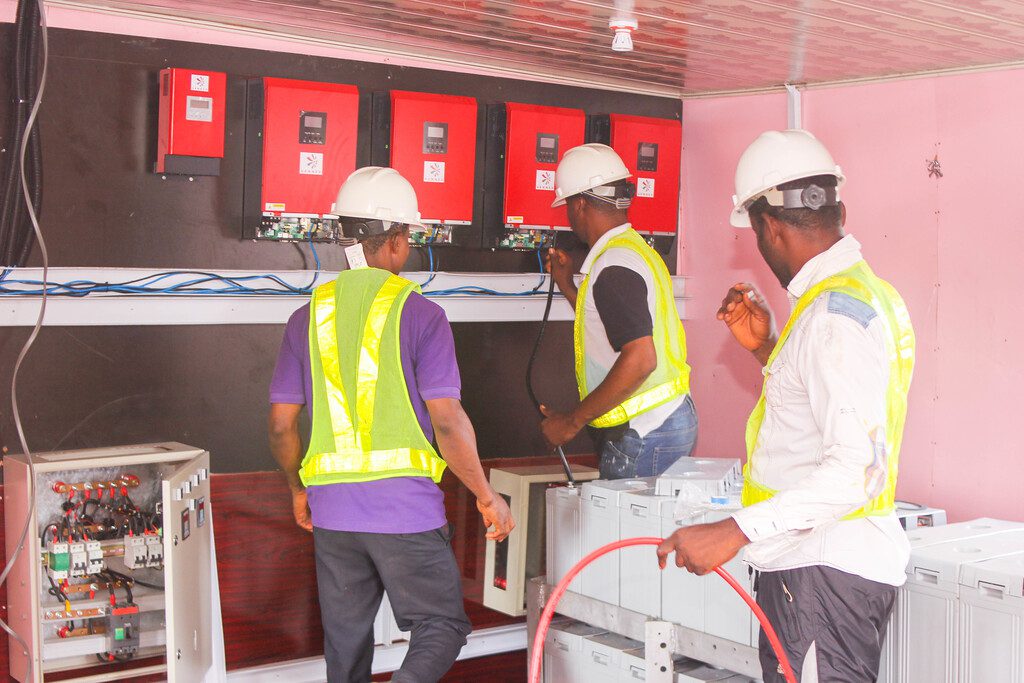
[dt_teaser style=”2″ background=”plain” animation=”zoomIn”][/dt_teaser]
[dt_teaser style=”2″ background=”plain” animation=”zoomIn”][/dt_teaser]
[dt_teaser style=”2″ background=”plain” animation=”zoomIn”][/dt_teaser]
  • Outreach

    PIND’s Access to energy program had an outreach of 199 persons in Q3 2021. These are the 73 participants who attended the two PIND organized events to promote optimization of the solar mini grid interventions, and 126 people from 20 households and 6 businesses, with access to clean energy solutions from the new connections to the existing mini grid at Gbokoda community. Cumulatively in 2021 so far, 134 households and 56 businesses and thus a total of 860 persons, now have access to clean energy because of the operationalization of solar interventions in various communities.

  • Preventing postharvest losses through access to solar refrigeration hubs

    In Q3 2021, PIND carried out a survey of the solar refrigeration interventions in Sangana and Fishtown communities in Bayelsa state. The survey reveals that fish traders are the key actors who have been positively affected by the intervention. The adoption of the technology has had a significant effect on the dynamics of the local fish trading regime with a knock-on effect on the seagoing fishing vessel business (since the traders are the vessel owners). The technology has eliminated an estimated 8kg daily of postharves  losses for the cooperative members. With losses eliminated, these farmers, increased the daily quantity of fish they harvest by an average of 10kg per cooperative member. Also, these traders increased the daily quantity of fish they preserve by 18kg, since the adoption of solar refrigerators.

    With eight days of purchasing or harvesting fish each month, additional income for the 252 members of the cooperatives in Sangana and Fishtown, using the facilities in Bayelsa state from Q1-Q3, 2021 is N329,576,846.76, at an average additional income of N145,316 per trader, each month.

  • The impact of solar mini grids on livelihoods and welfare in the coastal communities

    Results of the outcome assessment of solar mini grids facilitated by PIND suggest that in 2021 alone, the interventions in four coastal communities Gbokoda& Ogheye (both in Delta State) and Molutehin & Gbagira (both in Ondo State) have unlocked a significant amount of capital through savings for coastal businesses and in some cases households. The assessment showed that 85% (221) of the 272 households and businesses which connected to the solar mini grids in these communities experienced cost savings, resulting from reduced energy costs (use of generators in particular). Beneficiary households and businesses in Molutehin and Gbagira communities of Ondo State reportedly saved an average of N11,286 on energy costs each month, while beneficiary households and businesses saved N6,407 each month. The total cost savings for these 221 households and businesses, across the four communities, is N12,326,733, for Q1-Q3, 2021.

  • Optimizing access to energy for businesses and households through the adoption of Productive use equipment

    In Q3, 2021 PIND had a community stakeholders engagement meeting with leaders and members of Kpokugbene community, Warri North LGA, Delta State. Kpokugbene community was nominated by the EGCDF to CNL PGPA as one of two options for a proposed grant funded energy cabin, and PIND’s stakeholder meeting was designed to further engage the stakeholders in view of the planned implementation. Seven women and 17 men representing the leadership and key stakeholder groups within the community participated in the meeting to discuss various aspects of the project such as communal night-time lighting. Additional noted above 26 were recorded on the existing solar mini grid at Gbokoda, which is consistent with the forecast for increase business and household demand for electricity.

  • Increasing women economic power through access to energy goods and services

    PIND’s gender programming in energy also reflects the efforts at mainstreaming access to energy. The various surveys suggest that 60% of the solar refrigeration users are between the ages of 20 – 40 years, while a high percentage of the beneficiaries (78%) are females. Similarly, 45% of the beneficiaries of the community mini grids are women and women headed households. This underscores a conscious programming that deliberately targets the youth and women through participation in local economic development sectors that “leaves no one behind” principle of the SDG.
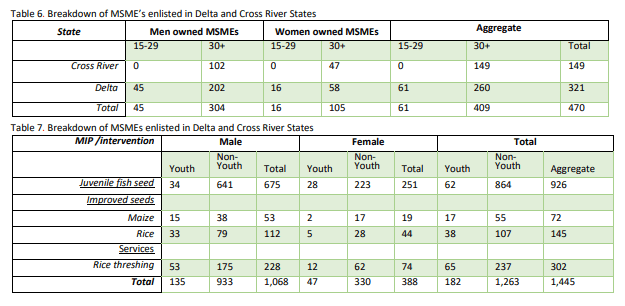
The Agricultural Extension and Advisory Services (AEAS) Activity is jointly-funded by USAID and PIND over five-year period (May 25, 2020 – May 24, 2025). Like PIND, the Activity utilizes a facilitative approach to market development by partnering with micro, small and medium enterprises (MSMEs) and key market actors within the aquaculture, cowpea, maize, rice, and soybean value chains to pilot proven technologies, scale up successful ones, and promote the adoption of improved production practices. It also aims to improve service delivery that will rapidly, effectively, and sustainably provide access to agro-inputs and disseminate extension messaging to at least two million smallholder farmers in Benue, Cross River, Delta, Ebonyi, Kaduna, Kebbi, and Niger states.

The Extension Activity uses Lean production principles and tools to develop a deep understanding of the existing production systems to identify the most promising opportunities (also known as most impactful practices- MIPs) and the most important constraints to improve efficiency and increase return on investment for farmers. The Extension Activity leverages MSMEs as change agents around the identified on-farm opportunities. These MSMEs are strategically placed intermediaries for upstream and downstream movement of inputs and commodities through the market system; and their businesses depend on and can grow with the enhanced competitiveness and profitability of smallholder producers: their core customers.

The MIPs identified were validated in stakeholder workshops with over 60 people in attendance, including USAID, PIND, FMARD, research institutions, international experts, senior personnel from government ministries, departments, and agencies, and key players in the private sector. MIPs were determined based on the costs, number of occurrences for improvement, and the value of suggested alternatives.

PIND and AEAS interventions in the Niger Delta
PIND’s collaboration with the PIND-USAID co-funded AEAS project focuses on interventions in Aquaculture, Maize and Rice in Delta and Cross River States. Between July and September 2021, the Extension Activity continued to train and enlist interested MSMEs for intervention partnerships. A total of 470 MSMEs, as seen in table 6 have been enlisted so far to provide intervention support, through the promotion of MIPs to farmers in Delta and Cross River States. By the end of the report period, 33 MSMEs (1 female-owned) had adapted their business models to reach small holder farmers with innovative solutions and had started deploying MIPs to farmers. These 33 MSMEs facilitated access to improved inputs and services to 1,445 (498 females) aquaculture, rice and maize farmers in the focal states. A summary of farmers reached with various interventions across Delta and Cross River States, is shown below:
[dt_teaser style=”2″ background=”plain” animation=”zoomIn”][/dt_teaser]
Over the years, poor or no access to finance has consistently affected the productivity of smallholder farmers in the Niger Delta. This is due to systemic constraints (existing laws, infrastructural deficit, and knowledge gap), which influence the demand and supply of financial services. In response to these constraints, Sombreiro Kapital was incorporated to facilitate lending to smallholder farmers through the issuance of credit guarantees to partner financial institutions and inputs companies (Commercial banks, Agro-dealers, etc.) to de-risk lending and unlock the flow of funds to farmers.
In 2021, the institution’s target is to facilitate loans worth N450 million to 900 smallholder farmers through risk-sharing with partner commercial banks and agro-dealers. The plan for the year also includes identifying potential loan beneficiaries from the aquaculture, poultry, cocoa, palm oil, and cassava value chains in Delta, Edo, Bayelsa, Imo, and Ondo states. In Q3, the institution facilitated loans worth N75,134,060 to 301 farmers in Edo, Delta, Imo, and Ondo.
Loans to Aquaculture, Cocoa, cassava, and Poultry Farmers
In Q3 2021, SK facilitated loans worth N75,134,060 to 301 smallholder farmers in the aquaculture, cocoa, cassava, and poultry sectors. From the total loans facilitated, Sterling Bank Plc disbursed loans worth N54,817,880 while partner agro-dealers (Hofete farms Ltd and Savee livestock services Ltd) supported farmers with loans worth N20,316,180.
Facilitating innovative financing models to support the growth of farmers in the region
In 2021, SK plans to achieve its targets using guarantee and non-guarantee instruments. Following receipt of the N100 million donated by PIND to SK, the institution can only reach 525 smallholder farmers with loans worth N163, 000,000, based on an average loan amount of N267, 000 per farmer, a 60% risk coverage on loans supported through Sterling Bank Plc and a 100% risk coverage on loans supported by partner Agro- dealers. Therefore, to achieve the target for the year, the institution plans to utilize non-guarantee instruments to facilitate 375 additional loans worth N275,000,000 through the dissemination of the SK’s business model to organizations with intersecting objectives to inform collaboration. Following the dissemination of SK’s business model to Partners for Development (the implementing partner of a US-funded access-to-finance intervention), a decision was reached by Partners for Development to subsequently revise the initial program design of the US-funded intervention to reflect SK's business model. Currently, 600 smallholder farmers in Delta state are being trained by Mr. Alfred Ukane (an SK partner) to access loans worth N300, 000,000 through LAPO microfinance bank. It is expected that the farmers will start receiving the loans in Q4, 2021.
Download Report - Learn more
Onboarding additional participating financial partners for improved sustainability
Part of the institution's sustainability strategy is to onboard additional commercial banks as lending partners to promote business continuity should Sombreiro Kapital's current lending partner (Sterling Bank) decide to reduce its funding appetite for agricultural businesses . This informed the engagement with and dissemination of partnership proposals to five licensed commercial banks in Nigeria: Guaranty Trust Bank, Fidelity Bank Plc, First City Monument Bank, Wema Bank Plc, and United Bank for Africa. At the end of the engagement sessions, three of the five commercial banks (Guaranty Trust Bank, Fidelity Bank, and United Bank for Africa) expressed interest in collaborating with the institution and are currently evaluating the institution's partnership requests to inform future collaboration.
In Q4, 2021, the institution intends to fully onboard the three financial institutions as lending partners to promote business continuity.
Download Report - Learn more

PEACEBUILDING | IN THE NIGER DELTA

This section highlights key achievements of the Peace Building program for Q3, 2021.

Since 2012 PIND has embarked on extensive interventions in conflict prevention, conflict management and peacebuilding in the region. PIND’s role in and its support for grassroots-led conflict resolution initiatives are examples of both the scope and the limits of long-term peacebuilding projects. Recognizing the need for an integrated and comprehensive approach to tackling the complex causes and drivers of conflict in the region, PIND adopted a plan of action that aimed to keep the level of violence as low as possible, particularly in key communities of interest, while also building the social infrastructure and social capital of peace actors across the region for long term sustainable peace. This ushered in a paradigm shift reflecting a different way of working on problems of militancy, election violence, gang/cult violence, communal violence, and the cross-cutting issue of Violence Affecting Women and Girls (VAWG)20.In the 2020-2024 strategic cycle, PIND’s objective is to positively affect up to 10% of the Niger Delta population through its peacebuilding interventions by enabling active engagement of 5,000 peace actors in conflict mitigation and reduction.

In Q3, the Peacebuilding Program carried out a series of targeted peace building and conflict mitigation interventions to mitigate the levels of conflict risk and lethal violence in the Niger Delta. As part of these targeted interventions, the Program trained 129 community-based field monitors to report incidents of conflict risk and violence to the integrated Early Warning and Early Response (EWER) platform to aid proactive responses. The program also produced weekly conflict briefs and a quarterly conflict report to update stakeholders and facilitate interventions to mitigate prevailing and emerging conflict issues in the region. These interventions by PIND’s Peacebuilding Program, together with interventions by similar and complementary programs, resulted in a significant reduction in the level of violence and conflict fatalities during the quarter compared to Q2.


According to data from the Peace Map (www.p4p- nigerdelta.org/peace-map ), there was a decrease in violent criminality from 151 incidents and 366 fatalities in Q2, to 60 incidents and 121 fatalities in Q3 (60% and 67% reduction in violent criminality and fatalities, respectively) across the Niger Delta states. PIND produced a total of 9 weekly updates in Q3 that provided a data-driven analysis of the dynamics of violent criminality and solicited the intervention of relevant stakeholders during the period.


Similarly, there was a reduction in the level of violence and conflict fatalities caused by ethno- national separatist agitation during the quarter. Following a resurgence of violent separatist agitation in Q2, PIND and the P4P network intensified efforts towards updating stakeholders with weekly situation reports and data analysis, and mobilized peace actors through the P4P network for targeted conflict mitigation and peace messaging in Abia and Imo States. These contributed to the reduction in violence and conflict fatalities related to the separatist agitation in the region. For instance, there was a decrease in violent agitation from 25 incidents and 86 fatalities in Q2, to 13 incidents and 26 fatalities in Q3. At the community level, there was also a decrease in inter- and intra-communal conflicts over land and boundary disputes from 13 incidents and 49 fatalities in Q2 to 8 incidents and 8 fatalities respectively in Q3.

[dt_fancy_separator separator_color=”accent” line_thickness=”10″ el_width=”120px”]
Key Achievements of the Peace Building Program for Quarter 3, 2021
In Q3, the Peacebuilding Program carried out a series of targeted peace building and conflict mitigation interventions to mitigate the levels of conflict risk and lethal violence in the Niger Delta. As part of these targeted interventions, the Program trained 129 community-based field monitors to report incidents of conflict risk and violence to the integrated Early Warning and Early Response (EWER) platform to aid proactive responses. The program also produced weekly conflict briefs and a quarterly conflict report to update stakeholders and facilitate interventions to mitigate prevailing and emerging conflict issues in the region. These interventions by PIND’s Peacebuilding Program, together with interventions by similar and complementary programs, resulted in a significant reduction in the level of violence and conflict fatalities during the quarter compared to Q2.

There was a decrease in violent agitation from 25 incidents and 86 fatalities in Q2, to 13 incidents and 26 fatalities in Q3. At the community level, there was also a decrease in inter- and intra-communal conflicts over land and boundary disputes from 13 incidents and 49 fatalities in Q2 to 8 incidents and 8 fatalities respectively in Q3.

An analysis of the utilization of PIND’s data products revealed that 332 stakeholders utilized PIND’s peacebuilding data and analysis during Q3 2021. Many organizations in Nigeria are gathering data on conflict drivers and fatalities. Each focuses on different issues, locations, and periods. Integrating all these data sources on a single platform allows for cross-validation and triangulation to better identify hotspots and trends so that peace agents can target their efforts in addressing emerging conflict. Data sources currently integrated on the Peace Map include West Africa Network for Peacebuilding (WANEP), Fund for Peace’s UNLocK, Transition Monitoring Group’s (TMG) Quick Count of the Nigerian Election Early Warning System (NEEWS2015), Nigeria Stability and Reconciliation Program (NSRP), Council of Foreign Relations, Nigeria Watch, Armed Conflict Location and Event Data (ACLED), and Community Initiative for Enhanced Peace and Development (CIEPD).

Stimulating Peace Actors to Tackle Conflict and Promote Peace

In Q3 2021, 97 peace actors whose capacities had been strengthened through PIND/P4P facilitated training21 sessions and workshops (Figure 8), applied the skills they had acquired to promote peace and tackle conflict in their communities. A significant number of peace actors reportedly applied their skills by providing further training to others; engaging in conflict mitigation efforts in their communities; reporting conflict issues to the PIND/SMS platform; engaging in peacebuilding awareness campaigns against electoral violence and analyzing conflict trends and patterns. Here is an example of the way peace actors previously trained have applied skills gained to promote peace and tackle conflict in Q3: Bridget Anyafulu, in Delta State, participated in a conflict mitigation training in 2018, during which trainees formed a network for sharing ideas on conflict mitigation. She stepped down her training to colleagues in her organization and members of her community, as advised during the training. Because of these step-down trainings, she has been called upon to intervene in various issues in her community. In July 2021, she was contacted by her community to help resolve a human trafficking issue. To address this, she spoke with her local government chairman, who in turn reported the issue to the DPO leading to the apprehension of the perpetrator. She said that people in her community have told her they feel safe because that first there is someone to call on to help resolve issues and that they are assured that if they call on her, she will do all she can to ensure their issues are resolved. Also, 181 peace actors constructively resolved emerging conflicts in various communities in the Niger Delta, utilizing 35 ‘quality actions’22 to resolve these conflicts within the reporting period.

Download Report to read some interventions carried out by various peace actors towards creating a long-term peaceful environment, during the quarter.

Imo State P4P Chapter Restores Peace in Agwa Clan

The destruction of property and loss of lives in Ubah, Obudi, Mgbala, Mbano, Umuefeke and Uworiecommunities, which make up the Agwa Clan, Oguta Local Government Area, in Imo State, led to the disruption of socio-political and economic activities in the communities from 2020 to early 2021. Schools, banks, and markets were closed, and farming activities affected. Findings of the P4P intervenors showed that the conflict was caused by a long-standing leadership tussle between traditional rulers, regarding who should represent the six autonomous communities during engagements with Sterling Oil Exploration& Energy Production Company Ltd. (SEEPCO), the operating oil company in Agwa clan. Other causes identified were youth restiveness, boundary disputes, and cult supremacy tussles and some traditional rulers engaging various cult groups as community vigilante security for their personal interest.


To mitigate this multidimensional conflict and ensure peace returned to Agwa clan, the Imo State chapter of the P4P, in 2020, through a project tagged “Cult Violence, Ezeship Tussle and Intra/Inter Communal Violent Conflict”, began deploying a joint problem-solving conflict management mechanism. The P4P intervenors held a series of meetings with traditional rulers in the six autonomous communities, cult groups (Ganjaba Boys, Icelanders, Deygbam, Ward 4, Urashi, Boko Haram and Middle Belt Boys), youths leaders, political leaders, public office holders, women leaders, officials of the Sterling Global Oil Company, community vigilante Groups, religious leaders, SEEPLAT Contractors, government security agencies, Niger Delta Development Commission (NDDC) and Imo State Oil Producing Areas Development Commission (ISOPADEC). These efforts resulted in the signing of a peace agreement by actors/ key stakeholders in all the communities in Agwa Clan.

In August 2021, in demonstration of the relative peace in the Agwa clan, the Agwa subchapter of the P4P in collaboration with the Imo State Chapter of the P4P, organized a one-day community stakeholders’ dialogue on “Agwa Peace Process and Reintegration Project”. Elders from these communities attributed the newfound peace in Agwa clan to P4P and thanked them for the role they played in mitigating the conflict. With relative peace restored, people have returned to their homes and socio-political and economic activities have resumed in the six communities.

The Warri Multi stakeholder platform (MSP) - Fostering Peaceful Coexistence
[dt_fancy_separator separator_color=”accent” line_thickness=”10″ el_width=”120px”]
In 2020, PIND funded two organizations - Development Initiative for Community Impact (DICI), and Center for Peace and Environmental Justice (CEPEJ) to implement projects aimed at mitigating conflict drivers in two coastal communities in Warri North LGA of Delta State for a period of nine months. The projects, which closed out in Q3, 2021, had the objectives of strengthening local capacities for conflict transformation and sustainable conflict resolution; reducing community leadership conflicts and establishing community dispute resolution structures.
[dt_vc_list]

Development Initiative for Community Impact (DICI) Intervention

  • The “Promoting Social Cohesion through mitigating of Conflict Drivers in the Coastal Community of Aja- Amita” project was implemented to reduce community leadership conflict. Key stakeholders such as the Trust Management Committee executive, youth groups, community-based organizations and the Itsekiri Regional Development Council were engaged. Other key activities implemented were training workshops on conflict transformation and resolution, EWER, conflict sensitivity and community peacebuilding; dialogue sessions and advocacy visits to relevant stakeholders.


Women now part of Aja-Amita Decision Making Body

  • In many African societies, women are often seen but not heard,. Nigeria remains a largely patriarchal society, where structural and gender inequalities ensure that men dominate the private and public spheres and hold positions of power. Women are in many instances relegated to the background with diminished agency and decision-making power in the economic, reproductive and social arenas (ICRW, 2020).Aja-Amita community, in Warri North of Delta State, is not left out in women exclusion in decision making bodies. This was revealed when Development Initiative for Community Impact (DICI) began implementing a conflict mitigation intervention in the coastal community using PIND’s small grant support. Findings show that women were side-lined and hushed whenever they sought to ask for inclusion in decision making structures.Through advocacy, DICI requested the elders to nominate women to be part of the Aja-Amita Inclusive Peace Committee (AIPC). The elders granted the request, and seven women were nominated as members of the 15-person AIPC. The women are elated and are now actively contributing to decision making concerning peacebuilding and community development issues.


Center for Peace and Environmental Justice Intervention

  • Aside from building the capacity of the Tsekelewu youths on peace building and conflict management, the “Strengthen Tsekelewu Community Leadership System to Support Conflict Mitigation” project’s specific objective was to reduce leadership conflicts and establish peaceful transition of power within the Tsekelewu youth groups. The youth leadership conflict began in 2017 which led to the community being split into factions. Youth groups, women associations, community women, elders, Community Development Committees (CDCs), Community-Based Organizations (CBOs), national and community leaders of thought were engaged in town hall meetings, dialogue and roundtable discussion sessions, sensitization events as well as training activities.

[/dt_vc_list]
[dt_fancy_separator separator_color=”accent” line_thickness=”10″ el_width=”120px”]
Key Achievements for All Initiatives Implemented Under the General Enabling Program
PIND’s interventions fall under two distinct but interrelated program areas: (1) an Economic Development program focused on generating opportunities for pro-poor market development and employment generation; and (2) a Peace Building program that strengthens conflict resolution mechanisms for enabling integrated peace and economic growth.

Additional initiatives designed to support, enable, measure, and communicate the results and achievements of the 2 core pillars of Economic Development and Peace Building include:

A capacity building that will build the service delivery and engagement capacity of business membership organizations, civil society organizations and communities.

Advocacy that seeks to influence policies, practices and programs underpinned by in-depth analyses and understanding of systemic constraints to growth in the Niger Delta region.

A robust communications and outreach effort that enhances PIND’s reputation through clear and consistent messaging via multiple channels, of its unique selling points, transformative approaches, impacts and learning.

PIND’s General Enabling Program contributes to the following global Sustainable Development Goals:

[dt_teaser style=”2″ image_hovers=”false” background=”plain” animation=”zoomIn”][/dt_teaser]

Capacity Building

In Q3, the capacity building program initiated some engagements for a capacity building consultant to provide support to CAPABLE organizations, for its support to the market systems development projects. Also, under its RDC capacity building, PIND developed the capacities of the various Regional Development Councils (RDC) to implement selected recommendations from the Organizational Capacity Assessment (OCA), conducted on them in 2018. Three training programs covering video production and photography, Gender equality and social inclusion, and Sustainable project management in line with the OCA recommendations were delivered at various times this quarter to the various committees and leadership of the RDCs. The program also continued to provide coordination and secretarial support to the PIND and PGPA teams for their collaborative activities and hosted the third collaborative team meeting for 2021, in August 2021.

Advocacy

Facilitating the development of well-structured and articulated State long-term development plans and influencing policies are examples of ways to drive equitable, inclusive, and sustainable economic growth.

The principal focus of the advocacy project in 2021 is to promote, inform and influence policies and approaches that foster productivity increases and inclusive, equitable economic opportunities for businesses, State Governments, and Federal institutions and agencies operating in the Niger Delta; thereby contributing to the achievement of SDG 8.

Specifically, Advocacy will continue to focus on three key areas of work as contained in PIND’s Strategic plan (2020-2024):
To influence spending and funding from government, donors, and the private sector organizations on new projects in the Niger Delta; Support the Economic Development program in addressing emerging advocacy issues of access to arable land for smallholder farmers and addressing constraints on small businesses brought about by multi-taxation and illegal levies; and Provide support to the peacebuilding efforts to institutionalize strategies that will promote security and conflict prevention across the Niger Delta.

In Q3, 2021, the study/assessment of multiple taxation and illegal levies in the Niger Delta continued with Key Informant Interviews (KIIs) and Focus Group Discussions (FGDs) held with stakeholders in Abia, Delta, and Rivers State. Initial study findings reveal that many businesses in the region are struggling with illegal levies and multiplicity of legal taxes, which have hampered their productivity and growth.

In addition, PIND held meetings with high-level government stakeholders in Delta, Edo, and Ondo States in a bid to establish committees that will help to articulate policies on access to agricultural land for smallholder farmers in the three pilot States. It is expected that these committees will move the recommendations from the high-level forum organized in Asaba in quarter one, forward and ensure that state governments develop policies that will improve access to land for agriculture in the respective States.

Similarly, PIND held extensive meetings with the Ministry of Niger Delta Affairs (MNDA), culminating in an agreement on the terms of collaboration, as well as timelines for the collaborative activities, between the Ministry and PIND for setting up a Peace and Security Architecture for the Niger Delta region.

Communications

PIND’s communication activities are geared towards upscaling the visibility of the Foundation by getting people to know about PIND, talk about PIND, and engage with PIND, to strengthen its reputation and attract target stakeholders to support PIND’s cause, partner with PIND, fund PIND’s programs and replicate PIND’s proven models.

PIND continued its social responsibility of reporting incidents of COVID-19 within the region. The aim is to provide information on regional incidents of COVID-19, state hotlines, and other relevant resources gathered from global and national health authorities such as the Nigerian Centre for Disease Control (NCDC) via PIND Niger Delta COVID-19 update webpage and PIND’s social media platforms.

PIND shared 21 new contents about PIND and its partners in Q3, 2021. Some of the knowledge products, organizational updates, and social issues actively promoted during the quarter include: Niger Delta Weekly Conflict Updates; Georgetown Case Study on Private Sector Engagement and Social Investment in the Niger Delta, that spotlighted USAID and PIND’s partnership for the MARKETS II project; the PIND Q2 2021 Progress Report; Niger Delta Quarterly Conflict Tracker – 2021 Q2, Improving Production of Quality Fish Seeds, 30- Year Development Plan – A Roadmap in Taking Policy Decisions, and other original or repurposed website content.

These products earned 2,131 downloads from the PIND website. PIND’s website recorded 11,151 new visitors and 19,130 repeat visitors, resulting in 29,956 views of posted content that increased awareness of PIND.

0
Persons Gained Awareness
0
New Visitors
0
Repeat Visitors
0
Downloads

Gender Equality and Social Inclusion

PIND has a target of enabling at least 60,000 women (40% of the overall target) to increase their incomes, thereby positioning women’s economic empowerment at the core of its economic development implementation activities.

In Q3 2021, 16,509 males and 9,723 females (37% of the total beneficiaries) benefitted from the various economic development interventions in the Niger Delta in, aquaculture, poultry, cassava, cocoa, and palm oil value chains, as well as the micro, small and medium enterprises (MSME) development, and linkages, access to energy and capacity building events; targeted at improving their knowledge and practices, with an aim to increase their incomes and improve their livelihoods. Similarly, 926 males and 585 females (39% of peace actors) participated in various peacebuilding interventions including: conflict mitigation, forums on peace and stability, skills enhancements, and mentorships, for the advancement of sustainable peace in the region. Nevertheless, PIND will intensify efforts to ensure the inclusion of persons living with disabilities (PWD) in interventions in the next quarter.

Related Posts

PIND 2021 Q4 Progress Report

Niger Delta Quarterly Conflict Tracker – 2021 Q3

PIND 2021 Q2 Progress Report

Stay Connected

Get the latest updates on our projects, events and opportunities delivered straight to your inbox.

Weekly newsletter only. No spam, unsubscribe at any time. Read our privacy policy