

Effective community development requires more than investments in individual projects. It requires partnerships that respond to local needs, strengthen community participation, and establish systems that can sustain results over time. In Edo State, the Foundation for Partnership Initiatives in the Niger Delta (PIND) and Okomu Oil Palm Company Plc. (OOPC) are advancing this integrated approach by connecting peacebuilding with economic development in communities neighbouring OOPC’s operations.
Formalised through a three-year partnership agreement, the collaboration brings together private-sector commitment, development expertise and community participation to address priorities identified through a comprehensive community needs assessment. The interventions span peacebuilding, agricultural development, youth employment, access to finance and renewable energy, recognising the links between peaceful communities, economic opportunity and sustainable development.
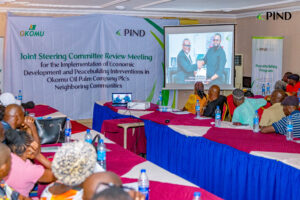
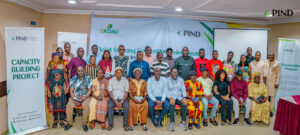
To assess progress and guide the next phase of implementation, PIND and OOPC convened their 2026 Joint Steering Committee (JSC) Review Meeting in Benin City, Edo State, on October 12–13, bringing together representatives from PIND, OOPC and community representatives from Okomu Oil Palm PLC’s neighbouring communities.

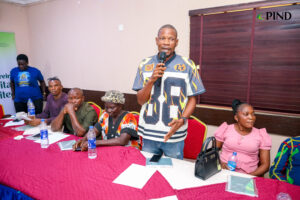
Strengthening Community Ownership and Accountability
At the centre of the partnership is the Joint Steering Committee, established in January 2026 to provide strategic oversight, support coordination, and strengthen accountability across the interventions. Comprising community representatives alongside PIND and OOPC representatives, the committee provides a platform for stakeholders to review implementation, raise concerns, and contribute to decisions affecting their communities.
The review meeting provided an opportunity to examine how the interventions are responding to identified needs, consider implementation challenges and incorporate feedback from community representatives. Discussions also emphasised the importance of clear representation, consistent communication with communities and stronger accountability within the committee.
These considerations are essential to an integrated development approach, ensuring that community members remain active participants in shaping interventions across different sectors. By creating space for joint problem-solving and local feedback, the partnership can better align implementation with community priorities and strengthen the local structures needed to sustain progress.

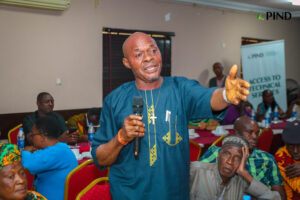
Using Evidence to Shape the Next Phase
The review also provided an opportunity to reflect on emerging results and lessons from implementation. Across the intervention areas, progress includes the expansion of community-based peacebuilding structures, agricultural training for farmers, skills development for young people, improved access to finance, and the commissioning of the Gbelebu solar mini-grid in August 2026.
Together, these interventions demonstrate how peacebuilding and economic development can reinforce one another. Stronger community peace structures can help create conditions for economic activity, while improved access to skills, finance, agricultural opportunities and reliable energy can expand livelihoods and support local economic growth.
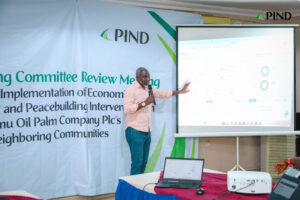
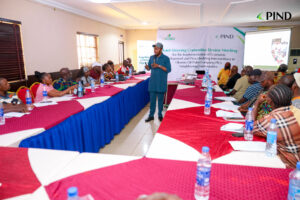
Discussions therefore focused not only on progress to date but also on what is needed to translate programme activities into lasting benefits. Priorities include strengthening farmers’ access to inputs and markets, aligning youth training with local opportunities, improving the effectiveness of community peacebuilding structures and ensuring that future energy investments respond to community needs and their potential for productive use.
The partners also agreed on priorities for 2027, informed by implementation experience, stakeholder feedback and sustainability considerations. These will guide the next phase of work, with continued attention to local ownership, effective coordination and the practical conditions required for interventions to deliver lasting value.
Through this partnership, PIND and OOPC are connecting community priorities with coordinated peacebuilding and economic development. The review reinforces the importance of learning from implementation, strengthening local participation, and using evidence to guide decisions, helping ensure that interventions work together to support more peaceful, resilient, and economically active communities in Edo State.