

Climate change is increasingly affecting more than the environment across the Niger Delta. For communities whose livelihoods depend on farming, fishing, and other natural resources, flooding, coastal erosion, irregular rainfall, and environmental degradation are disrupting incomes, increasing vulnerability, and placing greater pressure on already limited resources.
As these pressures intensify, they can deepen existing grievances, increase competition over resources, and heighten risks to community stability and human security.
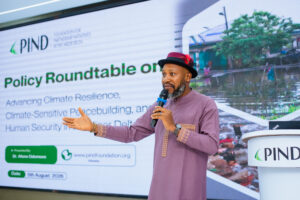
Recognizing these interconnected challenges, the Foundation for Partnership Initiatives in the Niger Delta (PIND) convened a high-level policy roundtable on Advancing Climate Resilience, Climate-Sensitive Peacebuilding, and Human Security in the Niger Delta on August 5, 2026, in Port Harcourt, Rivers State.
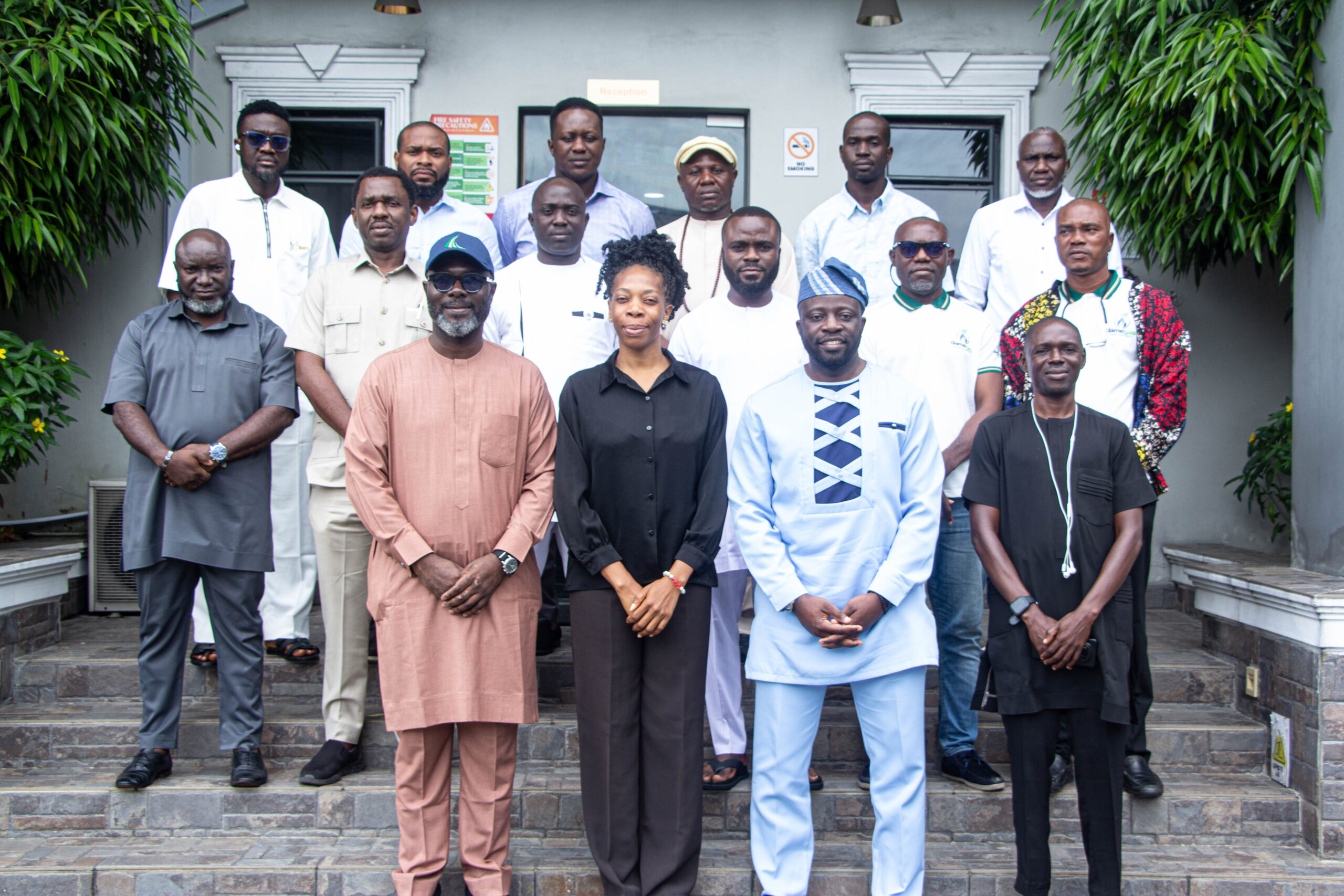
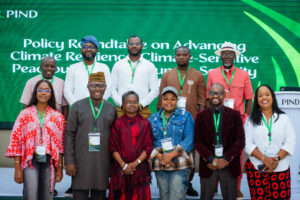
The roundtable brought together government institutions, development partners, civil society organizations, researchers, environmental and climate experts, private sector actors, peacebuilding practitioners, and representatives of climate-vulnerable communities to examine emerging climate-security risks and identify practical pathways for action.
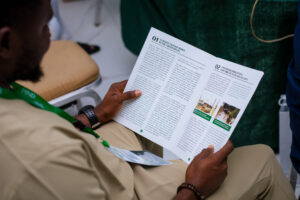
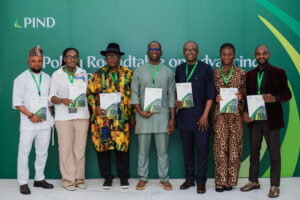
The engagement also marked the launch of PIND’s Policy Brief on Climate Change and Human Security in the Niger Delta, which examines the links between climate-related stressors, livelihood insecurity, conflict dynamics, and human security across the region.

From Climate Change to a Human Security Challenge
Evidence presented at the roundtable highlighted how flooding, coastal erosion, irregular rainfall, and environmental degradation are reducing agricultural and fishing productivity and disrupting livelihoods across vulnerable communities. These impacts extend beyond immediate economic losses. Reduced access to productive land and water can increase competition over resources, contribute to displacement, deepen household vulnerability, and aggravate existing community grievances.
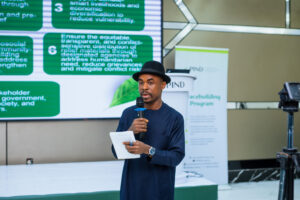
Delivering the welcome remarks on behalf of PIND’s Executive Director, Mr. Sam Ogbemi Daibo, PIND’s Peacebuilding Program Manager, Dr. David Udofia, emphasized the need to view climate change through a broader peace and security lens. He noted that when farms are flooded, fishing waters are degraded, mangroves are destroyed, and families lose their sources of income, the consequences extend beyond the environment. He called for climate resilience to be integrated into peacebuilding and development planning.
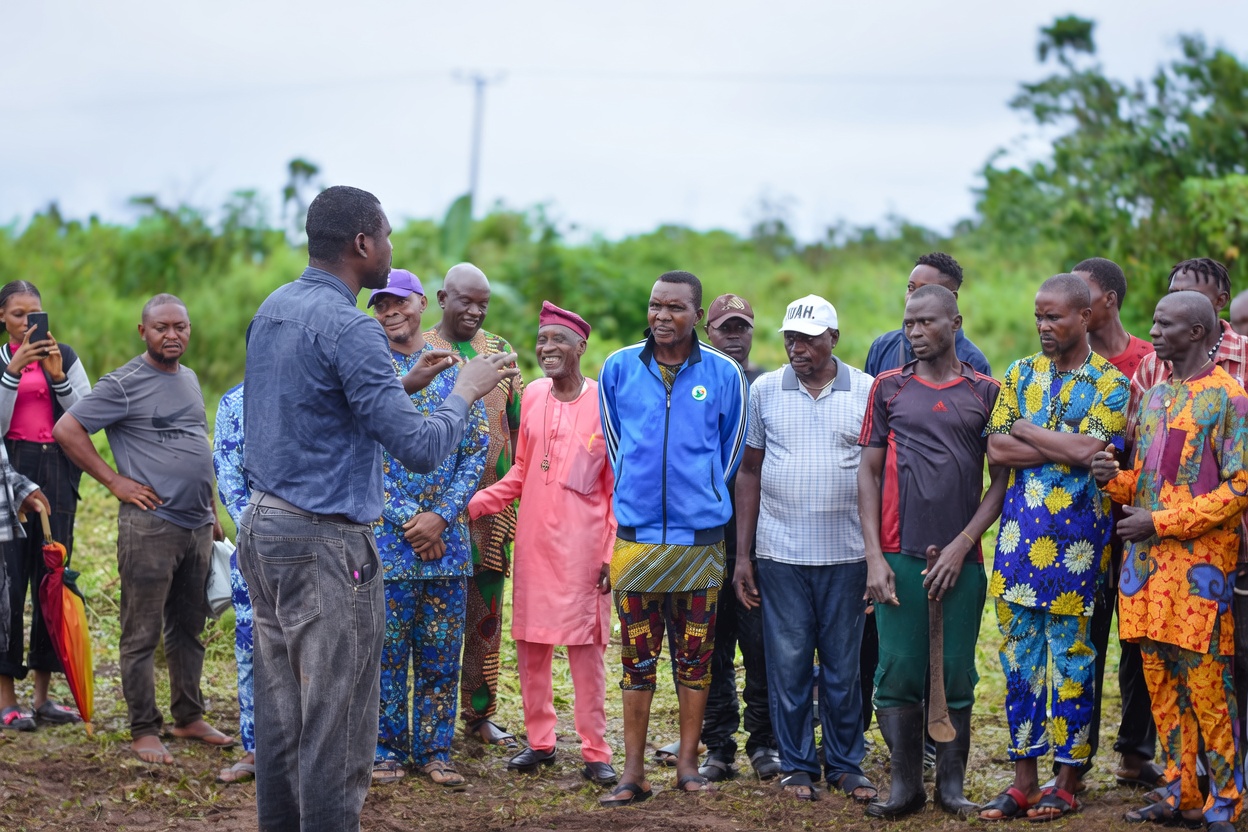
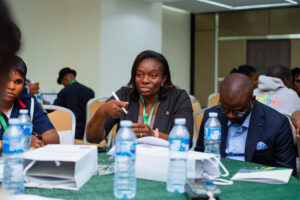
The community perspective further demonstrated the real-life implications of these challenges. Mr. Ebijimi Olugbenga of Bijimi Community in Ilaje Local Government Area described the growing difficulty households face in sustaining farming and fishing activities due to flooding and environmental degradation.
Turning Evidence into Policy and Action
The roundtable builds on PIND’s broader work to understand and anticipate emerging climate-related risks in the Niger Delta.
It follows the 2025 Niger Delta Crisis Scenario Planning Workshop on Resilience Strategies, convened by PIND in collaboration with the Office for Strategic Preparedness and Resilience (OSPRE), The Fund for Peace (FFP), and Deutsche Gesellschaft für Internationale Zusammenarbeit (GIZ) GmbH under the ECOWAS Peace, Security and Governance (EPSG) Project.
The scenario planning process examined how climate, environmental, economic, governance, and security pressures could interact to affect the region’s future. PIND subsequently conducted desk and field research on climate change and human security, followed by stakeholder consultations to validate and refine the findings.
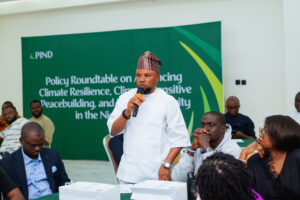
Participants examined approaches to strengthening climate adaptation, protecting climate-sensitive livelihoods, improving environmental governance, reducing resource-based tensions, and integrating climate-security considerations into development planning and peacebuilding.
Chief Amiefamonyo Braid Fredrick Ongiri, Director of Relief and Rehabilitation at the Bayelsa State Emergency Management Agency (BYSEMA), highlighted the importance of stronger collaboration between government institutions and other stakeholders in responding to the scale of the challenge.
Connecting Climate Data to Early Action
A key feature of the roundtable was the demonstration of PIND’s newly deployed Climate Data Filter on the Niger Delta Peace Map. The tool integrates climate-related information into conflict analysis and early-warning processes, providing stakeholders with a clearer understanding of how environmental pressures may interact with existing vulnerabilities and conflict risks.
By connecting climate information with conflict data, the Climate Data Filter can support policymakers and practitioners in identifying emerging risks, strengthening anticipatory action, and making more timely, evidence-based decisions.
The tool complements PIND’s Early Warning and Early Response (EWER) system and creates opportunities for stronger collaboration among climate, environmental, resilience, and peacebuilding experts in responding to emerging risks.

Strengthening Collaboration for Resilience
Beyond identifying climate-security risks, the roundtable provided an opportunity to advance recommendations from the 2025 scenario-planning process and to strengthen collaboration among government institutions, communities, development partners, private-sector actors, researchers, and civil society organizations.
The priorities emerging from the engagement were captured in a communiqué that documented stakeholder recommendations and agreed-upon action points to guide continued advocacy, policy engagement, programming, and collaboration.
The Policy Brief on Climate Change and Human Security in the Niger Delta provides the evidence and recommendations that underpin the discussion and is available to stakeholders seeking deeper insight into the region’s emerging climate-security challenges.
As climate pressures continue to reshape livelihoods and community stability across the Niger Delta, the roundtable reinforced a clear message: building climate resilience is also an investment in peace and human security.
Through its research, policy engagement, early-warning systems, and multi-stakeholder partnerships, PIND continues to support approaches that connect climate resilience with peacebuilding and sustainable development across the Niger Delta.
For a detailed overview of the discussions, recommendations, and agreed priorities from the roundtable, read the full Communiqué below.
 Loading...

 Reload document
  Open in new tab