

PIND 2021 Q4 PROGRESS REPORT
October – December 2021
This report highlights the achievements of PIND’s program interventions in the Niger Delta from October – December 2021 (Quarter 4 of 2021), and for 2021 cumulatively. It also provides relevant information about program management, lessons learned, and plans for the next quarter. The report demonstrates how PIND is driving change to ensure broad-based economic growth in the Niger Delta.
PIND’s activities are designed to promote and sustain a culture of learning and adaptation, to build a process where evidence plays a significant role in determining policy direction and interventions in economic development, peace building, advocacy, and capacity building of both government institutions and civil society in the Niger Delta.

SUMMARY OF PROGRESS
Economic Development
PIND incentivized MSMEs and participating farmers to invest ₦1.88 billion to implement good agricultural practices, technological innovations, purchase inputs and other capital expenditures. The total funds leveraged in 2021 by these actors is ₦10.83 billion (₦7.24 billion – Equity and ₦3.59 billion – debt).
Market Systems Development
During the quarter, 11,258 farmers and agricultural entrepreneurs (37% women) were reached with information and knowledge on best practices and efficient technologies in the crop and non-crops sectors, with a total outreach of 67,213 farmers and agricultural entrepreneurs in 2021. These farmers earned an estimated ₦16.42 billion in additional income and enabled the creation of 10,471 full time equivalent jobs in 2021.
Access to Energy
PIND championed community-centered initiatives including the environmentally-friendly solar energy mini grids and solar–powered freezers. In 2021 a total of 2,070 people from 285 households and 360 businesses had access to clean energy because of the operationalization of solar interventions in various communities.
Youth Employment Program (YEP)
The Youth Employment Pathways program in Delta State (DYEP) focused on enhancing the employability of participants or boosting their capacity for entrepreneurship across four intervention sectors: ICT, building construction, agriculture and services. 586 youth participants were trained in technical skills in 17 vocations within the four sectors.
Sombriero Kapital
PIND’s special purpose vehicle, Sombreiro Kapital, was incorporated to facilitate lending to smallholder farmers through the issuance of credit guarantees to partner financial institutions and inputs companies (commercial banks, agro-dealers, etc.) to de-risk lending and unlock the flow of funds to farmers. In 2021, cumulatively, ₦227 million worth of loans were disbursed to 742 farmers.
Peacebuilding
In Q4, the peacebuilding program continued targeted peace building and conflict mitigation interventions to lessen the levels of conflict risk and lethal violence in the Niger Delta. As part of these interventions, 80 community-based field monitors were trained to report incidents of conflict risk and violence on the integrated Early Warning and Early Response (EWER) platform to aid proactive responses. PIND identified and disseminated 16 conflict issues to 26 members of the RDC Peacebuilding Committee in Delta and Ondo States for situational awareness and preventive response. 12 weekly conflict reports were produced including 11 weekly conflict briefs and one quarterly conflict tracker to update stakeholders and facilitate targeted interventions to mitigate emerging conflict issues in the region.
Communications
By amplifying PIND’s communications efforts during the fourth quarter of the year, 9,157,939 people (18,549,494, so far in 2021) gained new or increased awareness about PIND, through its platforms: newsletters, social media, website, email inquiries, forums and traditional mainstream media.
Advocacy
In Q4, 2021, PIND worked with State Ministries of Agriculture and Natural Resources to establish Policy Drafting Committees for the access to arable land initiative in Edo and Ondo States.
Capacity Building
As part of efforts to strengthen institutions that support the Chevron GMoU process, PIND continued the implementation of the recommendations from the 2018 Organizational Capacity Assessment (OCA) on the Regional Development Committees (RDCs) to effectively support these institutions.
Gender Empowerment & Social Inclusion (GESI)
In Q4 2021, 8,094 males and 4,454 females (37% of the total beneficiaries) benefitted from our various economic development interventions in the Niger Delta. Also five people with disabilities enrolled in DYEP. Similarly, 456 males and 211 females (32% of the peace actors) participated in various peacebuilding interventions.
ECONOMIC DEVELOPMENT
-
As a result, 10,082 new farmers and enterprises were reached directly with information and knowledge on best practices and efficient technologies. In addition, to the direct outreach, a total of 1,176 indirect cassava farmers copied from the ‘direct’ participating farmers at a copying ratio of 1:1 from 80% of the direct farmers, making the total farmers reached 11,258. This result represents a 113% performance against the quarter’s target of 9,967. It also makes the total outreach for the year 67,213 (direct: 56,772; indirect: 10,441) representing 111% of the 60,800 targeted for the year.
-
9,104 farmers and enterprises out of the 11,258 reached during the quarter, adopted the new solutions promoted by PIND, leading to increased productivity and additional N2.099 billion in income, and the creation of 1,737 jobs. The net funds leveraged by the farmers/MSMEs under the MSD project for Q4, 2021 was ₦1.88 billion.
-
In addition, the analysis of copying farmers showed that the 10,441 farmers that copied the improved practices from Cassava farmers directly reached by PIND’s intervention partners during the year, recorded increased incomes of ₦1.8 billion.
- Consequently, the total number of farmers with net additional income for the year is 45,433, which is a 103% performance against the 43, 938 target for 2021. It also brings the total additional income for the year to ₦16.42 billion, a 147% performance against the ₦11.15 billion target for 2021.
- The results mirror trends from previous years and further validate the effectiveness of the strategies put in place by PIND to leverage the network of partners strengthened over the past nine years, to significantly expand outreach to farmers in the current year and over the 2020 – 2024 strategic period.
[/dt_vc_list]
KEY ACHIEVEMENTS: AQUACULTURE
PIND’s interventions in the aquaculture sector focus on improving the efficiency and productivity of fish farmers and processors, through improved knowledge of best fish farming practices, access to improved processing technology, as well as access to quality input, market, and finance for farmers. The sector’s activities are driven by aquaculture service providers working with input companies, fabricators, and other market actors. In 2021, the plan was for the aquaculture interventions to reach an additional 5,000 fish farmers and processors through the promotion of improved technology in the coastal communities, adoption of improved practices amongst fish farmers in the region and facilitating access to finance for farmers and processors in the coastal communities of the Niger Delta.
In the quarter under review, PIND deepened its work with the network of aquaculture service providers to further create awareness on the use of quality inputs and to build the capacity of fish farmers and processors, to access funds for equipment and input purchase. PIND also continued its support to selected hatchery operators to produce and promote quality fish seeds for farmers, in addition to overseeing and tracking the expansion of the training on good pond management and business practices to more farmers and processors, through service providers and input companies in the region.
Fish Farmers and Processors Reached
1,620 additional aquaculture farmers and fish processors were reached directly with information and knowledge on best practices and efficient smoking technologies by the end of the quarter and cumulatively 5,294 farmers were reached in 2021.[dt_button link=”https://pindfoundation.org/download/63939/” target_blank=”true” button_alignment=”default” animation=”fadeIn” size=”medium” style=”link” text_color_style=”context” text_hover_color_style=”accent” icon=”fa fa-chevron-circle-right” icon_align=”left”]Learn more [/dt_button][/dt_teaser][dt_teaser image_id=”51237″ lightbox=”true” style=”2″ background=”fancy” animation=”zoomIn”]
Increased Income
737 of the farmers and processors reached earned increased incomes of ₦518.98 million, because of the adoption of the improved practices and technology promoted by PIND.[dt_button link=”https://pindfoundation.org/download/63939/” target_blank=”true” button_alignment=”default” animation=”fadeIn” size=”medium” style=”link” text_color_style=”context” text_hover_color_style=”accent” icon=”fa fa-chevron-circle-right” icon_align=”left”]Learn more [/dt_button][/dt_teaser][dt_teaser image_id=”43261″ lightbox=”true” style=”2″ background=”fancy” animation=”zoomIn”]
Jobs Created
As a result of the activities of aquaculture actors, 427 jobs were created in Q4 and cumulatively 1,352 in 2021, against a target of 850 jobs for the year.[dt_button link=”#” target_blank=”true” button_alignment=”default” animation=”fadeIn” size=”medium” style=”link” text_color_style=”context” text_hover_color_style=”accent” icon=”fa fa-chevron-circle-right” icon_align=”left”]Learn more [/dt_button][/dt_teaser][/dt_carousel]
KEY ACHIEVEMENTS: CASSAVA
The Cassava value chain interventions are designed to improve the productivity and incomes of actors in the cassava sector. This is achieved through incentivizing partners to invest in activities that will improve access to information and quality inputs as well as markets for cassava farmers. Since 2015, PIND has continued to identify and partner with key value chain actors – agro-input companies/agro-dealers, who promote the sale and adoption of their products through demonstrations and training across cassava farming clusters in the region. These partners continue to report increased sales, due to the collaborations, and farmers who participate in the program also report increased yields and income from their farms.
In 2021, PIND set out to reach 19,800 farmers (11,000 direct and 8,800 copying farmers) leveraging the activities of its value chain partners who are scaling up and expanding the demonstration activities to promote the adoption of Good Agricultural Practices (GAP) in more communities in the Niger Delta. The activities were also meant to be complemented by interventions aimed at increasing farmers’ access to improved cassava stems, through collaborations with Building a Sustainable and Integrated Cassava Seeds System (BASICS II project). PIND also planned to intensify support to partners towards the establishment of Cassava out-grower and aggregation programs in target locations.
This quarter, key activities carried out in the sector include onboarding seven new grantees to implement activities in the coming cassava planting season; on-farm demonstrations of good agricultural practices (GAP) by agro-input companies, agro-dealers and Farm Service providers successfully done across the region.
Also, PIND and BASICS II successfully hosted the second National Cassava Summit in Abuja with the theme “Catalyzing and Scaling up Private sector Led Cassava seed system in Nigeria”. The Summit, which was organized by IITA- BASICS-ll project in collaboration with PIND and Federal Ministry of Agriculture and Rural Development (FMARD) brought together more than 132 national and international participants representing the public, private and international development sectors.
Within the reporting period, funds from Sombreiro Kapital (SK) were released to 33 farmers from Ukwuoma Ndigbo Farmers multipurpose cooperative society in Imo State to cultivate 33 hectares of land and commence pre-planting activities, with planting deferred to Q1 2022 due to the receding rains. In Bayelsa state, farmers utilized its unique planting season to commence activities early in the quarter hoping to beat the onset of the expected flooding in 2022 before harvesting. This presented the opportunity for service providers to continue to provide support to farmers and sell quality agro-inputs, including improved stem varieties.
Cassava Farmers and Processors Reached
2,740 additional cassava farmers (including 1,176 copying farmers) were reached with information and knowledge on best practices by the end of the quarter, leading to a cumulative reach of 24,325 farmers (including 10,441 copying farmers) in 2021.[dt_button link=”#” target_blank=”true” button_alignment=”default” animation=”fadeIn” size=”medium” style=”link” text_color_style=”context” text_hover_color_style=”accent” icon=”fa fa-chevron-circle-right” icon_align=”left”]Learn more [/dt_button][/dt_teaser][dt_teaser image_id=”46871″ lightbox=”true” style=”2″ background=”fancy” animation=”zoomIn”]
Increased Income
78,451 of the farmers reached earned increased incomes of ₦2.155 billion, because of the adoption of the improved practices promoted by and access to finance facilitated by PIND. Cumulatively, 19,916 cassava farmers earned increased incomes of ₦4.73 billion.[dt_button link=”#” target_blank=”true” button_alignment=”default” animation=”fadeIn” size=”medium” style=”link” text_color_style=”context” text_hover_color_style=”accent” icon=”fa fa-chevron-circle-right” icon_align=”left”]Learn more [/dt_button][/dt_teaser][dt_teaser image_id=”46879″ lightbox=”true” style=”2″ background=”fancy” animation=”zoomIn”]
Jobs Created
Due to the activities of these farmers, 174 jobs were created in Q4 and cumulatively 1,545 in 2021, .[dt_button link=”#” target_blank=”true” button_alignment=”default” animation=”fadeIn” size=”medium” style=”link” text_color_style=”context” text_hover_color_style=”accent” icon=”fa fa-chevron-circle-right” icon_align=”left”]Learn more [/dt_button][/dt_teaser][/dt_carousel]
KEY ACHIEVEMENTS: COCOA
PINDs Cocoa value chain intervention activities focus on improving the productivity and income of farmers through the adoption of good agricultural practices and technologies. To achieve this, the cocoa project works with a network of support market actors (agro-input companies, agro-input dealers, agro equipment dealers, and Farm Service Providers – FSPs) to improve access to agricultural information, agro-inputs, and efficient technologies to farmers in the cocoa sector. Since 2019, PIND has onboarded and partnered with 59 different support market actors11 to promote productivity improvement and quality enhancement practices and technologies among cocoa farmers. These partners have reached over 18,000 farmers with agricultural information, quality agro-inputs, and technologies in five cocoa-producing states of Abia, Akwa Ibom, Cross River, Edo, and Ondo.
In 2021, PIND planned to reach an additional 12,000 farmers through activities aimed at deepening the solutions it has introduced and expanding it to all the cocoa-producing states in the Niger Delta. To achieve this, PIND worked with both new and existing partners to upscale the solutions.
Specifically, for the period under review, PIND recorded increased outreach to cocoa farmers through partners who expanded training activities and demonstrations on Good Agricultural Practices (GAP) to more farmers. With the Cocoa Research Institute of Nigeria (CRIN), PIND improved access to high-yielding cocoa seedlings by facilitating the distribution of cocoa seed pods to nursery operators. This followed the technical training conducted for selected nursery operators on best nursery management practices in the previous quarter.
Cocoa Farmers and Processors Reached
This quarter, 3,233 additional cocoa farmers were reached with information and knowledge on best practices, leading to a cumulative reach of 12,053 farmers in 2021, against a target of 12,000.[dt_button link=”#” target_blank=”true” button_alignment=”default” animation=”fadeIn” size=”medium” style=”link” text_color_style=”context” text_hover_color_style=”accent” icon=”fa fa-chevron-circle-right” icon_align=”left”]Learn more [/dt_button][/dt_teaser][dt_teaser image_id=”60450″ lightbox=”true” style=”2″ background=”fancy” animation=”zoomIn”]
Increased Income
2,267 of the farmers reached earned increased incomes of ₦529.47 million, because of the adoption of the improved practices promoted by PIND and partners. Cumulatively, 8,455 cocoa farmers earned increased incomes of ₦1.97 billion in 2021, against a target of 8,400 and ₦1.6 billion respectively.[dt_button link=”#” target_blank=”true” button_alignment=”default” animation=”fadeIn” size=”medium” style=”link” text_color_style=”context” text_hover_color_style=”accent” icon=”fa fa-chevron-circle-right” icon_align=”left”]Learn more [/dt_button][/dt_teaser][dt_teaser image_id=”61821″ lightbox=”true” style=”2″ background=”fancy” animation=”zoomIn”]
Jobs Created
Due to the activities of these farmers, 262 jobs were created in Q4 and cumulatively 975 in 2021, against a target of 1,090 jobs for the year.[dt_button link=”#” target_blank=”true” button_alignment=”default” animation=”fadeIn” size=”medium” style=”link” text_color_style=”context” text_hover_color_style=”accent” icon=”fa fa-chevron-circle-right” icon_align=”left”]Learn more [/dt_button][/dt_teaser][/dt_carousel]
KEY ACHIEVEMENTS: PALM OIL
PIND’s interventions in the palm oil sector focus on stimulating best management practices (BMPs) among farmers and improving access to palm oil seedlings. These interventions aim to increase the productivity and income of farmers and small processors in the region. The interventions utilize the market systems development approach and are driven by agro-dealers, fabricators, input companies, and palm seed nursery operators and producers who have the incentives to provide a range of services and products that improve the productivity of farmers and processors. Previous interventions included stimulating the use of harvesting technologies and improved processing equipment.
In 2021, PIND planned to expand farmers outreach in the Palm Oil sector to 14, 000 farmers, through the network of existing service providers whose capacities had been built to provide services to farmers, and new partners. The aim was to deepen access to improved seeds, and adoption of best management practices by farmers, either individually or through oil palm business membership organizations. Emphasis was on stimulating collaboration and coordination amongst different value chain actors in the sector by facilitating linkage activities to expand the field activities of the market actors.
This quarter witnessed strong collaborations between seed producers and nursery operators in the region. It also scaled up the business finders’ model with new seed producers who increased their distribution networks across the Niger Delta. In the period under review, PIND’s network of support actors continued on-field activities and support planned collaborations between value chain actors to enable Oil palm farmers increase access to improved and affordable seeds.
Palm Oil Farmers and Processors Reached
1,643 additional palm farmers were reached with information and knowledge on best practices and technology, leading to a cumulative reach of 14,462 farmers in 2021, against a target of 14,000.[dt_button link=”#” target_blank=”true” button_alignment=”default” animation=”fadeIn” size=”medium” style=”link” text_color_style=”context” text_hover_color_style=”accent” icon=”fa fa-chevron-circle-right” icon_align=”left”]Learn more [/dt_button][/dt_teaser][dt_teaser image_id=”59704″ lightbox=”true” style=”2″ background=”fancy” animation=”zoomIn”]
Increased Income
922 of these farmers earned increased incomes of ₦491.58 million from adopting improved practices promoted by PIND and partners. Cumulatively, 8,517 palm oil farmers earned increased incomes of ₦4.84 billion in 2021, against a target of 8,666 and ₦3.16 billion respectively. [dt_button link=”#” target_blank=”true” button_alignment=”default” animation=”fadeIn” size=”medium” style=”link” text_color_style=”context” text_hover_color_style=”accent” icon=”fa fa-chevron-circle-right” icon_align=”left”]Learn more [/dt_button][/dt_teaser][dt_teaser image_id=”15263″ lightbox=”true” style=”2″ background=”fancy” animation=”zoomIn”]
Jobs Created
The activities of these farmers facilitated the creation of 162 jobs in Q4 and cumulatively 1,66712 in 2021, against a target of 2,700 jobs for the year. The investments in the sector in Q4, 2021 resulted from the adoption of improved seeds, and the purchase of improved.[dt_button link=”#” target_blank=”true” button_alignment=”default” animation=”fadeIn” size=”medium” style=”link” text_color_style=”context” text_hover_color_style=”accent” icon=”fa fa-chevron-circle-right” icon_align=”left”]Learn more [/dt_button][/dt_teaser][/dt_carousel]
KEY ACHIEVEMENTS: POULTRY
The poultry value chain interventions are designed to improve the productivity and income of poultry farmers in the Niger Delta through the adoption of good poultry practices and linkages to quality inputs (day old chicks (DoCs), drugs, vaccines and feeds). Other intervention activities focus on improving access to market and finance to aid the growth and expansion plans of farmers. The sector’s activities are driven by Poultry Service Providers (PSPs) and Village Level Dealers (VLDs) working with input companies, chicken processors, and other market actors, who see the incentive to make more money by providing their services and products commercially to farmers, to improve their productivity. PIND’s target for 2021 was to reach 7,000 poultry farmers with information on good poultry practices (GPP) and quality inputs (Vaccine and Feed), and facilitate access to market and finance; through strengthened collaboration with service providers, village-level dealers (VLDs), chicken processors, and input companies.
In Q4, PIND’s activities in the sector focused on supporting service providers (PSPs & VLDs) who are driving activities in the sector, to provide technical and business training, and linkages (inputs, market & finance) support to farmers. The service providers also organized linkages and awareness forums in partnership with inputs companies to expose farmers to the use and importance of quality inputs and facilitate linkages between farmers and other market actors.
Despite the outbreak of bird flu (Avian Influenza) towards the end of Q3 and in the early part of Q4 in some parts of the region, particularly in Delta, Rivers, and Ondo States, which affected some beneficiary farms in the region, the poultry sector demonstrated resilience. Service providers and village level dealers continued to reinforce the use of biosecurity measures to help curtail the spread of the disease within the region.
Poultry Farmers Reached
1,634 additional poultry farmers being reached with information and knowledge on best practices, drugs and vaccines in Q4, and a cumulative reach of 7,578 farmers in 2021, against a target of 7,000.[dt_button link=”#” target_blank=”true” button_alignment=”default” animation=”fadeIn” size=”medium” style=”link” text_color_style=”context” text_hover_color_style=”accent” icon=”fa fa-chevron-circle-right” icon_align=”left”]Learn more [/dt_button][/dt_teaser][dt_teaser image_id=”59765″ lightbox=”true” style=”2″ background=”fancy” animation=”zoomIn”]
Increased Income
989 of these farmers earned increased incomes of ₦167 million and cumulatively, 4,524 poultry farmers earned increased incomes of ₦1.43 billion in 2021, against a target of 4,760 and ₦900 million respectively, from accessing improved inputs and adopting good poultry practices, drugs and vaccines.[dt_button link=”#” target_blank=”true” button_alignment=”default” animation=”fadeIn” size=”medium” style=”link” text_color_style=”context” text_hover_color_style=”accent” icon=”fa fa-chevron-circle-right” icon_align=”left”]Learn more [/dt_button][/dt_teaser][dt_teaser image_id=”61834″ lightbox=”true” style=”2″ background=”fancy” animation=”zoomIn”]
Jobs Created
Activities of these farmers facilitated the creation of 354 jobs in Q4 and cumulatively 1,701 in 2021, against a target of 1,475 jobs for the year.[dt_button link=”#” target_blank=”true” button_alignment=”default” animation=”fadeIn” size=”medium” style=”link” text_color_style=”context” text_hover_color_style=”accent” icon=”fa fa-chevron-circle-right” icon_align=”left”]Learn more [/dt_button][/dt_teaser][/dt_carousel]
KEY ACHIEVEMENTS: MSME DEVELOPMENT & LINKAGES
The MSME Development and Linkages project aims to stimulate a market that creates a dynamic and diversified set of strong local enterprises that can meet the demand created by large buyers operating within the Niger Delta. This then strengthens the local economic environment capable of driving economic growth and job creation. The project also strengthens platforms that enable micro, small, and medium enterprises (MSMEs) to access quality business support services, market, and funding opportunities that enable enterprises to grow and be more competitive in both local and global markets.
The project activities are driven by business services providers (BSPs) whose capacities have been strengthened by PIND to enhance the growth of local enterprises. These BSPs work in partnership with financial institutions, large corporate buyers, chambers of commerce, and other public and private stakeholders important to the development of the MSME sector; to organize business linkages and investment forums, as well as to access new market and funding opportunities necessary for MSME development.
For the period under review, PIND focused on supporting the BSPs to provide business development services and facilitate access to finance to MSMEs, through the Central Bank of Nigeria Agri-Business/Small and Medium Enterprise Investment Scheme (AGSMEIS). Also, in this quarter, PIND expanded business development support services to small and micro businesses in the coastal communities, in collaboration with existing and new business service providers.
MSMEs Reached
Consequently, 388 additional MSMEs were reached through outreach events organised by BSPs to support MSMEs in Q4, and a cumulative reach of 3,501 MSMEs in 2021, against a target of 3,000.[dt_button link=”#” target_blank=”true” button_alignment=”default” animation=”fadeIn” size=”medium” style=”link” text_color_style=”context” text_hover_color_style=”accent” icon=”fa fa-chevron-circle-right” icon_align=”left”]Learn more [/dt_button][/dt_teaser][dt_teaser image_id=”59812″ lightbox=”true” style=”2″ background=”fancy” animation=”zoomIn”]
Increased Income
192 of these entrepreneurs earned increased incomes of ₦65.60 million and cumulatively, 1,732 MSMEs earned increased incomes of ₦1.84 billion in 2021, against a target of 1,000 and ₦2 billion respectively, from accessing improved inputs and adopting good poultry practices, drugs and vaccines.[dt_button link=”#” target_blank=”true” button_alignment=”default” animation=”fadeIn” size=”medium” style=”link” text_color_style=”context” text_hover_color_style=”accent” icon=”fa fa-chevron-circle-right” icon_align=”left”]Learn more [/dt_button][/dt_teaser][dt_teaser image_id=”63973″ lightbox=”true” style=”2″ background=”fancy” animation=”zoomIn”]
Access to Loans & Improved Working Capital
In Q4, 105 enterprises (34 women-owned) accessed loans worth ₦179.68 million from the CBN AGSMEIS. These loans were given to fund the acquisition of new equipment and technologies, expand into new business lines and improve working capital. This enhanced the business performance of the enterprises to meet new market opportunities.[dt_button link=”#” target_blank=”true” button_alignment=”default” animation=”fadeIn” size=”medium” style=”link” text_color_style=”context” text_hover_color_style=”accent” icon=”fa fa-chevron-circle-right” icon_align=”left”]Learn more [/dt_button][/dt_teaser][dt_teaser image_id=”63975″ lightbox=”true” style=”2″ background=”fancy” animation=”zoomIn”]
Jobs Created
The activities of these farmers facilitated the creation of 359 jobs in Q4 and cumulatively 3,231 in 2021, against a target of 2,500 jobs for the year.[dt_button link=”#” target_blank=”true” button_alignment=”default” animation=”fadeIn” size=”medium” style=”link” text_color_style=”context” text_hover_color_style=”accent” icon=”fa fa-chevron-circle-right” icon_align=”left”]Learn more [/dt_button][/dt_teaser][/dt_carousel]
- Aquaculture
-
KEY ACHIEVEMENTS: AQUACULTURE
PIND’s interventions in the aquaculture sector focus on improving the efficiency and productivity of fish farmers and processors, through improved knowledge of best fish farming practices, access to improved processing technology, as well as access to quality input, market, and finance for farmers. The sector’s activities are driven by aquaculture service providers working with input companies, fabricators, and other market actors. In 2021, the plan was for the aquaculture interventions to reach an additional 5,000 fish farmers and processors through the promotion of improved technology in the coastal communities, adoption of improved practices amongst fish farmers in the region and facilitating access to finance for farmers and processors in the coastal communities of the Niger Delta.
In the quarter under review, PIND deepened its work with the network of aquaculture service providers to further create awareness on the use of quality inputs and to build the capacity of fish farmers and processors, to access funds for equipment and input purchase. PIND also continued its support to selected hatchery operators to produce and promote quality fish seeds for farmers, in addition to overseeing and tracking the expansion of the training on good pond management and business practices to more farmers and processors, through service providers and input companies in the region.
[dt_carousel slides_on_h_tabs=”2″ slide_to_scroll=”all” autoplay=”y” autoplay_speed=”5000″ next_icon=”dt-icon-the7-arrow-0-41″ prev_icon=”dt-icon-the7-arrow-0-42″ arrow_bg_width=”36x” arrow_border_width=”0px” r_arrow_icon_paddings=”0px 0px 0px 0px” r_arrow_v_offset=”0px” l_arrow_icon_paddings=”0px 0px 0px 0px” l_arrow_v_offset=”0px”][dt_teaser image_id=”44696″ lightbox=”true” style=”2″ background=”fancy” animation=”zoomIn”]Fish Farmers and Processors Reached
1,620 additional aquaculture farmers and fish processors were reached directly with information and knowledge on best practices and efficient smoking technologies by the end of the quarter and cumulatively 5,294 farmers were reached in 2021.[dt_button link=”https://pindfoundation.org/download/63939/” target_blank=”true” button_alignment=”default” animation=”fadeIn” size=”medium” style=”link” text_color_style=”context” text_hover_color_style=”accent” icon=”fa fa-chevron-circle-right” icon_align=”left”]Learn more [/dt_button][/dt_teaser][dt_teaser image_id=”51237″ lightbox=”true” style=”2″ background=”fancy” animation=”zoomIn”]
Increased Income
737 of the farmers and processors reached earned increased incomes of ₦518.98 million, because of the adoption of the improved practices and technology promoted by PIND.[dt_button link=”https://pindfoundation.org/download/63939/” target_blank=”true” button_alignment=”default” animation=”fadeIn” size=”medium” style=”link” text_color_style=”context” text_hover_color_style=”accent” icon=”fa fa-chevron-circle-right” icon_align=”left”]Learn more [/dt_button][/dt_teaser][dt_teaser image_id=”43261″ lightbox=”true” style=”2″ background=”fancy” animation=”zoomIn”]
Jobs Created
As a result of the activities of aquaculture actors, 427 jobs were created in Q4 and cumulatively 1,352 in 2021, against a target of 850 jobs for the year.[dt_button link=”#” target_blank=”true” button_alignment=”default” animation=”fadeIn” size=”medium” style=”link” text_color_style=”context” text_hover_color_style=”accent” icon=”fa fa-chevron-circle-right” icon_align=”left”]Learn more [/dt_button][/dt_teaser][/dt_carousel]
- Cassava
-
KEY ACHIEVEMENTS: CASSAVA
The Cassava value chain interventions are designed to improve the productivity and incomes of actors in the cassava sector. This is achieved through incentivizing partners to invest in activities that will improve access to information and quality inputs as well as markets for cassava farmers. Since 2015, PIND has continued to identify and partner with key value chain actors – agro-input companies/agro-dealers, who promote the sale and adoption of their products through demonstrations and training across cassava farming clusters in the region. These partners continue to report increased sales, due to the collaborations, and farmers who participate in the program also report increased yields and income from their farms.
In 2021, PIND set out to reach 19,800 farmers (11,000 direct and 8,800 copying farmers) leveraging the activities of its value chain partners who are scaling up and expanding the demonstration activities to promote the adoption of Good Agricultural Practices (GAP) in more communities in the Niger Delta. The activities were also meant to be complemented by interventions aimed at increasing farmers’ access to improved cassava stems, through collaborations with Building a Sustainable and Integrated Cassava Seeds System (BASICS II project). PIND also planned to intensify support to partners towards the establishment of Cassava out-grower and aggregation programs in target locations.
This quarter, key activities carried out in the sector include onboarding seven new grantees to implement activities in the coming cassava planting season; on-farm demonstrations of good agricultural practices (GAP) by agro-input companies, agro-dealers and Farm Service providers successfully done across the region.
Also, PIND and BASICS II successfully hosted the second National Cassava Summit in Abuja with the theme “Catalyzing and Scaling up Private sector Led Cassava seed system in Nigeria”. The Summit, which was organized by IITA- BASICS-ll project in collaboration with PIND and Federal Ministry of Agriculture and Rural Development (FMARD) brought together more than 132 national and international participants representing the public, private and international development sectors.
Within the reporting period, funds from Sombreiro Kapital (SK) were released to 33 farmers from Ukwuoma Ndigbo Farmers multipurpose cooperative society in Imo State to cultivate 33 hectares of land and commence pre-planting activities, with planting deferred to Q1 2022 due to the receding rains. In Bayelsa state, farmers utilized its unique planting season to commence activities early in the quarter hoping to beat the onset of the expected flooding in 2022 before harvesting. This presented the opportunity for service providers to continue to provide support to farmers and sell quality agro-inputs, including improved stem varieties.
[dt_carousel slides_on_h_tabs=”2″ slide_to_scroll=”all” autoplay=”y” autoplay_speed=”5000″ next_icon=”dt-icon-the7-arrow-0-41″ prev_icon=”dt-icon-the7-arrow-0-42″ arrow_bg_width=”36x” arrow_border_width=”0px” r_arrow_icon_paddings=”0px 0px 0px 0px” r_arrow_v_offset=”0px” l_arrow_icon_paddings=”0px 0px 0px 0px” l_arrow_v_offset=”0px”][dt_teaser image_id=”15101″ lightbox=”true” style=”2″ background=”fancy” animation=”zoomIn”]Cassava Farmers and Processors Reached
2,740 additional cassava farmers (including 1,176 copying farmers) were reached with information and knowledge on best practices by the end of the quarter, leading to a cumulative reach of 24,325 farmers (including 10,441 copying farmers) in 2021.[dt_button link=”#” target_blank=”true” button_alignment=”default” animation=”fadeIn” size=”medium” style=”link” text_color_style=”context” text_hover_color_style=”accent” icon=”fa fa-chevron-circle-right” icon_align=”left”]Learn more [/dt_button][/dt_teaser][dt_teaser image_id=”46871″ lightbox=”true” style=”2″ background=”fancy” animation=”zoomIn”]
Increased Income
78,451 of the farmers reached earned increased incomes of ₦2.155 billion, because of the adoption of the improved practices promoted by and access to finance facilitated by PIND. Cumulatively, 19,916 cassava farmers earned increased incomes of ₦4.73 billion.[dt_button link=”#” target_blank=”true” button_alignment=”default” animation=”fadeIn” size=”medium” style=”link” text_color_style=”context” text_hover_color_style=”accent” icon=”fa fa-chevron-circle-right” icon_align=”left”]Learn more [/dt_button][/dt_teaser][dt_teaser image_id=”46879″ lightbox=”true” style=”2″ background=”fancy” animation=”zoomIn”]
Jobs Created
Due to the activities of these farmers, 174 jobs were created in Q4 and cumulatively 1,545 in 2021, .[dt_button link=”#” target_blank=”true” button_alignment=”default” animation=”fadeIn” size=”medium” style=”link” text_color_style=”context” text_hover_color_style=”accent” icon=”fa fa-chevron-circle-right” icon_align=”left”]Learn more [/dt_button][/dt_teaser][/dt_carousel]
- Cocoa
-
KEY ACHIEVEMENTS: COCOA
PINDs Cocoa value chain intervention activities focus on improving the productivity and income of farmers through the adoption of good agricultural practices and technologies. To achieve this, the cocoa project works with a network of support market actors (agro-input companies, agro-input dealers, agro equipment dealers, and Farm Service Providers – FSPs) to improve access to agricultural information, agro-inputs, and efficient technologies to farmers in the cocoa sector. Since 2019, PIND has onboarded and partnered with 59 different support market actors11 to promote productivity improvement and quality enhancement practices and technologies among cocoa farmers. These partners have reached over 18,000 farmers with agricultural information, quality agro-inputs, and technologies in five cocoa-producing states of Abia, Akwa Ibom, Cross River, Edo, and Ondo.
In 2021, PIND planned to reach an additional 12,000 farmers through activities aimed at deepening the solutions it has introduced and expanding it to all the cocoa-producing states in the Niger Delta. To achieve this, PIND worked with both new and existing partners to upscale the solutions.
Specifically, for the period under review, PIND recorded increased outreach to cocoa farmers through partners who expanded training activities and demonstrations on Good Agricultural Practices (GAP) to more farmers. With the Cocoa Research Institute of Nigeria (CRIN), PIND improved access to high-yielding cocoa seedlings by facilitating the distribution of cocoa seed pods to nursery operators. This followed the technical training conducted for selected nursery operators on best nursery management practices in the previous quarter.
[dt_carousel slides_on_h_tabs=”2″ slide_to_scroll=”all” autoplay=”y” autoplay_speed=”5000″ next_icon=”dt-icon-the7-arrow-0-41″ prev_icon=”dt-icon-the7-arrow-0-42″ arrow_bg_width=”36x” arrow_border_width=”0px” r_arrow_icon_paddings=”0px 0px 0px 0px” r_arrow_v_offset=”0px” l_arrow_icon_paddings=”0px 0px 0px 0px” l_arrow_v_offset=”0px”][dt_teaser image_id=”63006″ lightbox=”true” style=”2″ background=”fancy” animation=”zoomIn”]Cocoa Farmers and Processors Reached
This quarter, 3,233 additional cocoa farmers were reached with information and knowledge on best practices, leading to a cumulative reach of 12,053 farmers in 2021, against a target of 12,000.[dt_button link=”#” target_blank=”true” button_alignment=”default” animation=”fadeIn” size=”medium” style=”link” text_color_style=”context” text_hover_color_style=”accent” icon=”fa fa-chevron-circle-right” icon_align=”left”]Learn more [/dt_button][/dt_teaser][dt_teaser image_id=”60450″ lightbox=”true” style=”2″ background=”fancy” animation=”zoomIn”]
Increased Income
2,267 of the farmers reached earned increased incomes of ₦529.47 million, because of the adoption of the improved practices promoted by PIND and partners. Cumulatively, 8,455 cocoa farmers earned increased incomes of ₦1.97 billion in 2021, against a target of 8,400 and ₦1.6 billion respectively.[dt_button link=”#” target_blank=”true” button_alignment=”default” animation=”fadeIn” size=”medium” style=”link” text_color_style=”context” text_hover_color_style=”accent” icon=”fa fa-chevron-circle-right” icon_align=”left”]Learn more [/dt_button][/dt_teaser][dt_teaser image_id=”61821″ lightbox=”true” style=”2″ background=”fancy” animation=”zoomIn”]
Jobs Created
Due to the activities of these farmers, 262 jobs were created in Q4 and cumulatively 975 in 2021, against a target of 1,090 jobs for the year.[dt_button link=”#” target_blank=”true” button_alignment=”default” animation=”fadeIn” size=”medium” style=”link” text_color_style=”context” text_hover_color_style=”accent” icon=”fa fa-chevron-circle-right” icon_align=”left”]Learn more [/dt_button][/dt_teaser][/dt_carousel]
- Palm Oil
-
KEY ACHIEVEMENTS: PALM OIL
PIND’s interventions in the palm oil sector focus on stimulating best management practices (BMPs) among farmers and improving access to palm oil seedlings. These interventions aim to increase the productivity and income of farmers and small processors in the region. The interventions utilize the market systems development approach and are driven by agro-dealers, fabricators, input companies, and palm seed nursery operators and producers who have the incentives to provide a range of services and products that improve the productivity of farmers and processors. Previous interventions included stimulating the use of harvesting technologies and improved processing equipment.
In 2021, PIND planned to expand farmers outreach in the Palm Oil sector to 14, 000 farmers, through the network of existing service providers whose capacities had been built to provide services to farmers, and new partners. The aim was to deepen access to improved seeds, and adoption of best management practices by farmers, either individually or through oil palm business membership organizations. Emphasis was on stimulating collaboration and coordination amongst different value chain actors in the sector by facilitating linkage activities to expand the field activities of the market actors.
This quarter witnessed strong collaborations between seed producers and nursery operators in the region. It also scaled up the business finders’ model with new seed producers who increased their distribution networks across the Niger Delta. In the period under review, PIND’s network of support actors continued on-field activities and support planned collaborations between value chain actors to enable Oil palm farmers increase access to improved and affordable seeds.
[dt_carousel slides_on_h_tabs=”2″ slide_to_scroll=”all” autoplay=”y” autoplay_speed=”5000″ next_icon=”dt-icon-the7-arrow-0-41″ prev_icon=”dt-icon-the7-arrow-0-42″ arrow_bg_width=”36x” arrow_border_width=”0px” r_arrow_icon_paddings=”0px 0px 0px 0px” r_arrow_v_offset=”0px” l_arrow_icon_paddings=”0px 0px 0px 0px” l_arrow_v_offset=”0px”][dt_teaser image_id=”59481″ lightbox=”true” style=”2″ background=”fancy” animation=”zoomIn”]Palm Oil Farmers and Processors Reached
1,643 additional palm farmers were reached with information and knowledge on best practices and technology, leading to a cumulative reach of 14,462 farmers in 2021, against a target of 14,000.[dt_button link=”#” target_blank=”true” button_alignment=”default” animation=”fadeIn” size=”medium” style=”link” text_color_style=”context” text_hover_color_style=”accent” icon=”fa fa-chevron-circle-right” icon_align=”left”]Learn more [/dt_button][/dt_teaser][dt_teaser image_id=”59704″ lightbox=”true” style=”2″ background=”fancy” animation=”zoomIn”]
Increased Income
922 of these farmers earned increased incomes of ₦491.58 million from adopting improved practices promoted by PIND and partners. Cumulatively, 8,517 palm oil farmers earned increased incomes of ₦4.84 billion in 2021, against a target of 8,666 and ₦3.16 billion respectively. [dt_button link=”#” target_blank=”true” button_alignment=”default” animation=”fadeIn” size=”medium” style=”link” text_color_style=”context” text_hover_color_style=”accent” icon=”fa fa-chevron-circle-right” icon_align=”left”]Learn more [/dt_button][/dt_teaser][dt_teaser image_id=”15263″ lightbox=”true” style=”2″ background=”fancy” animation=”zoomIn”]
Jobs Created
The activities of these farmers facilitated the creation of 162 jobs in Q4 and cumulatively 1,66712 in 2021, against a target of 2,700 jobs for the year. The investments in the sector in Q4, 2021 resulted from the adoption of improved seeds, and the purchase of improved.[dt_button link=”#” target_blank=”true” button_alignment=”default” animation=”fadeIn” size=”medium” style=”link” text_color_style=”context” text_hover_color_style=”accent” icon=”fa fa-chevron-circle-right” icon_align=”left”]Learn more [/dt_button][/dt_teaser][/dt_carousel]
- Poultry
-
KEY ACHIEVEMENTS: POULTRY
The poultry value chain interventions are designed to improve the productivity and income of poultry farmers in the Niger Delta through the adoption of good poultry practices and linkages to quality inputs (day old chicks (DoCs), drugs, vaccines and feeds). Other intervention activities focus on improving access to market and finance to aid the growth and expansion plans of farmers. The sector’s activities are driven by Poultry Service Providers (PSPs) and Village Level Dealers (VLDs) working with input companies, chicken processors, and other market actors, who see the incentive to make more money by providing their services and products commercially to farmers, to improve their productivity. PIND’s target for 2021 was to reach 7,000 poultry farmers with information on good poultry practices (GPP) and quality inputs (Vaccine and Feed), and facilitate access to market and finance; through strengthened collaboration with service providers, village-level dealers (VLDs), chicken processors, and input companies.
In Q4, PIND’s activities in the sector focused on supporting service providers (PSPs & VLDs) who are driving activities in the sector, to provide technical and business training, and linkages (inputs, market & finance) support to farmers. The service providers also organized linkages and awareness forums in partnership with inputs companies to expose farmers to the use and importance of quality inputs and facilitate linkages between farmers and other market actors.
Despite the outbreak of bird flu (Avian Influenza) towards the end of Q3 and in the early part of Q4 in some parts of the region, particularly in Delta, Rivers, and Ondo States, which affected some beneficiary farms in the region, the poultry sector demonstrated resilience. Service providers and village level dealers continued to reinforce the use of biosecurity measures to help curtail the spread of the disease within the region.
[dt_carousel slides_on_h_tabs=”2″ slide_to_scroll=”all” autoplay=”y” autoplay_speed=”5000″ next_icon=”dt-icon-the7-arrow-0-41″ prev_icon=”dt-icon-the7-arrow-0-42″ arrow_bg_width=”36x” arrow_border_width=”0px” r_arrow_icon_paddings=”0px 0px 0px 0px” r_arrow_v_offset=”0px” l_arrow_icon_paddings=”0px 0px 0px 0px” l_arrow_v_offset=”0px”][dt_teaser image_id=”61143″ lightbox=”true” style=”2″ background=”fancy” animation=”zoomIn”]Poultry Farmers Reached
1,634 additional poultry farmers being reached with information and knowledge on best practices, drugs and vaccines in Q4, and a cumulative reach of 7,578 farmers in 2021, against a target of 7,000.[dt_button link=”#” target_blank=”true” button_alignment=”default” animation=”fadeIn” size=”medium” style=”link” text_color_style=”context” text_hover_color_style=”accent” icon=”fa fa-chevron-circle-right” icon_align=”left”]Learn more [/dt_button][/dt_teaser][dt_teaser image_id=”59765″ lightbox=”true” style=”2″ background=”fancy” animation=”zoomIn”]
Increased Income
989 of these farmers earned increased incomes of ₦167 million and cumulatively, 4,524 poultry farmers earned increased incomes of ₦1.43 billion in 2021, against a target of 4,760 and ₦900 million respectively, from accessing improved inputs and adopting good poultry practices, drugs and vaccines.[dt_button link=”#” target_blank=”true” button_alignment=”default” animation=”fadeIn” size=”medium” style=”link” text_color_style=”context” text_hover_color_style=”accent” icon=”fa fa-chevron-circle-right” icon_align=”left”]Learn more [/dt_button][/dt_teaser][dt_teaser image_id=”61834″ lightbox=”true” style=”2″ background=”fancy” animation=”zoomIn”]
Jobs Created
Activities of these farmers facilitated the creation of 354 jobs in Q4 and cumulatively 1,701 in 2021, against a target of 1,475 jobs for the year.[dt_button link=”#” target_blank=”true” button_alignment=”default” animation=”fadeIn” size=”medium” style=”link” text_color_style=”context” text_hover_color_style=”accent” icon=”fa fa-chevron-circle-right” icon_align=”left”]Learn more [/dt_button][/dt_teaser][/dt_carousel]
- MSMEs
-
KEY ACHIEVEMENTS: MSME DEVELOPMENT & LINKAGES
The MSME Development and Linkages project aims to stimulate a market that creates a dynamic and diversified set of strong local enterprises that can meet the demand created by large buyers operating within the Niger Delta. This then strengthens the local economic environment capable of driving economic growth and job creation. The project also strengthens platforms that enable micro, small, and medium enterprises (MSMEs) to access quality business support services, market, and funding opportunities that enable enterprises to grow and be more competitive in both local and global markets.
The project activities are driven by business services providers (BSPs) whose capacities have been strengthened by PIND to enhance the growth of local enterprises. These BSPs work in partnership with financial institutions, large corporate buyers, chambers of commerce, and other public and private stakeholders important to the development of the MSME sector; to organize business linkages and investment forums, as well as to access new market and funding opportunities necessary for MSME development.
For the period under review, PIND focused on supporting the BSPs to provide business development services and facilitate access to finance to MSMEs, through the Central Bank of Nigeria Agri-Business/Small and Medium Enterprise Investment Scheme (AGSMEIS). Also, in this quarter, PIND expanded business development support services to small and micro businesses in the coastal communities, in collaboration with existing and new business service providers.
[dt_carousel slides_on_h_tabs=”2″ slide_to_scroll=”all” autoplay=”y” autoplay_speed=”5000″ next_icon=”dt-icon-the7-arrow-0-41″ prev_icon=”dt-icon-the7-arrow-0-42″ arrow_bg_width=”36x” arrow_border_width=”0px” r_arrow_icon_paddings=”0px 0px 0px 0px” r_arrow_v_offset=”0px” l_arrow_icon_paddings=”0px 0px 0px 0px” l_arrow_v_offset=”0px”][dt_teaser image_id=”59816″ lightbox=”true” style=”2″ background=”fancy” animation=”zoomIn”]MSMEs Reached
Consequently, 388 additional MSMEs were reached through outreach events organised by BSPs to support MSMEs in Q4, and a cumulative reach of 3,501 MSMEs in 2021, against a target of 3,000.[dt_button link=”#” target_blank=”true” button_alignment=”default” animation=”fadeIn” size=”medium” style=”link” text_color_style=”context” text_hover_color_style=”accent” icon=”fa fa-chevron-circle-right” icon_align=”left”]Learn more [/dt_button][/dt_teaser][dt_teaser image_id=”59812″ lightbox=”true” style=”2″ background=”fancy” animation=”zoomIn”]
Increased Income
192 of these entrepreneurs earned increased incomes of ₦65.60 million and cumulatively, 1,732 MSMEs earned increased incomes of ₦1.84 billion in 2021, against a target of 1,000 and ₦2 billion respectively, from accessing improved inputs and adopting good poultry practices, drugs and vaccines.[dt_button link=”#” target_blank=”true” button_alignment=”default” animation=”fadeIn” size=”medium” style=”link” text_color_style=”context” text_hover_color_style=”accent” icon=”fa fa-chevron-circle-right” icon_align=”left”]Learn more [/dt_button][/dt_teaser][dt_teaser image_id=”63973″ lightbox=”true” style=”2″ background=”fancy” animation=”zoomIn”]
Access to Loans & Improved Working Capital
In Q4, 105 enterprises (34 women-owned) accessed loans worth ₦179.68 million from the CBN AGSMEIS. These loans were given to fund the acquisition of new equipment and technologies, expand into new business lines and improve working capital. This enhanced the business performance of the enterprises to meet new market opportunities.[dt_button link=”#” target_blank=”true” button_alignment=”default” animation=”fadeIn” size=”medium” style=”link” text_color_style=”context” text_hover_color_style=”accent” icon=”fa fa-chevron-circle-right” icon_align=”left”]Learn more [/dt_button][/dt_teaser][dt_teaser image_id=”63975″ lightbox=”true” style=”2″ background=”fancy” animation=”zoomIn”]
Jobs Created
The activities of these farmers facilitated the creation of 359 jobs in Q4 and cumulatively 3,231 in 2021, against a target of 2,500 jobs for the year.[dt_button link=”#” target_blank=”true” button_alignment=”default” animation=”fadeIn” size=”medium” style=”link” text_color_style=”context” text_hover_color_style=”accent” icon=”fa fa-chevron-circle-right” icon_align=”left”]Learn more [/dt_button][/dt_teaser][/dt_carousel]
In Q4, 2021, implementation started with three core intervention areas; strengthening the capacity of program implementing partners, conducting technical/vocational and soft skills training and applying specific vocational training for coastal communities; across four intervention sectors: ICT, building construction, agriculture and services. 586 youth participants are undergoing technical skills training in 17 vocations within the four sectors. The technical training is expected to enhance their employability or boost their capacity for entrepreneurship.
NDYEP Challenge Fund Monitoring
In Q4 a grant monitoring visit was conducted to ascertain the effectiveness of the NDYEP grants disbursed in Q2, 2021 and to document lessons and harvest what worked well that could be replicated.
Prior to the monitoring visit, a one-day experience sharing workshop was organized in each State for all grantees. In Rivers State, 21 beneficiaries participated (18 Agriculture and three ICT). In Abia State, there were 11 participants (Four ICT, three Finished Leather and four Renewable Energy), while in Akwa Ibom, there were five participants (two Construction and three Aquaculture).
All 63 of the 69 businesses visited during the exercise, had commenced operation. Twenty-one (21) grantees have taken steps to register their businesses with CAC or SMEDAN; and one group which formed a cluster aquaculture farm at Akwa Ibom have also registered as a Cooperative.
Private sector power developers establish new footprints in electricity unserved coastal communities
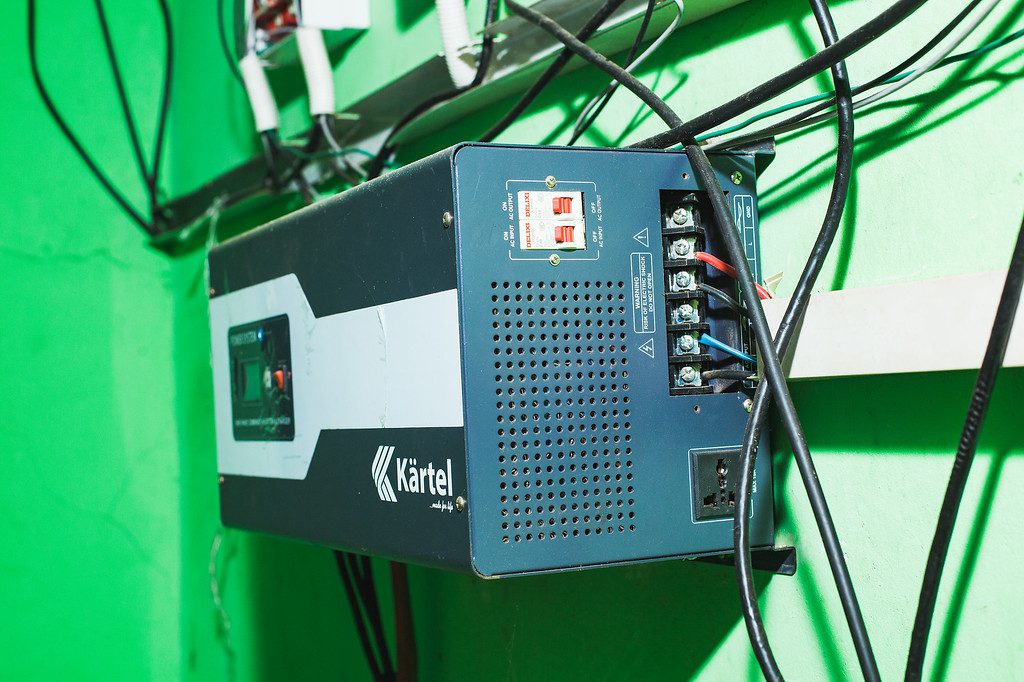
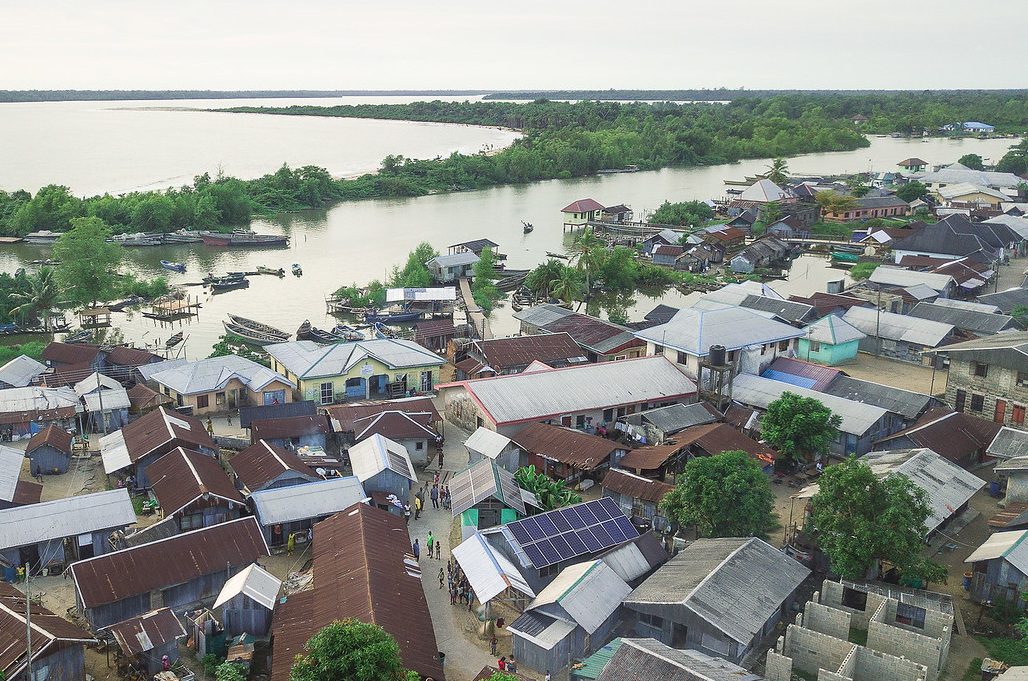
PIND’s work with private sector solar power developers established new footprints across two coastal communities in Q4 2021. This has subsequently increased the number of businesses and households with access to clean energy across the two communities. Opia community in Warri North LGA of Delta state and Akinsolu community in Ilaje LGA of Ondo state joined the coastal GMOU communities with the commercial model of PIND’s energy cabin and solar refrigeration hubs. Opia was previously unserved with electricity and PIND’s partnership with Infranergy Power networks delivered a mini grid there. This yielded 15 new household connections and 9 MSME connections. In addition to the private sector led business model for commercial mini grids, the PIND-promoted community partnership model for mini grids was implemented at one EGCDF-nominated community, also in Warri North LGA. Through this, 76 new households were connected at Kpokugbene community, following the energy cabin intervention that was supported by the Chevron grant for powering remote GMOU communities.
The energy cabin and solar refrigeration technologies provide key services in the coastal communities, and many power developers recognize the twin opportunity around both intervention areas. Solaviva Limited developed an innovative business model through PIND’s support, to install a hybrid energy cabin – solar refrigeration hub at Akinsolu community in Ilaje LGA of Ondo state. This hub provides solar refrigeration access to 250 fisher folks, 40 MSMEs and 60 households. The solar refrigeration hub also benefits from a PIND-brokered partnership with the Ilaje Sea Foods Producers and Marketers’ Association of Nigeria – with a membership of about 100 sea-going vessels and 500 fisherfolks.
 [/dt_teaser]
 [/dt_teaser]
Outreach
Overall in Q4 2021, 1,290 people were reached through PIND’s access to energy project. 1210 people from 304 businesses and 151 households at Kpokugbene, Akinsolu and Opia, who enjoyed electricity from a local mini grid for the first time. Cumulatively in 2021, 285 households and 360 businesses and thus a total of 2,070 persons, now have access to clean energy because of the operationalization of solar interventions in various communities.
80 people, comprising 50 solar PV entrepreneurs (13F and 37M), were trained as retailers and allied technology MSMEs on the PIND-DMG partnership for solar business linkages. Specifically,15 members of Kpokugbene community were trained as village level technicians (VLT), and 15 members of Akinsolu community (including men, women and youth) were trained as village – level operation and maintenance personnel.
Jobs Created
51 jobs were created by PIND partners through local employment opportunities related to mini grid installation, operation and maintenance in the coastal communities. 10 of these were employed as full-time energy cabin operators in the communities, while the rest were temporary and seasonal workers. Cumulatively 55 jobs have been facilitated by PIND via the access to energy program.
Financial Benefits Accrued to Users of various Energy Solutions Supported By PIND
Q4 2021 estimates of energy cost savings for households and businesses connected to mini grids in communities, was ₦14.9 million. Cumulatively in 2021, ₦466.73million in financial benefits, accrued to users of various energy solutions supported by PIND. Furthermore, despite dwindling investment from off grid power investors due to the economic shocks from the global pandemic, solar companies continue to follow the high yield commercial markets such as the rich fishing coastal communities. In this regard, ₦20.4 million was leveraged in Q4, 2021 through funds from Solaviva Limited to build a solar refrigeration and energy cabin hub at Akinsolu community, making the cumulative funds leveraged in 2021, ₦83.6 million.
Increasing Environmental, Social and Governance (ESG) Impact in the Coastal Communities through Renewable Energy Interventions
The outcome of PIND’s A2E project across coastal communities is often economic in nature with lots of opportunities for businesses to increase income through expansion and save money as a result of reduced use of conventional fuels. Ultimately, the reduction in the use of these conventional fuels contributes immensely to SDG 13 which aims to reduce greenhouse gas emissions by enabling developing countries invest in/ undertake low-carbon development.
Fostering the adoption of sustainable access to energy technologies which are based on renewables is an important aspect of PIND’s work for a sustainable economic development. In 2021, the solar energy mini grids and the refrigeration hubs facilitated by PIND have reduced substantial environmental emissions by 153.79 Tons of CO2 equivalent. This emissions displacement accounts for the corresponding amount of CO2 that would have been generated to achieve the same amount of developmental impact for those communities.
PEACEBUILDING
This section highlights key achievements of the Peace Building program in Q4,2021
PIND continued interventions in conflict prevention, conflict management and peacebuilding in the region in Q4. PIND’s role in and its support for grassroots-led conflict resolution initiatives are examples of both the scope and the limits of long-term peacebuilding projects. Recognizing the need for an integrated and comprehensive approach to tackling the complex causes and drivers of conflict in the region, PIND adopted a plan of action that aimed to keep the level of violence as low as possible, particularly in key communities of interest, while also building the social infrastructure and social capital of peace actors across the region for long term sustainable peace. This ushered in a paradigm shift reflecting a different way of working on problems of militancy, election violence, gang/cult violence, communal violence, and the cross-cutting issue of Violence Affecting Women and Girls (VAWG)15 . PIND aims to achieve this objective through the active engagement of 5,000 peace actors in conflict mitigation and reduction.
In Q4, the peacebuilding program continued targeted peace building and conflict mitigation interventions to lessen the levels of conflict risk and lethal violence in the Niger Delta. As part of these targeted interventions, the Program trained 80 community-based field monitors to report incidents of conflict risk and violence to the integrated Early Warning and Early Response (EWER) platform to aid proactive responses. PIND identified and disseminated 16 conflict issues to 26 members of the RDC Peacebuilding Committee in Delta and Ondo states, for situational awareness and preventive response. PIND also produced 12 conflict reports including 11 weekly conflict briefs and one quarterly conflict tracker to update stakeholders and facilitate targeted interventions to mitigate emerging conflict issues in the region.
 [/dt_teaser]