

PIND 2021 Q2 PROGRESS REPORT
April – June 2021
This report highlights the achievements of PIND’s program interventions in the Niger Delta from April – June 2021 (Quarter 2 of 2021). It also provides relevant information about program management, lessons learned, and plans for the next quarter. The report demonstrates how PIND is driving change, to ensure broad-based economic growth in the Niger Delta.
PIND’s activities are designed to promote and sustain a culture of learning and adaptation, to build a process where evidence plays a significant role in determining policy direction and interventions in economic development, peace building, advocacy, and capacity building of both government institutions and civil society in the Niger Delta.
PIND made significant progress in its initiatives this quarter; the following are highlights of its achievements in Q2, 2021:

SUMMARY OF PROGRESS
Market Systems Development
PIND’s market development projects continue to demonstrate progress towards widespread change. During the quarter, 20,984 farmers and agricultural entrepreneurs (38% of them being women), were reached with information and knowledge on best practices and efficient technologies in the crop and non-crops sectors.
Economic Development
PIND incentivized private investors and participating farmers to invest N2.4 billion to implement good agricultural practices, technological innovations, purchase inputs and other capital expenditures. Majority of the investments this quarter (N2.2 billion) were debt financing from banks and government institutional funding assistance schemes, accessed by farmers and small-scale businesses, while 7% (N176 million) were equity investments in PIND’s interventions by the farmers. Also, through the access to energy project, PIND influenced investments in energy solutions by the private sector, worth N17.8 million. In addition, the capacity building project supported women and CSOs to access a total of N10.15 million naira in grants (N10million to train 150 women and youths to produce and sell African patterned fabric) and service fees (N150,000 to support a local organization to develop its advocacy strategy).
Sombriero Kapital
In the GMoU communities, PIND worked with two financial institutions (Sterling Bank and Union Bank) and three agro-input dealers to provide loans and input credit worth N54.7million, to 107 farmers in Delta and Ondo States. Also, in Q2,2021, 15 of the 78 processors who were profiled and screened for access to finance from Sterling bank in Q1, 2021, were approved for funding by the financial institution and are currently awaiting disbursement. PIND will continue to monitor the progress and disbursements of funds to these processors.
Access to Energy
PIND also played a significant role in driving the market for low–carbon, low–cost solutions that offer high-quality energy access to coastal communities. Community–centered initiatives which PIND has championed, including the environmentally-friendly solar energy mini grids and solar–powered freezers, have addressed the challenges of energy access directly via an improved off–grid energy access to the poorest populations and businesses that operate in under-served or off-grid communities in the Niger Delta. Within the reporting period, PIND facilitated the signing of a power purchase agreement between Infranergy and Opia Community in Warri North LGA of Delta State, leveraging N17.8 million through private sector investment into the construction of a mini grid in the community. InfraNergy is an energy development company that seeks to maximize social impact in energy underserved communities in the coastal areas. They have partnered with PIND to explore the development of a mini grid and allied smaller energy provision services in the coastal areas. This partnership will see the deployment of a solar powered mini grid that will give a total of 100 households and businesses access to power by the end of the year.
Skills Development for Youth Employment
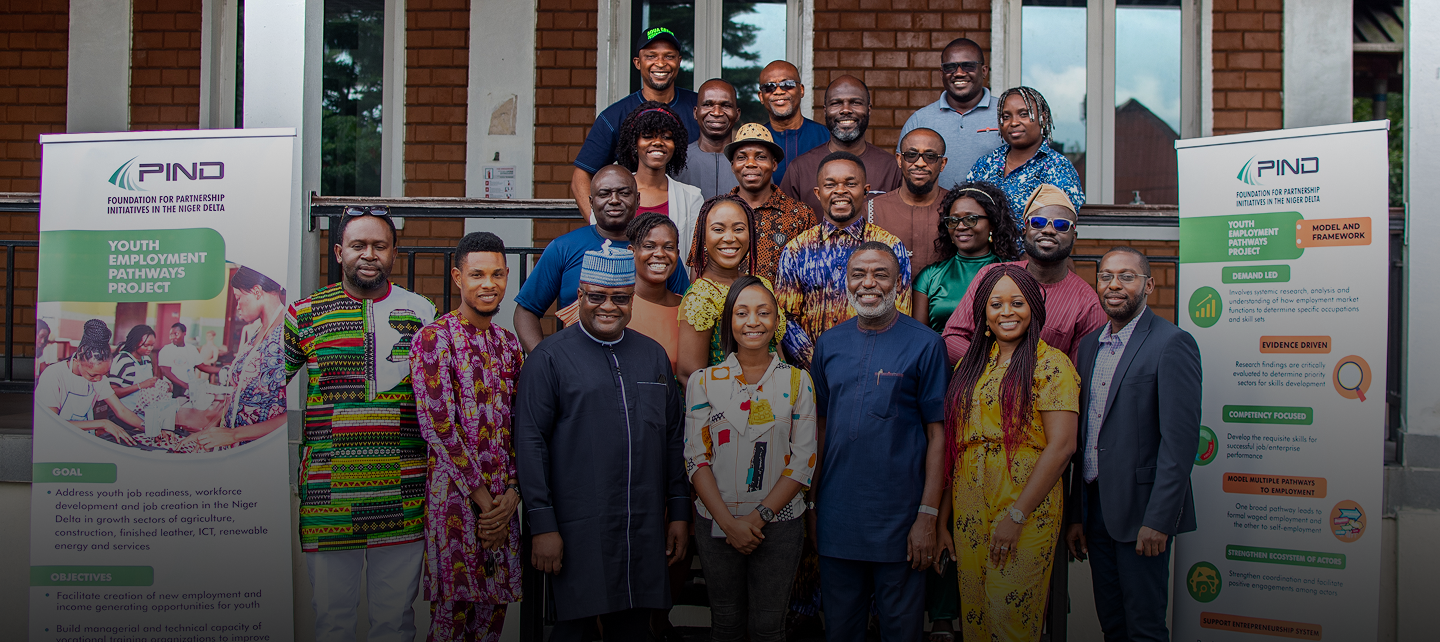
PIND continues to work with State governments, the private sector, and local partners to improve the quality of capacity building and vocational training and to expand access to financial services for entrepreneurs. Following the conclusion of the Niger Delta Youth Employment Program (NDYEP), the design of the follow-on youth skills development program, Delta Youth Employment Program (DYEP), was finalized in Q2, 2021, with interventions modelled after the NDYEP.
Peacebuilding
Shifting its strategy from growing the membership of the P4P Network to intensely activating its thousands of members/peace actors and deepening their work in peacebuilding by tackling conflict situations in their communities, PIND assisted 105 peace actors to constructively resolve emerging conflicts in various communities in the Niger Delta. This led to 36 quality actions1 being taken to mitigate conflict in different locations across the region. Learn more
Communications
By amplifying PIND’s communications efforts during the first quarter of the year, 5,392,218 people gained new or increased awareness about PIND, through its platforms: newsletters, social media, website, email inquiries, forums and traditional mainstream media. Also, PIND garnered 44 positive media mentions of its work and activities in the second quarter of 2021 and attracted 10 public endorsements from stakeholders who interacted with its content on the website, newsletters, and social media posts during the same period. Learn more
Advocacy
In addition, to ensure the sustainability of the economic development and peacebuilding interventions in the region, PIND finalized the Edo State Long-Term Development plan, which will be formally launched in Q3,2021. Also, PIND disseminated and promoted an assessment of the effects and causes of inadequate access to arable land for smallholder farmers in Delta, Edo, and Ondo States, via the PIND and NDLink websites. An intervention concept note is being developed for an approach that will provide the best potential for achieving the desired results of increasing access to land for agriculture. Learn more
PEACEBUILDING | IN THE NIGER DELTA
The strategic thrust of the peace building program is to achieve regional and lasting peace in the Niger Delta. To achieve this, PIND is creating sustainable peace partnerships, encouraging collaboration and cooperation amongst peace actors, providing support for economic development, and strengthening indigenous structures for peace, while also creating and building interfaces with larger state-level or regional peace efforts; thereby creating an enabling environment for sustainable broad-based economic development.
The peace building program consists of two interrelated and interdependent projects: The Integrated Peace and Development Unit (IPDU) and Partners for Peace (P4P) Network. The IPDU focuses on undertaking research and providing training to local and international stakeholders to implement innovative pilot projects that show promise of making a difference on the ground. Responding quickly in a targeted manner to rapidly changing dynamics, IPDU promotes collaboration and synergy amongst existing local, regional, and national efforts of actors in both public and private sectors to develop/deploy early warning and response mechanisms to address conflict, with a focus on gender and youth.
The P4P Network is PIND’s strategy towards establishing social infrastructure and capital across all nine States of the Niger Delta. In the last five years, PIND has established a network of self-identified agents of peace that have deployed the power of grassroots networking towards building peace in the region. Using conflict analyses and early warning as key instruments, P4P identifies, and supports existing initiatives, and creates new ones to address the conflict risk factors. The P4P Network currently has chapters and subchapters in all the 9 States and 119 LGAs of the Niger Delta.
In the current strategic phase, the Peace Network will focus on establishing and strengthening grassroots conflict resolution initiatives that promote a more enabling, integrated, and peaceable environment conducive for economic growth and development in the region.
ECONOMIC DEVELOPMENT
-
20,984 new farmers and enterprises were reached directly with information and knowledge on best practices and efficient technologies by the end of the quarter. The result represents a 123% performance against the quarters’ target of 17,119. It also brings the total outreach for the year to 29,919 representing 49.2% of the 60,800-target set for the year.
-
N2.4 billion was recorded as investment leveraged by the project within the quarter. Out of the N2.4billion leveraged, N2.2billion was debt financing attracted by the enterprises supported during the quarter, while about N176m was invested in the purchase of technologies in the palm oil sector.
[/dt_vc_list]
KEY ACHIEVEMENTS: AQUACULTURE
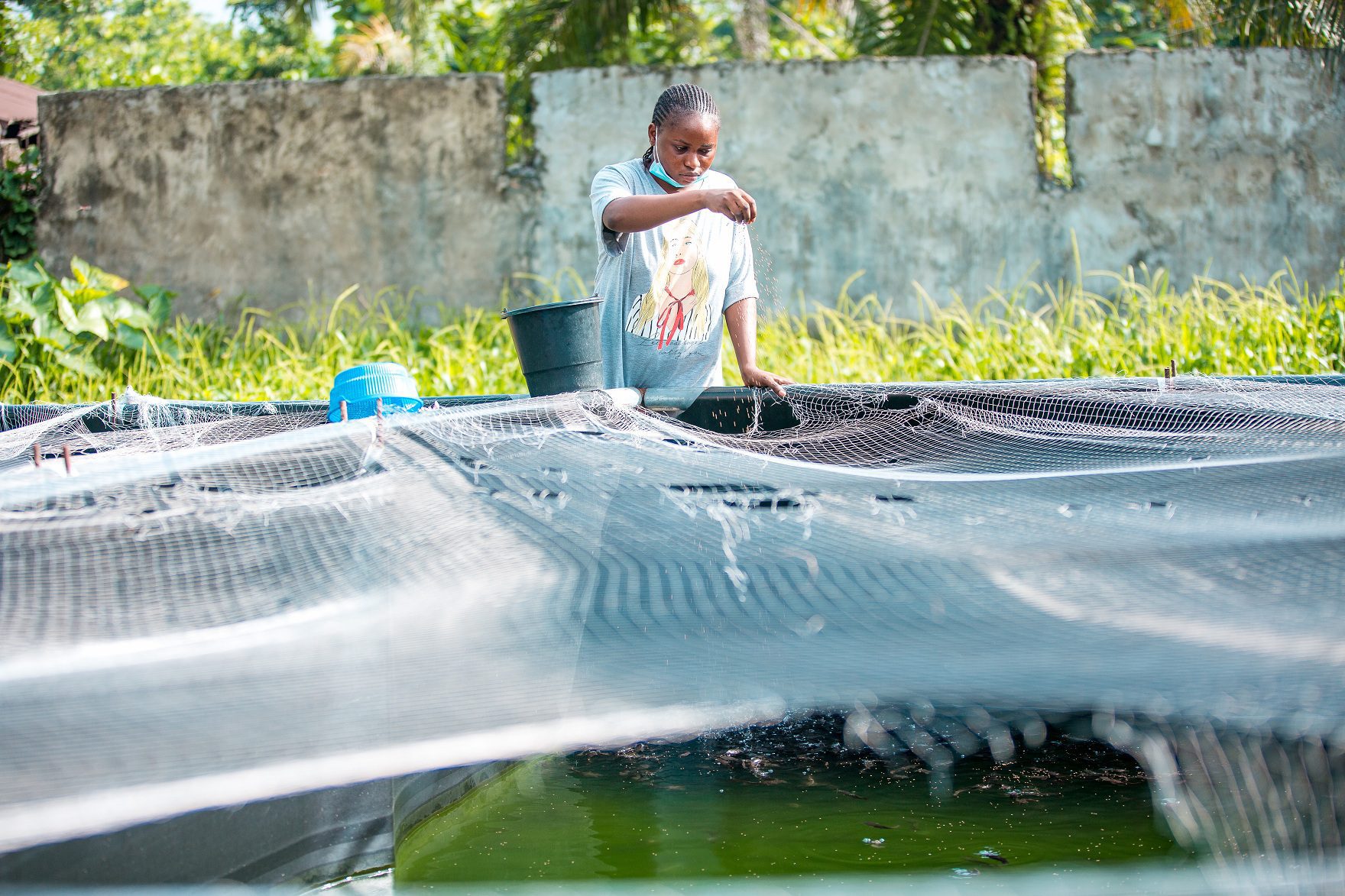
PIND’s interventions in the aquaculture sector focus on improving the efficiency and productivity of fish farmers and processors, through improved knowledge of best fish farming practices, access to improved processing technology, as well as access to quality input, market, and finance for farmers. The sector’s activities are driven by aquaculture service providers working with input companies, fabricators, and other market actors. In 2021, the aquaculture interventions plan to reach an additional 5,000 fish farmers and processors through the promotion of improved technology in the coastal communities, adoption of improved practices amongst fish farmers in the region and facilitating access to quality fish seeds and finance for farmers and processors in the coastal communities of the Niger Delta.
In 2021, the high rate of inflation in Nigeria and the naira devaluation continued to impact the aquaculture sector. This was evidenced in the continuous rise in the cost of fish feed which constitutes over 70% of the cost of production. The cost of fish feed increased by 34% over the last eight months with a concurrent increase in the price of fish by 29%. This further increased farmers’ production costs, necessitating access to finance/input credit for farmers and more efficient farm practices.
In the quarter under review, PIND deepened its work with the network of aquaculture service providers to further create awareness on the use of quality inputs and to build the capacity of fish farmers/processors, particularly in the GMOU communities to access funds for equipment and input purchase. PIND also continued to provide support to selected hatchery operators to produce and promote quality fish seeds for farmers, in addition to overseeing and tracking the expansion of the training on good pond management and business practices to more farmers and processors, through service providers and input companies in the region.
Increasing Outreach to more farmers on pond management practices
This quarter, PIND continued to support service providers to provide pond management practices and business skill training to build the capacity of fish farmers and processors to access finance, and to also improve their productivity and efficiency. As a result, a total of 763 (276 Females and 487 Males) fish farmers were reached by 15 service providers over the course of the quarter.
DOWNLOAD THE FULL 2021 QUARTER 2 REPORT” dt_text_title_bottom_margin=”10px
dt_text_content_bottom_margin=”5px” button_text=”File Below” btn_animation=”rollIn” icon_picker=”dt-icon-the7-menu-007″ dt_text_icon_paddings=”0px 0px 10px 0px” dt_text_icon_color=”#e8e8e8″]
-
Marich Agro-Allied, a service provider based in Delta State with support from PIND, facilitated two (2) capacity-building training programs to 47 fish farmers (16 females and 31 males) on best pond management practices as well as business skill training using the NAEC curriculum to build their capacity to access finance. He also collaborated with Durandel Ltd during a training in May to promote the use of improved probiotics for better performance of fish seeds.
-
Three (3) training programs were organized by Arkshore Consult, a master service provider alongside three other service providers based in Ondo State to reach 201 fish farmers (31 females and 170 males) with a focus on improved management practices and financial training.
- In Bayelsa State, Kingdom Obuza Ventures, an aquaculture service provider facilitated three (3) training sessions on best practices, reaching a total number of 83 fish farmers (36 males and 47 females).
- In Cross River State, Bangadonase trained 21 participants (11 males and 10 females) on fish farming practices and also exposed them to improved processing technology.
- In Rivers State, Aqua Green Initiative (AGI), a Master Service Provider alongside two other service providers facilitated five training sessions on fish farming best practices, reaching a total of 256 farmers (144 males, 112 females).
- PIND supported Durandel, a service provider to reach 56 farmers (38 males and 18 females) in Edo State on the use of probiotics to improve feed conversion ratio and the health of the fish as well as a cost reduction measure in their farming operations. This was done in collaboration with the Edo Fish Farmers Association (EDOFAC).
- Diyen Agro Services also facilitated training for fish farmers in Delta state with a total outreach of 65 farmers in attendance having 42 males and 23 females.
- Atim Okoko, a service provider, facilitated a live demonstration at the Ministry of Agriculture, Akwa Ibom State on the process of building a chorkor oven. 20 participants were recorded during that activity comprising 13 females and 7 males.
- Sharon Ohaka, facilitated training on best practices in Imo state, reaching a total of 14 fish farmers (8 males and 6 females).
[/dt_vc_list]
| Delta | Imo | Edo | Cross River | Bayelsa | Akwa Ibom | Ondo | Rivers | Total | |
| Number of training programs | 4 | 1 | 1 | 1 | 2 | 1 | 3 | 5 | 18 |
| Number of service providers | 3 | 1 | 1 | 2 | 1 | 1 | 3 | 3 | 15 |
| Number of farmers reached | 112 | 14 | 56 | 21 | 83 | 20 | 201 | 256 | 763 |
| No of fish processors reached | 304 | 0 | 0 | 0 | 0 | 3 | 239 | 41 | 587 |
| Total | 1,350 |
KEY ACHIEVEMENTS: CASSAVA
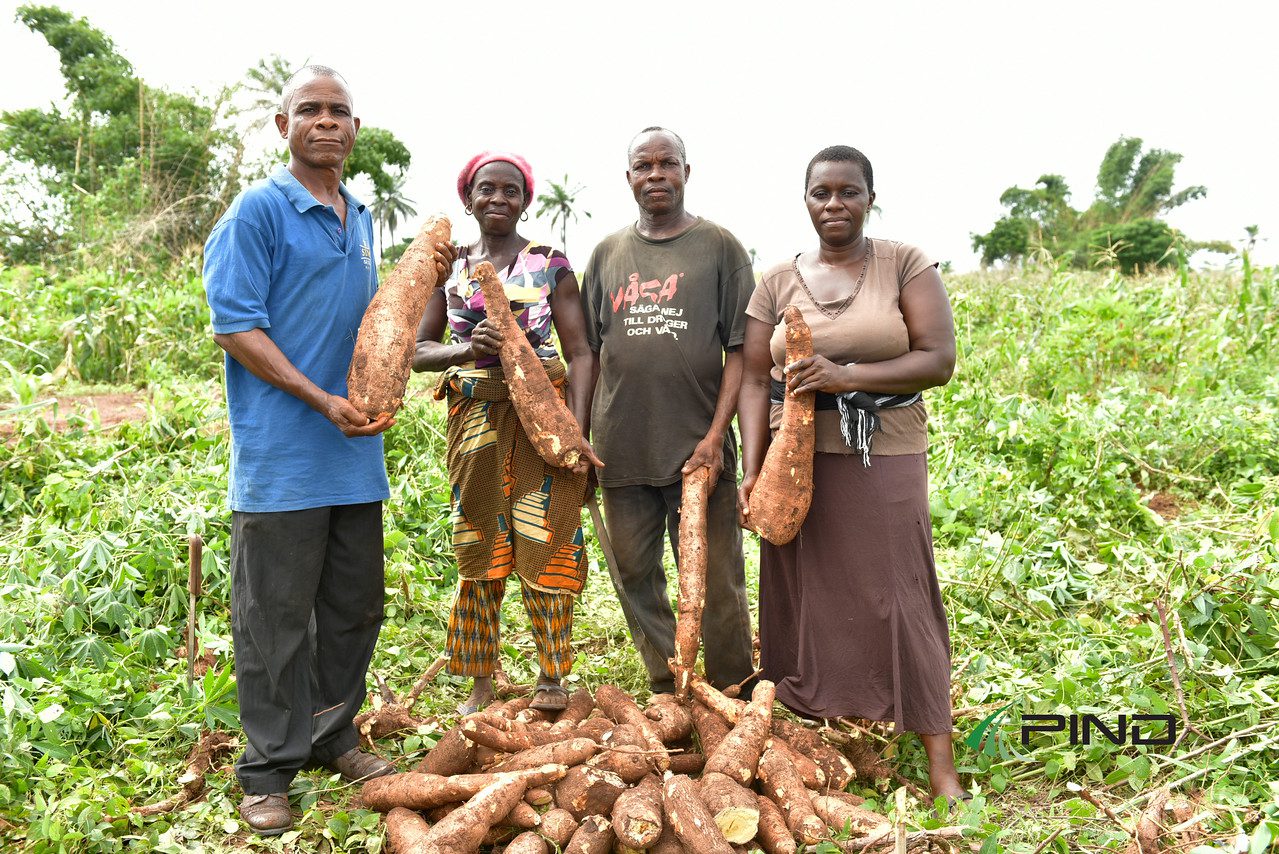
The Cassava value chain interventions are designed to improve the productivity and incomes of actors in the cassava sector. This is achieved by incentivizing partners to invest in activities that will improve access to information and quality inputs as well as markets for cassava farmers. Since 2015, PIND has partnered with key market actors like input companies and agro-dealers to embed demonstrations and training into their marketing and sales models. These partners have continued to report increased sales because of this collaboration.
In this new strategic phase, which commenced last year, PIND continued to leverage the network of input companies, agro-dealers, Farm Service Providers (FSP)s and the Cassava Seed Entrepreneurs (CSEs) it has strengthened, to drive and expand activities in the sector to reach more farmers with information and quality agro-input.
This year, PIND’s target is to reach an additional 19,800 farmers. This will be achieved through the expansion of its work across the region, by partnering with service providers to establish demonstration plots aimed at promoting the adoption of Good Agricultural Practices (GAP) in more communities in the Niger Delta. PIND will also increasingly leverage platforms to train and increase farmers’ access to agro-inputs including stems, fertilizers, and other crop protective products, CPPs. Also, PIND will support investors to establish Cassava out-grower and aggregation programs in target locations.
In Q2, 2021 with the commencement of the 2021 cassava planting season, PIND continued its activities with partners to provide support to farmers. Specifically, PIND scaled up its collaboration with BASICS II to establish a viable commercial cassava seed system in the region by training and onboarding 69 new Cassava Seed Entrepreneurs (CSEs). Also, previously trained CSEs continued to provide support to the sector through the sale of improved stem varieties. PIND further expanded its support to investors currently exploring opportunities for implementing out-grower and cassava aggregation programs with the signing of an MOU with Shine Bridge Global towards the implementation of the African Job for Food Program (AFJB) in partnership with the Federal Ministry of Agriculture.
A major socio-economic environment consideration this quarter is the rising inflation. The key effect of which is seen in the increase in the cost of inputs and services that farmers require for their productions. The current input price inflation has created a cash flow problem for farmers in the region. PIND will continue to refine and support partners with strategies to cope with current market realities including access to finance leveraging Sombreiro Kapital.
DOWNLOAD THE FULL 2021 QUARTER 2 REPORT” dt_text_title_bottom_margin=”10px
dt_text_content_bottom_margin=”5px” button_text=”File Below” btn_animation=”rollIn” icon_picker=”dt-icon-the7-menu-007″ dt_text_icon_paddings=”0px 0px 10px 0px” dt_text_icon_color=”#e8e8e8″]
-
To support increased access to improved high yielding and disease resistant Cassava stem varieties, in the Niger Delta, PIND is partnering with the BASICS II project, funded by the Bill and Melinda Gates Foundation, and the International Institute for Tropical Agriculture (IITA) as well as the National Root Crop Research Institute (NRCRI). PIND is doing this through the Cassava Seed Entrepreneurship (CSE) program – the Village Seed Entrepreneurship (VSE) program. The program aims to establish a commercial seed system in the region.
- Last year, 75 new CSEs drawn from Delta, Abia, Imo, Akwa Ibom, and Cross Rivers states were trained and onboarded into the National Network of Seed entrepreneurs. These CSEs went on to establish stem multiplication plots in their communities using foundation stems of improved and high-yielding varieties, received from the NRCRIs foundation stem distribution outfit, Umudike Seeds. In the previous quarter, PIND and BASICS II continued their collaboration with a plan to onboard additional CSEs and also strengthen collaboration with the National Seed Council (NASC) to ensure certification and effective monitoring and support to the trained CSEs.
- This quarter, PIND and BASICS II trained and onboarded 69 CSEs in Abia State. The CSEs were drawn from Edo, Delta, Abia, Imo, Akwa Ibom, Bayelsa, Rivers, and Cross Rivers State. These CSEs are expected to utilize the current planting season to set up multiplication plots and organize step-down training for farmers within their communities. In the future, they will also be expected to ratoon and sell improved stems varieties acquired from the National Root crop Research institutes (NRCRI) and previously trained CSEs.
[/dt_vc_list]
KEY ACHIEVEMENTS: COCOA
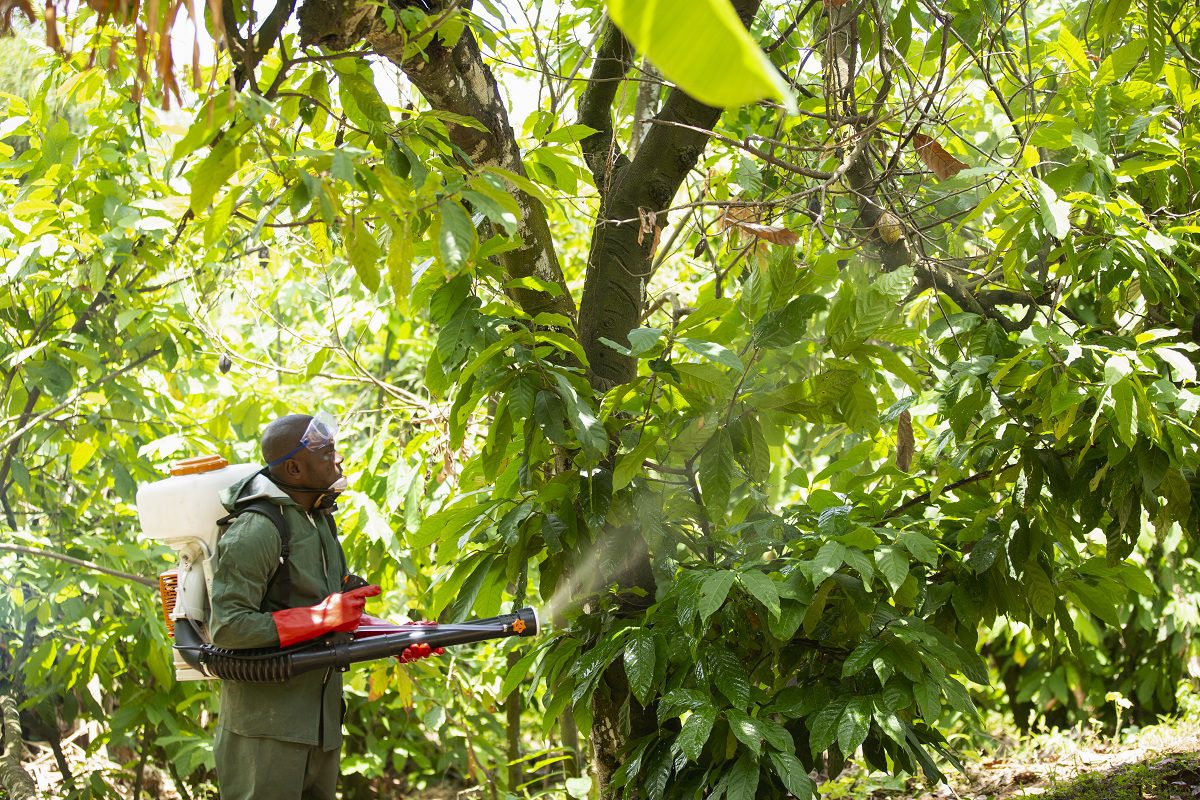
PIND’s Cocoa value chain interventions are designed to improve the productivity and income of cocoa farmers through the adoption of improved farming practices in planting/re-planting, pruning, weed management, pest and disease management, and harvest and post-harvest operations. The main intervention areas are productivity improvement and quality enhancement.
To achieve this, PIND is working with business partners to invest in the promotion of good agricultural practices and technologies by providing quality agricultural information and access to quality agro-inputs and technologies to farmers. In the last two years, PIND has on-boarded and supported input suppliers, equipment dealers/promoters, output buyers (off-takers), and farm service providers to conduct a series of training programs and demonstration/promotional activities, towards stimulating the adoption of good agricultural practices and technology by farmers.
Since 2019, PIND has onboarded and partnered with 44 different support market actors[1] to promote productivity improvement and quality enhancement practices and technologies among cocoa farmers. These partners have reached over 18,000 farmers with agriculture information, quality agro-inputs, and technologies in five cocoa-producing states of Abia, Akwa Ibom, Cross River, Edo, and Ondo.
In 2021, PIND plans to reach a further 12,000 farmers through a series of interlinked activities aimed at deepening the solutions it has introduced and expanding it to all the cocoa-producing states in the Niger Delta. To achieve this, PIND plans to work with both new and existing partners to upscale the solutions in the operating year.
For the quarter under review, PIND began operationalizing a working agreement with three new off-takers, Nivik Investment Ltd, A.A. Cooperative, and Abico Nigeria Limited, to scale up the quality enhancement intervention activities in Ondo, Edo, and Cross River states. Also, PIND continued to support and expand its work with existing farm service providers and agriculture-dealers to provide training and farm services to new farmers.
DOWNLOAD THE FULL 2021 QUARTER 2 PROGRESS REPORT” dt_text_title_bottom_margin=”10px
dt_text_content_bottom_margin=”5px” button_text=”File Below” btn_animation=”rollIn” icon_picker=”dt-icon-the7-menu-007″ dt_text_icon_paddings=”0px 0px 10px 0px” dt_text_icon_color=”#e8e8e8″]
-
In Ondo, Saro Agrosciences collaborated with two FSPs (Anthony Akinmade and Joseph Bamidele) to reach 213 farmers with training programs on GAP. Two other farm service providers (Ibikunle Olumuyiwa and Olufemi Osatuyi) reached 1,052 farmers with training and farm services on GAP. Also, two off-takers, Nivik Investment Ltd, and Abico Nigeria Limited reached a total of 1,831 farmers through the quality enhancement practices/activities.
- In Cross River, Saro Agrosciences in collaboration with one FSP (Ngor Oru Ogar) expanded outreach activities to 177 cocoa farmers. Two other farm service providers (Abit Farms and Solomon Agbor) reached 177 farmers with training and farm services on GAP. Also, AA Cooperative, an off-taker, reached 618 farmers through the quality enhancement practices/activities.
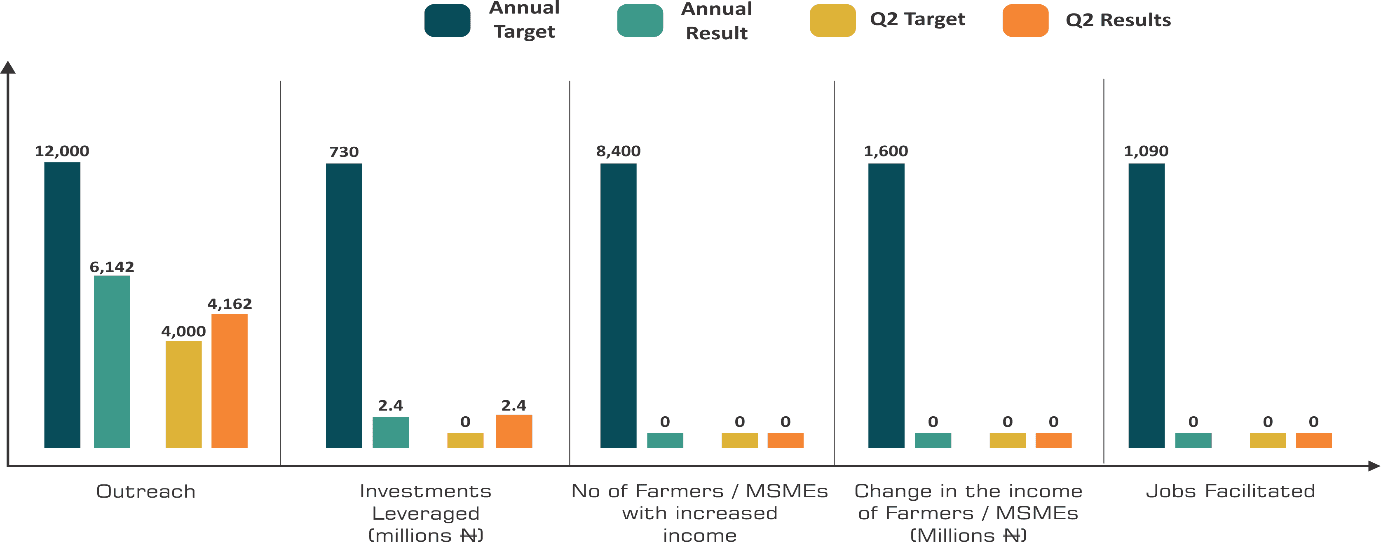
- In Akwa Ibom, a farm service provider, Victor Tom reached 94 farmers with training programs and services Cumulatively, PIND reached an additional 4,162 (933 females) farmers within the quarter, out of a target of 4,000 farmers set for the period. This brings the total outreach for 2021 to 6,142 which is 51% of the targeted outreach of 12,000 for 2021.
[/dt_vc_list]
KEY ACHIEVEMENTS: PALM OIL
PIND’s interventions in the palm oil sector focus on stimulating best management practices (BMPs) among farmers and improving access to palm oil seedlings. These interventions aim to increase the productivity and income of farmers and small processors in the region. The interventions utilize the market systems development approach and are driven by agro-dealers, fabricators, input companies, and palm seed nursery operators and producers who have the incentives to provide a range of services and products that improve the productivity of farmers and processors. Previous interventions included stimulating the use of harvesting technologies and improved processing equipment.
In 2021, PIND plans to further expand its outreach in the Palm Oil sector to 14, 000 farmers, through the network of both the existing service providers whose capacity were built, and new partners. This will deepen access to improved seeds, and adoption of best management practices by farmers, individually or through oil palm business membership organizations for inclusivity. Emphasis will be on stimulating collaboration and coordination amongst different value chain actors in the sector by facilitating linkage activities to expand the field activities of the market actors.
Specifically, for the access to improved seeds intervention, PIND plans to expand its reach by strengthening the collaboration between seed producers and nursery operators in the region. It also intends to scale up the business finders’ model with new seed producers willing to increase their distribution network across the Niger Delta. Through these activities, oil palm farmers are expected to have increased access to improved and affordable seeds
For the quarter under review, PIND’s intervention activities focused on working with input companies, farm services providers, and agro-dealers to expand the demonstrations on best management practices to farmers, and to enhance linkages between palm seed producers and nursery operators to organize promotional activities on quality seed.
DOWNLOAD THE FULL 2021 QUARTER 2 PROGRESS REPORT” dt_text_title_bottom_margin=”10px
dt_text_content_bottom_margin=”5px” button_text=”File Below” btn_animation=”rollIn” icon_picker=”dt-icon-the7-menu-007″ dt_text_icon_paddings=”0px 0px 10px 0px” dt_text_icon_color=”#e8e8e8″]
-
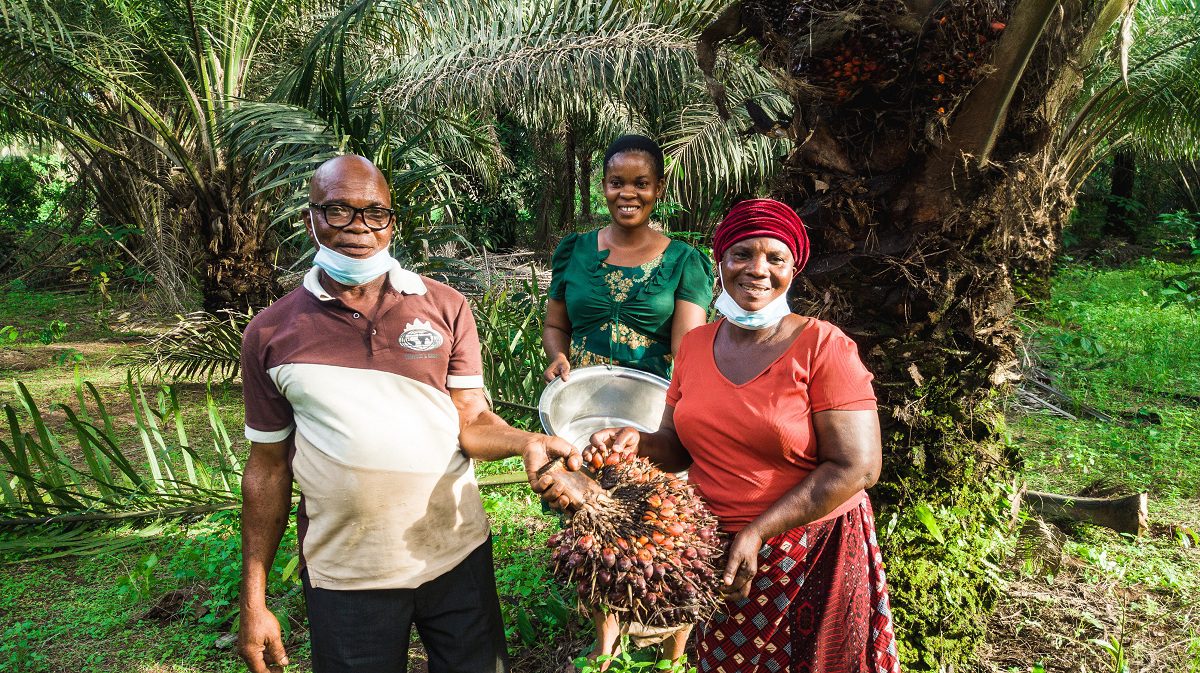
N103.7million was invested in the purchase of 131, 250 improved seedlings by 79 farmers in Ondo, Delta, Edo, Rivers, and Abia states.
- N5.6million was invested in the purchase of 405 improved harvesting technologies in Akwa Ibom, Edo, Delta, Ondo, and Cross River states by 122 farmers. This is in addition to the 224 improved harvesting technology (Malaysian knives) purchased last quarter.
- 12 farmers invested N31.5million in the purchase of 12 improved processing technologies in Akwa Ibom State. This is in addition to the 10 processing technologies purchased in Q1.
This brings the total investment leveraged for the year to N176, 592, 500 against the yearly target of N1.9 billion Naira. The significant difference in the target set for the year and what has been achieved, is the inclusion of equity investment by farmers adopting BMP. The equity investment will be calculated in Q4 when the outcome monitoring report for BMP is submitted.[/dt_vc_list]
KEY ACHIEVEMENTS: POULTRY
The poultry value chain interventions are designed to improve the productivity and income of poultry farmers in the Niger Delta through the adoption of good poultry practices and linkages to quality inputs (vaccines and feeds). Other intervention activities focus on improving access to market and finance to aid the growth and expansion plans of farmers. The sector’s activities are driven by Poultry Service Providers (PSPs) and Village Level Dealers (VLDs) working with input companies, chicken processors, and other market actors, who see the incentive to make more money by providing their services and products commercially to farmers, to improve their productivity.
PIND’s target for 2021 is to reach 7,000 farmers with information on good poultry practices (GPP), quality inputs (Vaccine and Feed) as well as facilitate access to market and finance in the Niger Delta region. In Q2, 2021, PIND continued to mentor and track the activities of the service providers and village level dealers across the region, specifically in Imo, Rivers, Bayelsa, and Delta, to determine the outcome of their support to farmers. Other strategies hinged on facilitating linkages among actors in the poultry sector, with the aim of exposing farmers to GPP.
Responding to the current rise in the prices of input for poultry farmers, PIND scaled up its access to finance initiative through Sombreiro Kapital, to enable more farmers access funding. It also scaled up the good poultry practices intervention to ensure more farmers are aware of the cost reduction benefits of adopting improved practice.
Expanding the outreach of farmers to good poultry practices and access to quality vaccines.
PIND continues to strengthen service delivery mechanisms to provide access to information on good poultry practices, quality inputs such as day-old chicks (DoCs), improved feed, and vaccines to enable poultry farmers in the Niger Delta improve their productivity and income.
DOWNLOAD THE FULL 2021 QUARTER 2 PROGRESS REPORT” dt_text_title_bottom_margin=”10px
dt_text_content_bottom_margin=”5px” button_text=”File Below” btn_animation=”rollIn” icon_picker=”dt-icon-the7-menu-007″ dt_text_icon_paddings=”0px 0px 10px 0px” dt_text_icon_color=”#e8e8e8″]
-
In Delta State, Chuvaak Agro Services (A master poultry service provider), trained and supported 15 poultry farmers (10 females) on good poultry practices and business skills using the NAEC curriculum. He also facilitated linkages to inputs and markets to the farmers. In the same vein, Mr. Musa Obohor (A village-level dealer), reached 96 poultry farmers (22 females) with quality vaccines. Also, Leonarnd Akachukwu (A poultry service provider), trained and supported 250 poultry farmers (102 females) on good poultry practices and business skills using the NAEC curriculum. Also, Akanbi Jamiu, (A poultry service provider), trained 5 poultry farmers (4 females) on good poultry practices and business skills. Mr. Valentine Obi (a poultry service provider) trained three poultry farmers on good poultry practices and business skills, using the NAEC curriculum.
- In Rivers State, Aqua Green Initiatives (A Poultry Service Provider), trained 235 poultry farmers (151 females) on good poultry practices and business skills. Another service provider, CAD digital farms trained 60 poultry farmers (23 females) on good poultry practices and business skills using the NAEC curriculum and facilitated loans for them through the CBN agric Scheme.
- In Ondo State, Green Shield Integrated Technology Limited (A master service provider), trained 220 poultry farmers (54 females) on good poultry practices. In the same vein, The Arkshore Konsult (master service provider) also trained 439 (146 females) farmers on good poultry practices and business skills using the NAEC curriculum.
- In Imo State, Chinedu Uduanusi (A poultry service provider) trained 298 (116 females) farmers on good poultry practices and business skills using the NAEC curriculum. In the same vein, Mr. Amadi Anslem (poultry service provider), trained 67 (12 females) farmers on good poultry practices. Also, Mr. Nwaonu John (poultry service provider) provided online training to 70 (33 females) farmers on good poultry practices while Ngozi Buelah (A poultry service provider), trained 18 (6 females) farmers on good poultry practices and business skills using the NAEC curriculum. Ngozi Okechukwu (A poultry service provider) trained 49 (26 females) farmers on good poultry practices and business skills using the NAEC curriculum. Similarly, Nwankwo Madonna (A poultry service provider) trained 29 (20 females) farmers on good poultry practices and business skills. Mr Ambrose Ogbonna (Poultry Service Provider), trained 75 (23 females) farmers on good poultry practices.
- In Cross Rivers State, Mr. Bassey Jacobs, (A poultry service provider) supported 87 poultry farmers (36 females) with technical and business training, advisory services, linkages to inputs and markets. In the same vein, Dr. Osita Okpo (A village-level dealer) reached 119 poultry farmers (34 females) with quality vaccines.
- In Edo State, Favour Animal Health (a village-level dealer) reached 104 poultry farmers (41 females) with quality vaccines.
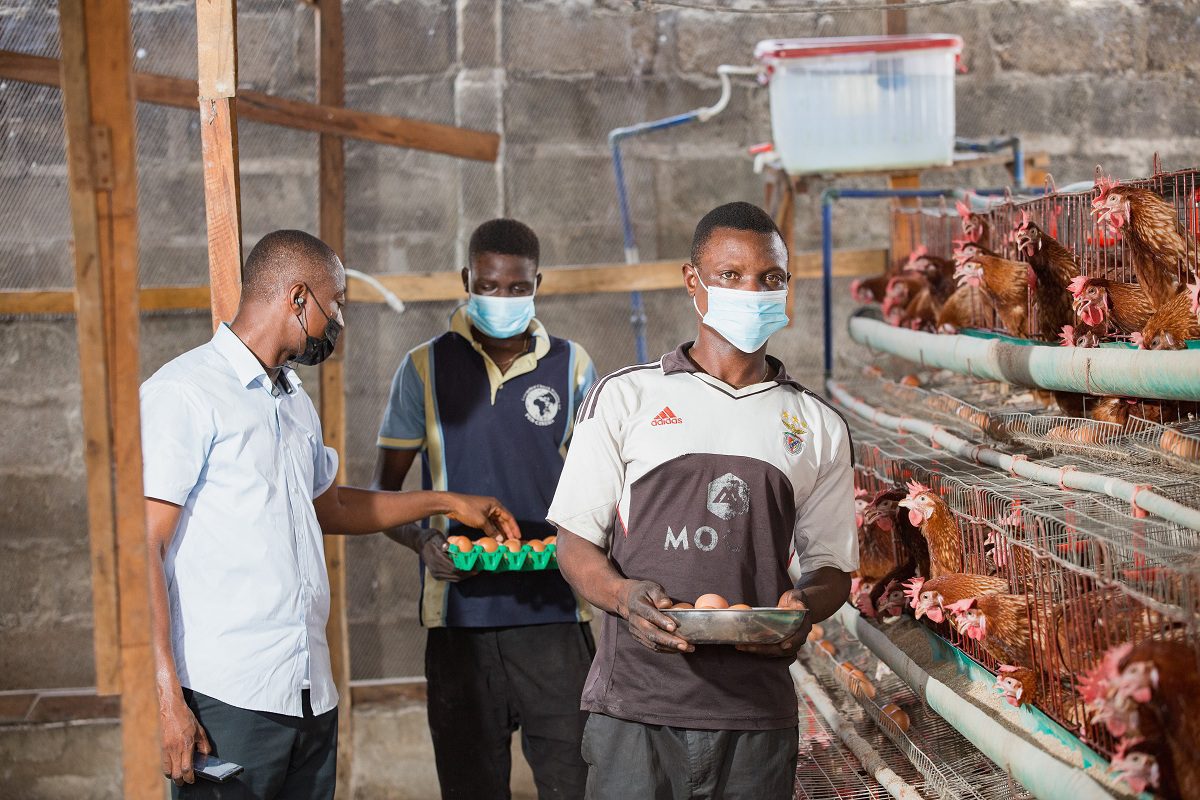
As a result of the above activities, the sector recorded a total outreach of 2,237 (910 females) farmers exceeding the 1700 target planned for the quarter. The cumulative outreach in 2021 so far is 3,757 which is about 54% of the total target set for 2021.[/dt_vc_list]
KEY ACHIEVEMENTS: MSME DEVELOPMENT AND LINKAGES
The PIND MSME Development and Linkages project aims to stimulate a market that creates a dynamic and diversified set of strong local enterprises that can meet the demand created by large buyers operating within the Niger Delta. This, in turn, strengthens the local economic environment capable of driving economic growth and job creation. The project also strengthens platforms that enable micro, small, and medium enterprises (MSMEs) to access quality business support services, market, and funding opportunities that enable enterprises to grow and be more competitive in both local and global markets.
The project activities are driven by business service providers (BSPs) strengthened by PIND, to enhance the growth of local enterprises. These BSPs work in partnership with private and public stakeholders, to organize business linkages and investment forums, as well as to access new market and funding opportunities necessary for MSME development.
In Q2 2021, PIND focused on supporting the BSPs to facilitate access to finance for MSMEs through the Central Bank of Nigeria Agri-Business/Small and Medium Enterprise Investment Scheme (AGSMEIS). The scheme is an initiative to support the Federal Government’s efforts and policy measures for the promotion of agricultural businesses and small and medium enterprises as vehicles for sustainable economic development and employment generation.
DOWNLOAD THE FULL 2021 QUARTER 2 PROGRESS REPORT” dt_text_title_bottom_margin=”10px
dt_text_content_bottom_margin=”5px” button_text=”File Below” btn_animation=”rollIn” icon_picker=”dt-icon-the7-menu-007″ dt_text_icon_paddings=”0px 0px 10px 0px” dt_text_icon_color=”#e8e8e8″]
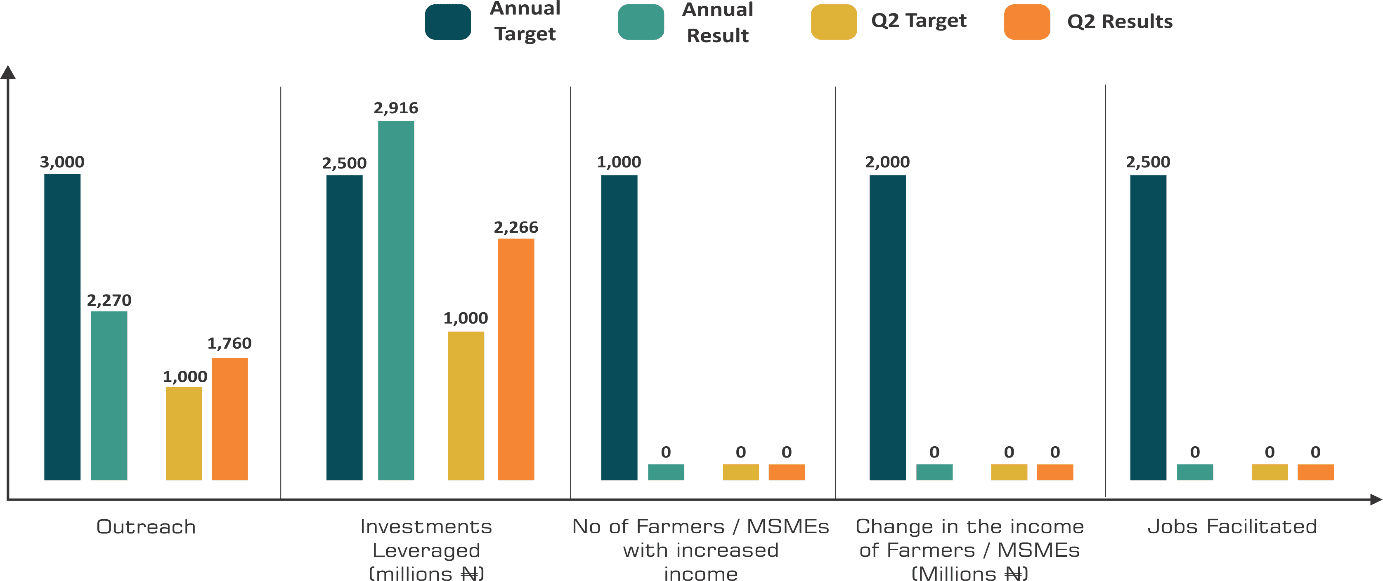
Performance status of MSME development for Q2 2021
Reaching more MSMEs through access to business information and finance
Business Service Providers (BSPs) provide a variety of services to MSMEs to improve their competitiveness and growth. This variety of services includes but is not restricted to business management training, business diagnostics and upgrading, business plan development, marketing strategy development, and linkages to finance and market. During the quarter, seven BSPs trained and supported a total of 1,760 (including 623 women-owned) MSMEs to access loans for their businesses through the CBN AGSMEIs scheme. These capacity-building activities involved classroom training, business plan development, and the preparation of loan applications. The breakdown of the activities is detailed out below:
-
In Bayelsa state, Wider Perspectives Limited, with support from PIND, collaborated with the Bayelsa State government, Megastar Stores, Silverbird Television, Standard Organisation of Nigeria (SON), and Boff & Company to organize a business linkages forum which had 70 MSMEs (50 male, 20 female) in attendance as well as other stakeholders comprising of Government, the Media, and Non-Government Organizations.
- Also in Bayelsa state, Zigha Ayibakoro Limited (ZAL), a business service provider in collaboration with NIRSAL Micro Finance Bank trained 415 enterprises (243 males and 173 women-owned) to access the CBN Agri-Business/Small and Medium Enterprise Investment Scheme funding opportunity. From the 416 MSMEs trained, 105 (67 male, 48 women-owned) enterprises have accessed funds worth 448.6 million Naira.
- In Rivers state, Wider Perspectives Limited collaborated with NIRSAL Micro Finance Bank to train 121 SMEs (76 males and 45 women-owned) with 34 (19 males, 15 women-owned) enterprises accessing 94.8 million Naira worth of loan from the AGSMEIS program.
- Entrepreneurship and Innovative Centre (E&I Centre) in Rivers state collaborated with NIRSAL Micro Finance Bank trained and supported 97 SMEs (51 males and 45 women-owned); with 43 enterprises accessing 137 million Naira worth of loan from the AGSMEIS program. The support from E&I Centre to the SMEs includes business registration, business plan development, and financial management.
- Also, in Rivers state, CAD Consulting Limited, a Master Business Service Provider, in collaboration with the Central Bank of Nigeria and NIRSAL Micro Finance Bank provided training on accessing the CBN Agri-Business/Small and Medium Enterprise Investment Scheme to 595 SMEs (393 males and 202 women-owned). Subsequently, 267 (160 male and 107 women-owned) of the enterprises trained accessed funds worth 1.006 billion Naira from the scheme.
- In Cross River State, Agric Entrepreneurs Association organized training for 161 SMEs (118 males and 43 women-owned) and supported 73 MSMEs (from the 161 trained) to access funds worth 189.7 million Naira from the CBN Agri-Business/Small and Medium Enterprise Investment Scheme.
- In Akwa Ibom state, Green Steps Limited, a new business service provider onboarded by CAD Consulting Limited, in collaboration with NIRSAL Micro Finance Bank trained 129 SMEs (99 males and 30 women-owned) with 57 of them accessing loans worth 157 million Naira from the CBN Agri-Business/Small and Medium Enterprise Investment Scheme.
- In Abia state, CAD Consulting Limited, a Master Business Service Provider, in collaboration with the Central Bank of Nigeria and NIRSAL Micro Finance Bank provided training on accessing.
- The CBN AGSMEIS fund to 129 enterprises (97 males and 32 women-owned). From the 129 enterprises trained, 32 (18 male and 14 women-owned) enterprises have accessed funds worth 113 million Naira from the CBN Agri-Business/Small and Medium Enterprise Investment Scheme.
- In Delta state, Lifeedge Consulting, a BSPs onboarded by Dorbudee Integrated Concept provided entrepreneurship training and linkages to finance to 43 (7 male, 36 women-owned) enterprises. From the 43 businesses supported, 36 have accessed finance worth 17.9 million from the financial institution.
Overall, from the activities above, a total of 1,760 (1,137 male, 623 women-owned) enterprises were reached during the period, exceeding the 1,000 targets set for the quarter. This brings the total outreach for the year to 2,270 MSMEs against the 3,000 targets for 2021.
Also, the total value of loans facilitated for the quarter came to a total of N2.2 billion, bringing the total loans facilitated in the sector for the year to N2.9 billion against the target N2.5 billion set for the year. The loans were mainly provided to the enterprises for the purchase of equipment and to meet working capital needs to enable their expansion drive. This injection of the funds is expected to improve the operations of the enterprises and enable them to meet new market opportunities.
 [/dt_vc_list]
- Aquaculture
-
KEY ACHIEVEMENTS: AQUACULTURE
PIND’s interventions in the aquaculture sector focus on improving the efficiency and productivity of fish farmers and processors, through improved knowledge of best fish farming practices, access to improved processing technology, as well as access to quality input, market, and finance for farmers. The sector’s activities are driven by aquaculture service providers working with input companies, fabricators, and other market actors. In 2021, the aquaculture interventions plan to reach an additional 5,000 fish farmers and processors through the promotion of improved technology in the coastal communities, adoption of improved practices amongst fish farmers in the region and facilitating access to quality fish seeds and finance for farmers and processors in the coastal communities of the Niger Delta.
In 2021, the high rate of inflation in Nigeria and the naira devaluation continued to impact the aquaculture sector. This was evidenced in the continuous rise in the cost of fish feed which constitutes over 70% of the cost of production. The cost of fish feed increased by 34% over the last eight months with a concurrent increase in the price of fish by 29%. This further increased farmers’ production costs, necessitating access to finance/input credit for farmers and more efficient farm practices.
In the quarter under review, PIND deepened its work with the network of aquaculture service providers to further create awareness on the use of quality inputs and to build the capacity of fish farmers/processors, particularly in the GMOU communities to access funds for equipment and input purchase. PIND also continued to provide support to selected hatchery operators to produce and promote quality fish seeds for farmers, in addition to overseeing and tracking the expansion of the training on good pond management and business practices to more farmers and processors, through service providers and input companies in the region.
Increasing Outreach to more farmers on pond management practices
This quarter, PIND continued to support service providers to provide pond management practices and business skill training to build the capacity of fish farmers and processors to access finance, and to also improve their productivity and efficiency. As a result, a total of 763 (276 Females and 487 Males) fish farmers were reached by 15 service providers over the course of the quarter.
DOWNLOAD THE FULL 2021 QUARTER 2 REPORT” dt_text_title_bottom_margin=”10px
dt_text_content_bottom_margin=”5px” button_text=”File Below” btn_animation=”rollIn” icon_picker=”dt-icon-the7-menu-007″ dt_text_icon_paddings=”0px 0px 10px 0px” dt_text_icon_color=”#e8e8e8″]
[dt_vc_list] -
Marich Agro-Allied, a service provider based in Delta State with support from PIND, facilitated two (2) capacity-building training programs to 47 fish farmers (16 females and 31 males) on best pond management practices as well as business skill training using the NAEC curriculum to build their capacity to access finance. He also collaborated with Durandel Ltd during a training in May to promote the use of improved probiotics for better performance of fish seeds.
-
Three (3) training programs were organized by Arkshore Consult, a master service provider alongside three other service providers based in Ondo State to reach 201 fish farmers (31 females and 170 males) with a focus on improved management practices and financial training.
- In Bayelsa State, Kingdom Obuza Ventures, an aquaculture service provider facilitated three (3) training sessions on best practices, reaching a total number of 83 fish farmers (36 males and 47 females).
- In Cross River State, Bangadonase trained 21 participants (11 males and 10 females) on fish farming practices and also exposed them to improved processing technology.
- In Rivers State, Aqua Green Initiative (AGI), a Master Service Provider alongside two other service providers facilitated five training sessions on fish farming best practices, reaching a total of 256 farmers (144 males, 112 females).
- PIND supported Durandel, a service provider to reach 56 farmers (38 males and 18 females) in Edo State on the use of probiotics to improve feed conversion ratio and the health of the fish as well as a cost reduction measure in their farming operations. This was done in collaboration with the Edo Fish Farmers Association (EDOFAC).
- Diyen Agro Services also facilitated training for fish farmers in Delta state with a total outreach of 65 farmers in attendance having 42 males and 23 females.
- Atim Okoko, a service provider, facilitated a live demonstration at the Ministry of Agriculture, Akwa Ibom State on the process of building a chorkor oven. 20 participants were recorded during that activity comprising 13 females and 7 males.
- Sharon Ohaka, facilitated training on best practices in Imo state, reaching a total of 14 fish farmers (8 males and 6 females).
[/dt_vc_list]
Delta Imo Edo Cross River Bayelsa Akwa Ibom Ondo Rivers Total Number of training programs 4 1 1 1 2 1 3 5 18 Number of service providers 3 1 1 2 1 1 3 3 15 Number of farmers reached 112 14 56 21 83 20 201 256 763 No of fish processors reached 304 0 0 0 0 3 239 41 587 Total 1,350 [dt_fancy_title title=”Facilitating Linkage to Finance and input Loan for fish farmers” title_align=”left” title_size=”h2″ title_color=”accent”] -
- Cassava
-
KEY ACHIEVEMENTS: CASSAVA
The Cassava value chain interventions are designed to improve the productivity and incomes of actors in the cassava sector. This is achieved by incentivizing partners to invest in activities that will improve access to information and quality inputs as well as markets for cassava farmers. Since 2015, PIND has partnered with key market actors like input companies and agro-dealers to embed demonstrations and training into their marketing and sales models. These partners have continued to report increased sales because of this collaboration.
In this new strategic phase, which commenced last year, PIND continued to leverage the network of input companies, agro-dealers, Farm Service Providers (FSP)s and the Cassava Seed Entrepreneurs (CSEs) it has strengthened, to drive and expand activities in the sector to reach more farmers with information and quality agro-input.
This year, PIND’s target is to reach an additional 19,800 farmers. This will be achieved through the expansion of its work across the region, by partnering with service providers to establish demonstration plots aimed at promoting the adoption of Good Agricultural Practices (GAP) in more communities in the Niger Delta. PIND will also increasingly leverage platforms to train and increase farmers’ access to agro-inputs including stems, fertilizers, and other crop protective products, CPPs. Also, PIND will support investors to establish Cassava out-grower and aggregation programs in target locations.
In Q2, 2021 with the commencement of the 2021 cassava planting season, PIND continued its activities with partners to provide support to farmers. Specifically, PIND scaled up its collaboration with BASICS II to establish a viable commercial cassava seed system in the region by training and onboarding 69 new Cassava Seed Entrepreneurs (CSEs). Also, previously trained CSEs continued to provide support to the sector through the sale of improved stem varieties. PIND further expanded its support to investors currently exploring opportunities for implementing out-grower and cassava aggregation programs with the signing of an MOU with Shine Bridge Global towards the implementation of the African Job for Food Program (AFJB) in partnership with the Federal Ministry of Agriculture.
A major socio-economic environment consideration this quarter is the rising inflation. The key effect of which is seen in the increase in the cost of inputs and services that farmers require for their productions. The current input price inflation has created a cash flow problem for farmers in the region. PIND will continue to refine and support partners with strategies to cope with current market realities including access to finance leveraging Sombreiro Kapital.
DOWNLOAD THE FULL 2021 QUARTER 2 REPORT” dt_text_title_bottom_margin=”10px
dt_text_content_bottom_margin=”5px” button_text=”File Below” btn_animation=”rollIn” icon_picker=”dt-icon-the7-menu-007″ dt_text_icon_paddings=”0px 0px 10px 0px” dt_text_icon_color=”#e8e8e8″]
[dt_vc_list] -
To support increased access to improved high yielding and disease resistant Cassava stem varieties, in the Niger Delta, PIND is partnering with the BASICS II project, funded by the Bill and Melinda Gates Foundation, and the International Institute for Tropical Agriculture (IITA) as well as the National Root Crop Research Institute (NRCRI). PIND is doing this through the Cassava Seed Entrepreneurship (CSE) program – the Village Seed Entrepreneurship (VSE) program. The program aims to establish a commercial seed system in the region.
- Last year, 75 new CSEs drawn from Delta, Abia, Imo, Akwa Ibom, and Cross Rivers states were trained and onboarded into the National Network of Seed entrepreneurs. These CSEs went on to establish stem multiplication plots in their communities using foundation stems of improved and high-yielding varieties, received from the NRCRIs foundation stem distribution outfit, Umudike Seeds. In the previous quarter, PIND and BASICS II continued their collaboration with a plan to onboard additional CSEs and also strengthen collaboration with the National Seed Council (NASC) to ensure certification and effective monitoring and support to the trained CSEs.
- This quarter, PIND and BASICS II trained and onboarded 69 CSEs in Abia State. The CSEs were drawn from Edo, Delta, Abia, Imo, Akwa Ibom, Bayelsa, Rivers, and Cross Rivers State. These CSEs are expected to utilize the current planting season to set up multiplication plots and organize step-down training for farmers within their communities. In the future, they will also be expected to ratoon and sell improved stems varieties acquired from the National Root crop Research institutes (NRCRI) and previously trained CSEs.
[/dt_vc_list]
-
- Cocoa
-
KEY ACHIEVEMENTS: COCOA
PIND’s Cocoa value chain interventions are designed to improve the productivity and income of cocoa farmers through the adoption of improved farming practices in planting/re-planting, pruning, weed management, pest and disease management, and harvest and post-harvest operations. The main intervention areas are productivity improvement and quality enhancement.
To achieve this, PIND is working with business partners to invest in the promotion of good agricultural practices and technologies by providing quality agricultural information and access to quality agro-inputs and technologies to farmers. In the last two years, PIND has on-boarded and supported input suppliers, equipment dealers/promoters, output buyers (off-takers), and farm service providers to conduct a series of training programs and demonstration/promotional activities, towards stimulating the adoption of good agricultural practices and technology by farmers.
Since 2019, PIND has onboarded and partnered with 44 different support market actors[1] to promote productivity improvement and quality enhancement practices and technologies among cocoa farmers. These partners have reached over 18,000 farmers with agriculture information, quality agro-inputs, and technologies in five cocoa-producing states of Abia, Akwa Ibom, Cross River, Edo, and Ondo.
In 2021, PIND plans to reach a further 12,000 farmers through a series of interlinked activities aimed at deepening the solutions it has introduced and expanding it to all the cocoa-producing states in the Niger Delta. To achieve this, PIND plans to work with both new and existing partners to upscale the solutions in the operating year.
For the quarter under review, PIND began operationalizing a working agreement with three new off-takers, Nivik Investment Ltd, A.A. Cooperative, and Abico Nigeria Limited, to scale up the quality enhancement intervention activities in Ondo, Edo, and Cross River states. Also, PIND continued to support and expand its work with existing farm service providers and agriculture-dealers to provide training and farm services to new farmers.
DOWNLOAD THE FULL 2021 QUARTER 2 PROGRESS REPORT” dt_text_title_bottom_margin=”10px
dt_text_content_bottom_margin=”5px” button_text=”File Below” btn_animation=”rollIn” icon_picker=”dt-icon-the7-menu-007″ dt_text_icon_paddings=”0px 0px 10px 0px” dt_text_icon_color=”#e8e8e8″]
[dt_vc_list] -
In Ondo, Saro Agrosciences collaborated with two FSPs (Anthony Akinmade and Joseph Bamidele) to reach 213 farmers with training programs on GAP. Two other farm service providers (Ibikunle Olumuyiwa and Olufemi Osatuyi) reached 1,052 farmers with training and farm services on GAP. Also, two off-takers, Nivik Investment Ltd, and Abico Nigeria Limited reached a total of 1,831 farmers through the quality enhancement practices/activities.
- In Cross River, Saro Agrosciences in collaboration with one FSP (Ngor Oru Ogar) expanded outreach activities to 177 cocoa farmers. Two other farm service providers (Abit Farms and Solomon Agbor) reached 177 farmers with training and farm services on GAP. Also, AA Cooperative, an off-taker, reached 618 farmers through the quality enhancement practices/activities.
- In Akwa Ibom, a farm service provider, Victor Tom reached 94 farmers with training programs and services Cumulatively, PIND reached an additional 4,162 (933 females) farmers within the quarter, out of a target of 4,000 farmers set for the period. This brings the total outreach for 2021 to 6,142 which is 51% of the targeted outreach of 12,000 for 2021.
[/dt_vc_list]
-
- Palm Oil
-
KEY ACHIEVEMENTS: PALM OIL
PIND’s interventions in the palm oil sector focus on stimulating best management practices (BMPs) among farmers and improving access to palm oil seedlings. These interventions aim to increase the productivity and income of farmers and small processors in the region. The interventions utilize the market systems development approach and are driven by agro-dealers, fabricators, input companies, and palm seed nursery operators and producers who have the incentives to provide a range of services and products that improve the productivity of farmers and processors. Previous interventions included stimulating the use of harvesting technologies and improved processing equipment.
In 2021, PIND plans to further expand its outreach in the Palm Oil sector to 14, 000 farmers, through the network of both the existing service providers whose capacity were built, and new partners. This will deepen access to improved seeds, and adoption of best management practices by farmers, individually or through oil palm business membership organizations for inclusivity. Emphasis will be on stimulating collaboration and coordination amongst different value chain actors in the sector by facilitating linkage activities to expand the field activities of the market actors.
Specifically, for the access to improved seeds intervention, PIND plans to expand its reach by strengthening the collaboration between seed producers and nursery operators in the region. It also intends to scale up the business finders’ model with new seed producers willing to increase their distribution network across the Niger Delta. Through these activities, oil palm farmers are expected to have increased access to improved and affordable seeds
For the quarter under review, PIND’s intervention activities focused on working with input companies, farm services providers, and agro-dealers to expand the demonstrations on best management practices to farmers, and to enhance linkages between palm seed producers and nursery operators to organize promotional activities on quality seed.
DOWNLOAD THE FULL 2021 QUARTER 2 PROGRESS REPORT” dt_text_title_bottom_margin=”10px
dt_text_content_bottom_margin=”5px” button_text=”File Below” btn_animation=”rollIn” icon_picker=”dt-icon-the7-menu-007″ dt_text_icon_paddings=”0px 0px 10px 0px” dt_text_icon_color=”#e8e8e8″]
[dt_vc_list] -
N103.7million was invested in the purchase of 131, 250 improved seedlings by 79 farmers in Ondo, Delta, Edo, Rivers, and Abia states.
- N5.6million was invested in the purchase of 405 improved harvesting technologies in Akwa Ibom, Edo, Delta, Ondo, and Cross River states by 122 farmers. This is in addition to the 224 improved harvesting technology (Malaysian knives) purchased last quarter.
- 12 farmers invested N31.5million in the purchase of 12 improved processing technologies in Akwa Ibom State. This is in addition to the 10 processing technologies purchased in Q1.
This brings the total investment leveraged for the year to N176, 592, 500 against the yearly target of N1.9 billion Naira. The significant difference in the target set for the year and what has been achieved, is the inclusion of equity investment by farmers adopting BMP. The equity investment will be calculated in Q4 when the outcome monitoring report for BMP is submitted.[/dt_vc_list]
-
- Poultry
-
KEY ACHIEVEMENTS: POULTRY
The poultry value chain interventions are designed to improve the productivity and income of poultry farmers in the Niger Delta through the adoption of good poultry practices and linkages to quality inputs (vaccines and feeds). Other intervention activities focus on improving access to market and finance to aid the growth and expansion plans of farmers. The sector’s activities are driven by Poultry Service Providers (PSPs) and Village Level Dealers (VLDs) working with input companies, chicken processors, and other market actors, who see the incentive to make more money by providing their services and products commercially to farmers, to improve their productivity.
PIND’s target for 2021 is to reach 7,000 farmers with information on good poultry practices (GPP), quality inputs (Vaccine and Feed) as well as facilitate access to market and finance in the Niger Delta region. In Q2, 2021, PIND continued to mentor and track the activities of the service providers and village level dealers across the region, specifically in Imo, Rivers, Bayelsa, and Delta, to determine the outcome of their support to farmers. Other strategies hinged on facilitating linkages among actors in the poultry sector, with the aim of exposing farmers to GPP.
Responding to the current rise in the prices of input for poultry farmers, PIND scaled up its access to finance initiative through Sombreiro Kapital, to enable more farmers access funding. It also scaled up the good poultry practices intervention to ensure more farmers are aware of the cost reduction benefits of adopting improved practice.
Expanding the outreach of farmers to good poultry practices and access to quality vaccines.
PIND continues to strengthen service delivery mechanisms to provide access to information on good poultry practices, quality inputs such as day-old chicks (DoCs), improved feed, and vaccines to enable poultry farmers in the Niger Delta improve their productivity and income.
DOWNLOAD THE FULL 2021 QUARTER 2 PROGRESS REPORT” dt_text_title_bottom_margin=”10px
dt_text_content_bottom_margin=”5px” button_text=”File Below” btn_animation=”rollIn” icon_picker=”dt-icon-the7-menu-007″ dt_text_icon_paddings=”0px 0px 10px 0px” dt_text_icon_color=”#e8e8e8″]
[dt_vc_list] -
In Delta State, Chuvaak Agro Services (A master poultry service provider), trained and supported 15 poultry farmers (10 females) on good poultry practices and business skills using the NAEC curriculum. He also facilitated linkages to inputs and markets to the farmers. In the same vein, Mr. Musa Obohor (A village-level dealer), reached 96 poultry farmers (22 females) with quality vaccines. Also, Leonarnd Akachukwu (A poultry service provider), trained and supported 250 poultry farmers (102 females) on good poultry practices and business skills using the NAEC curriculum. Also, Akanbi Jamiu, (A poultry service provider), trained 5 poultry farmers (4 females) on good poultry practices and business skills. Mr. Valentine Obi (a poultry service provider) trained three poultry farmers on good poultry practices and business skills, using the NAEC curriculum.
- In Rivers State, Aqua Green Initiatives (A Poultry Service Provider), trained 235 poultry farmers (151 females) on good poultry practices and business skills. Another service provider, CAD digital farms trained 60 poultry farmers (23 females) on good poultry practices and business skills using the NAEC curriculum and facilitated loans for them through the CBN agric Scheme.
- In Ondo State, Green Shield Integrated Technology Limited (A master service provider), trained 220 poultry farmers (54 females) on good poultry practices. In the same vein, The Arkshore Konsult (master service provider) also trained 439 (146 females) farmers on good poultry practices and business skills using the NAEC curriculum.
- In Imo State, Chinedu Uduanusi (A poultry service provider) trained 298 (116 females) farmers on good poultry practices and business skills using the NAEC curriculum. In the same vein, Mr. Amadi Anslem (poultry service provider), trained 67 (12 females) farmers on good poultry practices. Also, Mr. Nwaonu John (poultry service provider) provided online training to 70 (33 females) farmers on good poultry practices while Ngozi Buelah (A poultry service provider), trained 18 (6 females) farmers on good poultry practices and business skills using the NAEC curriculum. Ngozi Okechukwu (A poultry service provider) trained 49 (26 females) farmers on good poultry practices and business skills using the NAEC curriculum. Similarly, Nwankwo Madonna (A poultry service provider) trained 29 (20 females) farmers on good poultry practices and business skills. Mr Ambrose Ogbonna (Poultry Service Provider), trained 75 (23 females) farmers on good poultry practices.
- In Cross Rivers State, Mr. Bassey Jacobs, (A poultry service provider) supported 87 poultry farmers (36 females) with technical and business training, advisory services, linkages to inputs and markets. In the same vein, Dr. Osita Okpo (A village-level dealer) reached 119 poultry farmers (34 females) with quality vaccines.
- In Edo State, Favour Animal Health (a village-level dealer) reached 104 poultry farmers (41 females) with quality vaccines.
As a result of the above activities, the sector recorded a total outreach of 2,237 (910 females) farmers exceeding the 1700 target planned for the quarter. The cumulative outreach in 2021 so far is 3,757 which is about 54% of the total target set for 2021.[/dt_vc_list]
-
- MSMEs
-
KEY ACHIEVEMENTS: MSME DEVELOPMENT AND LINKAGES
The PIND MSME Development and Linkages project aims to stimulate a market that creates a dynamic and diversified set of strong local enterprises that can meet the demand created by large buyers operating within the Niger Delta. This, in turn, strengthens the local economic environment capable of driving economic growth and job creation. The project also strengthens platforms that enable micro, small, and medium enterprises (MSMEs) to access quality business support services, market, and funding opportunities that enable enterprises to grow and be more competitive in both local and global markets.
The project activities are driven by business service providers (BSPs) strengthened by PIND, to enhance the growth of local enterprises. These BSPs work in partnership with private and public stakeholders, to organize business linkages and investment forums, as well as to access new market and funding opportunities necessary for MSME development.
In Q2 2021, PIND focused on supporting the BSPs to facilitate access to finance for MSMEs through the Central Bank of Nigeria Agri-Business/Small and Medium Enterprise Investment Scheme (AGSMEIS). The scheme is an initiative to support the Federal Government’s efforts and policy measures for the promotion of agricultural businesses and small and medium enterprises as vehicles for sustainable economic development and employment generation.
DOWNLOAD THE FULL 2021 QUARTER 2 PROGRESS REPORT” dt_text_title_bottom_margin=”10px
dt_text_content_bottom_margin=”5px” button_text=”File Below” btn_animation=”rollIn” icon_picker=”dt-icon-the7-menu-007″ dt_text_icon_paddings=”0px 0px 10px 0px” dt_text_icon_color=”#e8e8e8″]
Performance status of MSME development for Q2 2021
Reaching more MSMEs through access to business information and finance
Business Service Providers (BSPs) provide a variety of services to MSMEs to improve their competitiveness and growth. This variety of services includes but is not restricted to business management training, business diagnostics and upgrading, business plan development, marketing strategy development, and linkages to finance and market. During the quarter, seven BSPs trained and supported a total of 1,760 (including 623 women-owned) MSMEs to access loans for their businesses through the CBN AGSMEIs scheme. These capacity-building activities involved classroom training, business plan development, and the preparation of loan applications. The breakdown of the activities is detailed out below:
-
In Bayelsa state, Wider Perspectives Limited, with support from PIND, collaborated with the Bayelsa State government, Megastar Stores, Silverbird Television, Standard Organisation of Nigeria (SON), and Boff & Company to organize a business linkages forum which had 70 MSMEs (50 male, 20 female) in attendance as well as other stakeholders comprising of Government, the Media, and Non-Government Organizations.
- Also in Bayelsa state, Zigha Ayibakoro Limited (ZAL), a business service provider in collaboration with NIRSAL Micro Finance Bank trained 415 enterprises (243 males and 173 women-owned) to access the CBN Agri-Business/Small and Medium Enterprise Investment Scheme funding opportunity. From the 416 MSMEs trained, 105 (67 male, 48 women-owned) enterprises have accessed funds worth 448.6 million Naira.
- In Rivers state, Wider Perspectives Limited collaborated with NIRSAL Micro Finance Bank to train 121 SMEs (76 males and 45 women-owned) with 34 (19 males, 15 women-owned) enterprises accessing 94.8 million Naira worth of loan from the AGSMEIS program.
- Entrepreneurship and Innovative Centre (E&I Centre) in Rivers state collaborated with NIRSAL Micro Finance Bank trained and supported 97 SMEs (51 males and 45 women-owned); with 43 enterprises accessing 137 million Naira worth of loan from the AGSMEIS program. The support from E&I Centre to the SMEs includes business registration, business plan development, and financial management.
- Also, in Rivers state, CAD Consulting Limited, a Master Business Service Provider, in collaboration with the Central Bank of Nigeria and NIRSAL Micro Finance Bank provided training on accessing the CBN Agri-Business/Small and Medium Enterprise Investment Scheme to 595 SMEs (393 males and 202 women-owned). Subsequently, 267 (160 male and 107 women-owned) of the enterprises trained accessed funds worth 1.006 billion Naira from the scheme.
- In Cross River State, Agric Entrepreneurs Association organized training for 161 SMEs (118 males and 43 women-owned) and supported 73 MSMEs (from the 161 trained) to access funds worth 189.7 million Naira from the CBN Agri-Business/Small and Medium Enterprise Investment Scheme.
- In Akwa Ibom state, Green Steps Limited, a new business service provider onboarded by CAD Consulting Limited, in collaboration with NIRSAL Micro Finance Bank trained 129 SMEs (99 males and 30 women-owned) with 57 of them accessing loans worth 157 million Naira from the CBN Agri-Business/Small and Medium Enterprise Investment Scheme.
- In Abia state, CAD Consulting Limited, a Master Business Service Provider, in collaboration with the Central Bank of Nigeria and NIRSAL Micro Finance Bank provided training on accessing.
- The CBN AGSMEIS fund to 129 enterprises (97 males and 32 women-owned). From the 129 enterprises trained, 32 (18 male and 14 women-owned) enterprises have accessed funds worth 113 million Naira from the CBN Agri-Business/Small and Medium Enterprise Investment Scheme.
- In Delta state, Lifeedge Consulting, a BSPs onboarded by Dorbudee Integrated Concept provided entrepreneurship training and linkages to finance to 43 (7 male, 36 women-owned) enterprises. From the 43 businesses supported, 36 have accessed finance worth 17.9 million from the financial institution.
Overall, from the activities above, a total of 1,760 (1,137 male, 623 women-owned) enterprises were reached during the period, exceeding the 1,000 targets set for the quarter. This brings the total outreach for the year to 2,270 MSMEs against the 3,000 targets for 2021.
Also, the total value of loans facilitated for the quarter came to a total of N2.2 billion, bringing the total loans facilitated in the sector for the year to N2.9 billion against the target N2.5 billion set for the year. The loans were mainly provided to the enterprises for the purchase of equipment and to meet working capital needs to enable their expansion drive. This injection of the funds is expected to improve the operations of the enterprises and enable them to meet new market opportunities.
[/dt_vc_list] -
SOMBREIRO KAPITAL
FEED THE FUTURE: NIGERIA AGRICULTURAL EXTENSION AND ADVISORY SERVICES ACTIVITY (AEAS)
SKILLS DEVELOPMENT FOR YOUTH EMPLOYMENT
Over 100 young people met expressed willingness to participate in skills development programs. It was observed that some of them are already saddled with the responsibility of parenthood and the majority lack basic formal education, which leaves us with the need to further exploit suitable options in such communities
A total of 86 youth emerged as winners of the challenge funds from the project states; Abia, Akwa Ibom and Rivers. Grants were disbursed to 43 beneficiaries in the aquaculture sector, 10 beneficiaries each in the ICT and finished leather sectors also received grants, while three beneficiaries each in the renewable energy and construction sectors were also awarded grants. These start-up businesses are functioning in the 3 states. This grant disbursement is the final activity for the NDYEP.