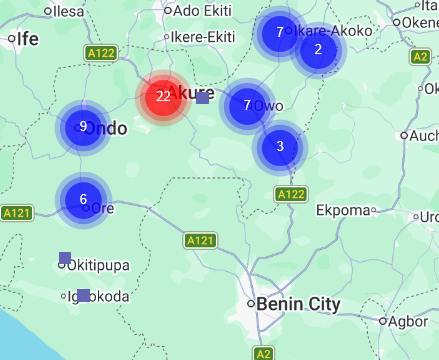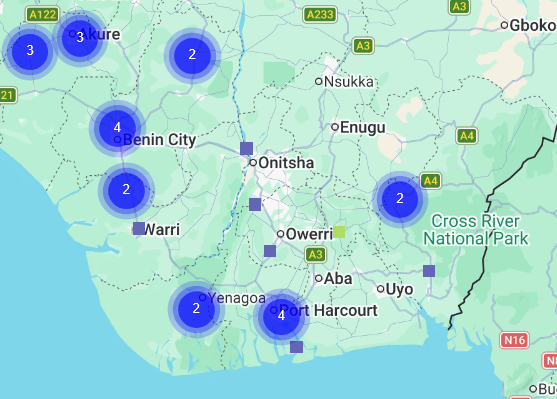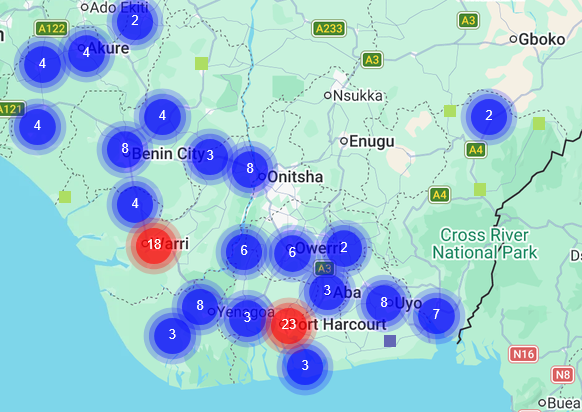


Sustainable peace and security remains a major challenge in the Niger Delta region. Data shows that there were no significant changes in the levels of conflict risk and lethal violence in the Niger Delta during the first quarter of 2022, compared to the fourth quarter of 2021 (See page 2). According to data uploaded to the P4P Peace Map (www.tgpcloud.org/p4p/index.php?m=p4p), organized criminality, clashes between hoodlums and government security operatives, separatist agitation, clashes between rival cult gangs, and communal conflict were the leading causes of conflict risk and lethal violence during the period.
This quarterly tracker looks at the trends and patterns of conflict risk and violence, and the related pressures on peace and stability at the regional, state and local levels. It is not designed as a conflict analysis, rather it is intended to update stakeholders on patterns and trends of violence. Understanding the deeper conflict drivers, implications, and mitigating options requires a robust participatory qualitative analysis of these trends by stakeholders, including traditional authorities, political leaders, women, youths, private sector actors, and others in affected communities.
DOWNLOAD THIS CONFLICT UPDATE
]

 Loading...

 Reload document
  Open in new tab