

Credible journalism helps communities understand development issues, institutions, and change. It can also examine the factors propelling progress, investigate solutions, and highlight the people and partnerships contributing to development.
To strengthen the media’s role in the Niger Delta, the Foundation for Partnership Initiatives in the Niger Delta (PIND), in partnership with the School of Media and Communication (SMC), Pan-Atlantic University, launched the inaugural PIND Media Fellows Program for Narrative Change in the Niger Delta in Lagos.
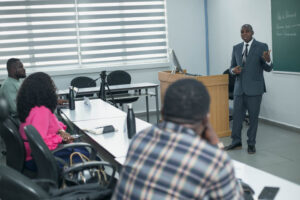
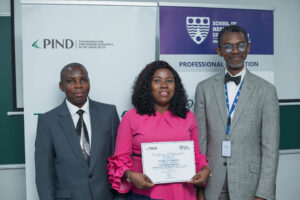
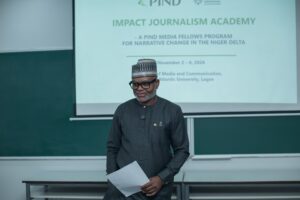
Held from November 2–6, 2026, at the School of Media and Communication (SMC), Pan-Atlantic University, Ibeju-Lekki, Lagos State, the five-day residential Impact Journalism Academy brought together six selected journalists, editors, and media storytellers for practical training in development, investigative, impact, and solutions journalism. The Academy marked the first phase of a six-month fellowship aimed at strengthening evidence-based reporting and promoting more balanced narratives about the Niger Delta.
Investing in Stronger, Independent Journalism
The program seeks to support a media landscape in which the Niger Delta is reported with greater depth, accuracy, and context, ensuring that its development challenges and opportunities are both recognized and understood. Through the partnership, PIND leads the program, while SMC provides academic and technical support through curriculum development, facilitation, and professional media training.
In his opening remarks, PIND Executive Director, Mr. Sam Ogbemi Daibo, described the fellowship as a long-term investment in media professionals who shape public understanding of the Niger Delta.
He emphasized the need for sustained, rigorous journalism that reports the region’s challenges honestly while also examining its solutions, enterprise, and resilience. He noted that journalists require access, knowledge, and professional support to investigate development claims, follow emerging solutions, and produce stories that are useful to citizens, decision-makers, and communities.
“This fellowship is an investment in stronger journalism, not a request for favorable coverage,” he said.

Equipping Journalists to Report Development with Greater Depth
The five-day Impact Journalism Academy combined practical journalism training with sessions on PIND’s development approaches, market systems, peacebuilding, results measurement, and ethical storytelling. These sessions introduced the program’s core themes before the fellows moved into deeper field training.
During a session on PIND’s Market Systems Development (MSD) approach, Misan Edema-Sillo, PIND’s Economic Development Manager, explored how addressing constraints within market systems can create sustainable opportunities for farmers, MSMEs, and young people, highlighting the importance of reporting not only on individual businesses or beneficiaries but also on the market relationships and supporting services that influence livelihoods and economic growth.
Ezekiel Abigwua Odeh, PIND’s Planning, Monitoring & Evaluation Manager, introduced participants to PIND’s results framework and the relationship between project activities, market uptake, enterprise performance, sector growth, and poverty reduction
The Academy also examined the relationship between peacebuilding and regional development. Abiodun Akanbi, PhD, PIND’s Peacebuilding Coordinator, explored how trust, dialogue, local institutions, and conflict-management mechanisms contribute to peaceful coexistence and create an enabling environment for development.
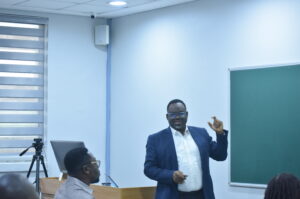
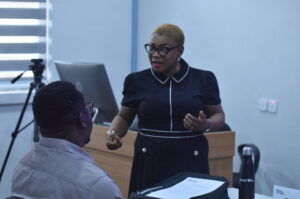
Other sessions strengthened the Fellows’ practical reporting skills. Dr. Ruth Karachi Benson Oji of Pan-Atlantic University facilitated a session on journalistic writing, fact-checking, grammar, and headline development, while Prof. Chidorum Nwakanma examined investigative and impact journalism, including how reporting can uncover overlooked issues and track changes in institutions, policies, and communities.
Strengthening Collaboration Between Journalists and Development Partners
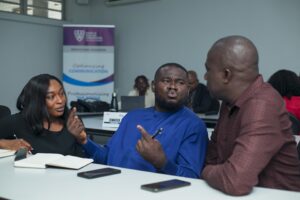
A panel discussion titled “Collaboration between Journalists, NGOs, and Development Partners” provided an opportunity to examine how media professionals and development organizations can build constructive working relationships. The discussion followed the earlier training themes and extended the conversation to practical engagement.
The conversation reinforced the importance of engagement between journalists and development stakeholders to support informed reporting, improve access to relevant evidence, and ensure community experiences and development issues receive the attention they deserve.
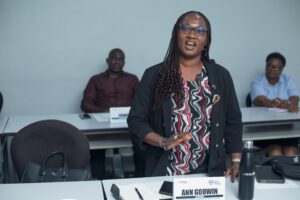
Some of the inaugural Fellows also shared their perspectives on the media’s role in shaping public understanding of the Niger Delta. Ann Godwin, South-South Bureau Chief of The Guardian Newspaper, emphasized the importance of looking beyond recurring narratives about the region, stating, “The Niger Delta must be reported beyond its recurring challenges. We must tell stories that reflect the region’s development challenges, local responses and emerging opportunities.”
Speaking on the experience, Joseph Kunde, Senior Reporter of TVC News said the training had opened up new frontiers for his reporting, revealing story angles and unfinished assignments that required further investigation.
“The inspiration has been massive. Right now, what is next is for us to look at those stories. Even while I was there, some stories came to mind that I knew I had to deal with, including others I had not finished business with. Now, the narrative has changed,” he said.
From Training to Independent Story Production
The Impact Journalism Academy marks the first phase of the six-month Media Fellows Program. After training, the fellows will move into field immersion, develop reporting pitches, receive editorial mentorship, and produce independent, fact-checked stories on development issues across the Niger Delta. Each fellow is expected to publish at least three stories and share relevant learning with colleagues in their newsroom, extending the program’s reach beyond the inaugural cohort.
Through the partnership, PIND and SMC are strengthening media capacity and supporting more informed development reporting. The initiative recognizes that a fuller understanding of the Niger Delta requires journalism that examines persistent challenges, holds institutions accountable, and highlights the people, partnerships, and solutions driving regional development.