

Quality seed is fundamental to agricultural productivity, but farmers’ access to it depends on more than developing improved varieties. Effective regulation, viable seed enterprises, access to finance, and reliable distribution channels are all necessary to ensure that farmers can obtain quality planting materials when they need them.
Recognizing the need to strengthen these connections, the Foundation for Partnership Initiatives in the Niger Delta (PIND) and the National Agricultural Seeds Council (NASC) convened the Nigeria Seed Systems Forum 2026 in Abuja from November 10 to 11. The Forum, themed “Unlocking Nigeria’s Seed Potential: Policy Implementation, Investment, and Partnerships for Sustainable Access to Quality Seed,” brought together stakeholders across the seed value chain to discuss persistent challenges and identify opportunities for coordinated action.
The engagement was the first major joint deliverable under the two-year Memorandum of Understanding PIND and NASC signed on September 10, 2026. It brings together NASC’s regulatory mandate and PIND’s market-systems development experience to strengthen local seed enterprises, expand access to certified planting materials, and mobilize investment, particularly in the Niger Delta.


Advancing Collaboration Across the Seed Sector
Participants recognized progress in electronic seed certification, Plant Variety Protection, decentralized quality assurance, and community-based seed production. However, high production costs, limited financing, inconsistent seed quality, weak distribution networks, and gaps between research and commercialization continue to constrain the sector.
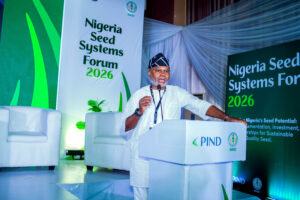
In remarks delivered on his behalf by NASC’s Director of Plant Protection, Dr. Okelola Folarin, NASC Director-General Hon. Fatuhu Muhammed highlighted the importance of stronger coordination among seed-sector actors.
“Farmers judge the strength of a seed system by whether they can obtain trusted seed at the right time and at a viable cost. The value of this Forum is that regulators, researchers, producers, financiers, and distributors have moved beyond separate conversations to agree on practical responsibilities and a common direction,” he said.
PIND Executive Director Mr. Sam Ogbemi Daibo also emphasized the need to translate the sector’s discussions into practical solutions that strengthen businesses and improve farmers’ access to quality seed.
“A promising variety that remains in a research station cannot raise a farmer’s yield, and certified seed that does not reach the last mile cannot improve livelihoods. The real test now is whether the priorities agreed here translate into stronger enterprises, credible markets, and dependable access for farmers,” Daibo said.
Building on PIND’s Experience in Agricultural Market Systems
PIND’s work in the Niger Delta demonstrates the importance of connecting research, regulation, and enterprise development to improve access to quality planting materials. Across the cassava, oil palm, and cocoa value chains, the Foundation has collaborated with research institutions, regulatory bodies, and private-sector actors to strengthen local seed enterprises.
This includes supporting oil palm nursery operators to propagate certified sprouted nuts, working with the Cocoa Research Institute of Nigeria (CRIN) to strengthen cocoa seedling production, and collaborating with the National Root Crops Research Institute (NRCRI), NASC, and Umudike Seeds to formalize the Cassava Seed Entrepreneur (CSE) system.
These interventions provide practical experience for the wider sector conversation, particularly on strengthening local production capacity and creating viable pathways for improved planting materials to reach farmers.
Addressing Investment and Distribution Constraints
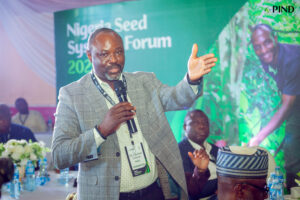
At the Forum, stakeholders examined ways to address certification bottlenecks without compromising standards, improve coordination between regulators and producers, and move breeder and foundation seed into commercial supply through licensing, technology transfer, and public-private partnerships. Discussions also highlighted the need for stronger research-to-market linkages, effective implementation of the National Seed Policy, and improved enforcement against counterfeit seed.
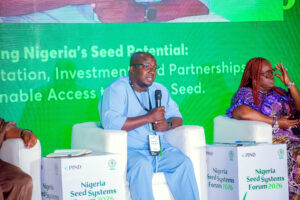
The financing needs of seed enterprises also featured prominently. The Executive Secretary of the Seed Entrepreneurs Association of Nigeria (SEEDAN), Mr. Stephen Oludapo Adigun, called for affordable financing that reflects the seasonal nature of seed businesses. Participants considered options such as guarantees, insurance, and technical support to improve access to capital.
IDH Country Director Prof. Enola Fabusoro emphasized capacity development, improved seed handling, and stronger partnerships as important requirements for translating recommendations into results. Other stakeholders, including agro-dealers, extension providers, farmers’ representatives, and technology companies, explored opportunities to improve affordability, demand planning, farmer information, and traceability.
Sustaining the PIND–NASC Partnership
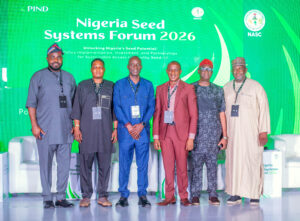
The Forum advances the PIND–NASC partnership by providing a platform for stronger coordination across policy, research, production, financing, and distribution. While NASC provides regulatory leadership and technical oversight, PIND contributes its experience in strengthening market relationships and supporting enterprise development.
Sustained collaboration will be necessary to turn the priorities identified into practical improvements across the seed value chain. For farmers, the measure of progress will be whether reliable and affordable quality seed becomes more accessible. For local enterprises, it will be whether the sector provides the financing, partnerships, and market opportunities needed to grow.
