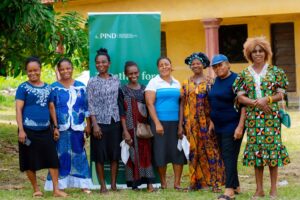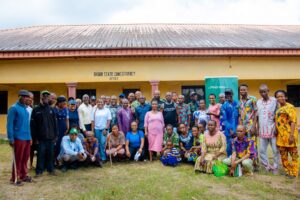

As climate change continues to threaten agricultural productivity and rural livelihoods across the Niger Delta, the Foundation for Partnership Initiatives in the Niger Delta (PIND) is working with partners to equip smallholder farmers with the knowledge, technologies, and support systems needed to build resilience and increase productivity.
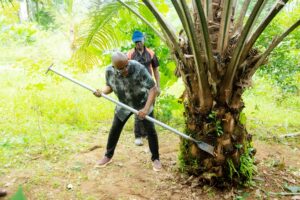
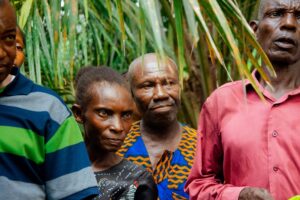
On May 28, 2026, PIND, through its Market Systems Development (MSD) Program, conducted a field monitoring visit to Okpopedi Community in Okobo Local Government Area of Akwa Ibom State to assess the adoption of Climate-Smart Good Agricultural Practices (GAP) among smallholder cassava and oil palm farmers who have participated in PIND-supported capacity-building interventions.
The monitoring exercise also evaluated the performance of Sonwill Grace Farm, a PIND-supported farm service provider, in delivering agronomic advisory services, technical support, and extension services to local farming clusters.
Implemented in partnership with East-West Seed and Agric Zyme, the initiative brought together farmers, agricultural input providers, and technical experts to demonstrate practical solutions for improving farm productivity while strengthening resilience to climate-related challenges.
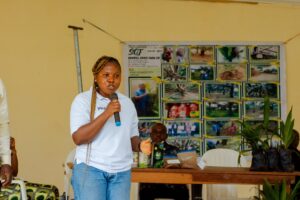
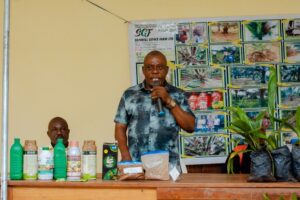
During the field engagement, farmers received hands-on guidance on recommended farm spacing, improved crop management techniques, climate-smart cultivation methods, and crop protection practices designed to enhance yields and reduce production risks. Participants were also introduced to improved agricultural inputs, including high-yielding planting materials, fertilizers, and crop protection products that support sustainable agricultural production.
The visit highlighted the critical role of strengthening connections between smallholder farmers, input suppliers, and service providers to address longstanding challenges that constrain agricultural productivity. These challenges include limited access to improved technologies, inadequate extension services, and low adoption of climate-resilient farming practices.
By facilitating access to quality inputs, technical advisory services, and market-oriented farming approaches, PIND and its partners are helping farmers transition from traditional production methods to more sustainable and commercially viable agricultural systems.
Key Outcomes
The monitoring exercise recorded several positive outcomes, including:
- Increased capacity among cassava and oil palm farmers to adopt climate-smart agricultural practices that improve productivity and resilience.
- Improved awareness and access to quality agricultural inputs, including enhanced planting materials, fertilizers, and crop protection solutions.
- Stronger linkages between farmers, farm service providers, and agricultural input companies, creating pathways for continued access to technical and market support services.
- Valuable insights on the adoption of recommended farming practices to guide future interventions and strengthen agricultural sustainability efforts across the Niger Delta.
Building Resilient Agricultural Systems
Promoting climate-smart agriculture remains central to efforts to improve food production, strengthen rural livelihoods, and enhance resilience to climate change across the Niger Delta. Through strategic partnerships and market-driven interventions, PIND is helping to create enabling environments where smallholder farmers can access the knowledge, technologies, and services needed to increase productivity and improve household incomes.
PIND will continue to work with ecosystem actors, private sector partners, and farming communities to expand access to climate-smart solutions that enable farmers to adapt to changing climatic conditions while contributing to long-term food security, economic growth, and sustainable development in the region.