

The ‘Sitting Down at Home Idle’ Phase is Over!
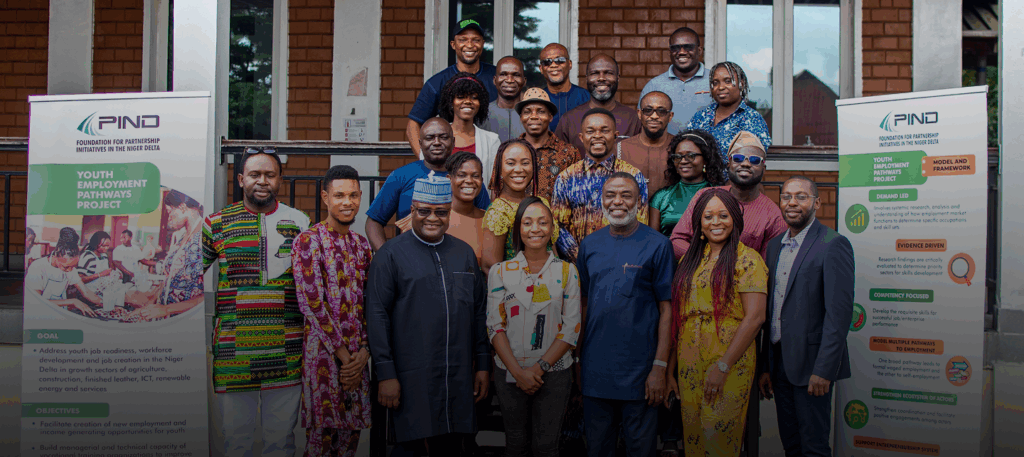
Our Niger Delta Youth Employment Pathways (NYDEP) project targets to empower young people in the region to attain market-relevant technical skills, vocational skills, and soft skills to secure waged employment or start an enterprise (SDG 4 & 8).
Energy Access for Underserved & Coastal Communities
The access-to-energy project works to develop access to affordable renewable energy for households and businesses to improve productivity, increase income, trigger new jobs, and improve the quality of life for the communities (SDG 7).
Surviving the COVID-19 Threat: Funding Innovations for Smallholder Farmers & MSMEs
Smallholder farmers and MSMEs in the Niger Delta encounter difficulty getting funds from financial institutions because of several factors. These factors include inappropriate financial products for the agricultural value chains; perceived low productivity and competitiveness in financing the sectors; and the perceived risk associated with agricultural financing.
PIND’s approach to improving access to funds for smallholder farmers and MSMEs entails developing new, inclusive financial models built around the peculiarities of the agricultural and agro-allied sectors. To qualify for the funds and loans from commercial banks, MFBs, and equity investors, we encouraged a crop of BSPs (business service providers) to support smallholder farmers and MSMEs.
Surviving the COVID-19 Threat: Micro, Small, Medium Enterprises) (MSMEs)
Our business linkages project assists micro, small, and medium enterprises (MSMEs) in the region to become more competitive, productive, and diversified in their markets. They will reap higher income (through increased sales and profits) and create new jobs for people (through access to quality business support services, markets, and funding).
Surviving COVID-19 Threat: Poultry Sector
Our poultry-value-chain project is working to help poultry farmers and processors increase their productivity, sales, and income while generating new jobs by adopting good poultry farming and business practices—as well as access to extension services, quality inputs, funding, and markets.
Surviving the COVID-19 Threat: Palm Oil Sector
Our palm oil-value-chain project helps smallholder palm oil farmers and processors increase their sales through the increased quantity and quality of their outputs. They earn more income; create new jobs by adopting best management practices; and access improved processing and harvesting technology, improved seedlings, funding, and market linkages.
Surviving the COVID-19 Threat: Cocoa Sector
Our cocoa-value-chain project helps cocoa farmers and processors increase their production quality and quantity, their sales and income, and the number of new jobs in the sector. These farmers and processors accomplish this through good cocoa agricultural practices, access to extension services, improved technologies, quality seedlings, and enhanced market relationships.
Surviving the COVID-19 Threat: Cassava Sector
Our cassava-value-chain project enables smallholder cassava farmers and processors to increase their yield, earn more income and employ more persons. This is achieved through the adoption of good farming and business practices; access to quality inputs and extension services; and improved cassava processing technology, funding, and new markets.
Surviving the COVID-19 Threat: Aquaculture Sector
Our aquaculture-value-chain project enables fish farmers and processors in the sector—who are limited by inadequate technical and business capacities—to increase their yield, earn more income, and employ more people.
An Eye for Potential Volunteers: Insight from Wariboko’s Peacebuilding Story
People’s orientation, outlook and attitude to peace contribute significantly to the scale of violent conflict, its management and sustaining a peaceful environment. So members of the Partners for Peace (P4P) Network invest a significant portion of their time working on improving people’s knowledge, attitude and practices about peace using various approaches. Tamunomie Wariboko, a Network […]
