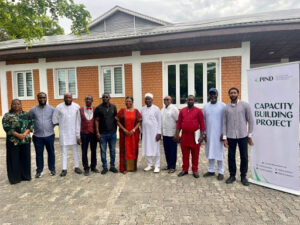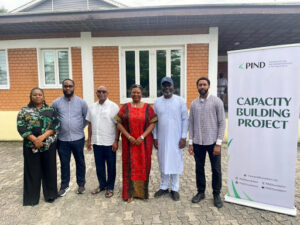

The Foundation for Partnership Initiatives in the Niger Delta (PIND) has reinforced its commitment to strengthening community governance and sustainable development by equipping Host Community Development Trusts (HCDTs) with practical advocacy tools and strategies to drive inclusive growth and resource mobilization across the Niger Delta.
As community institutions assume increasingly important roles in local development planning and implementation, there is a growing need for governance structures that can effectively engage stakeholders, influence policy decisions, and attract investments that address priority community needs. Recognizing this opportunity, PIND facilitated a two-day capacity-building workshop from May 14–15, 2026, in Warri, Delta State, to strengthen the advocacy and strategic planning capabilities of HCDT leaders.
The workshop brought together governance, administrative, and community representatives from four Host Community Development Trusts—Agbonu Ogulagha-Ibe, Warri Kingdom Coastal, Ugboland, and Egbema OPUDIS—to build the skills and systems needed for evidence-based advocacy, stakeholder engagement, and long-term institutional effectiveness.
Through practical exercises and guided learning sessions, participants developed Advocacy Issue Papers, conducted SWOT analyses, and designed Stakeholder Engagement Plans tailored to the development priorities of their respective communities. The training marked an important shift from reactive approaches to community development toward more structured, data-driven, and collaborative engagement strategies.
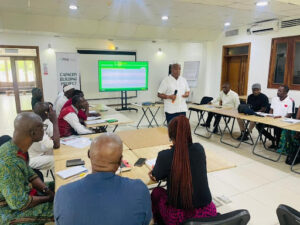

Speaking during the workshop on behalf of PIND’s Executive Director, Mr. Sam Ogbemi Daibo, the Advocacy Manager, Mr. Chuks Ofule, emphasized the importance of equipping community institutions with the knowledge and tools required to influence development outcomes effectively. “Strong community governance is built on informed decision-making, constructive engagement, and strategic action. By strengthening advocacy capacity within these institutions, we are helping communities articulate their priorities, engage stakeholders more effectively, and drive sustainable development outcomes,” he noted.
Building Sustainable Community Governance Systems
Using PIND’s Advocacy Training Manual as a guide, participants were introduced to an eight-step advocacy planning process that enabled them to identify development priorities, map key stakeholders, assess opportunities and risks, and develop practical action plans for engagement.
The workshop also supported discussions around establishing dedicated Advocacy Committees within the Trusts to institutionalize advocacy functions and strengthen long-term governance capacity. These structures are expected to provide ongoing leadership for stakeholder engagement, resource mobilization, and policy influence at local, state, and national levels.
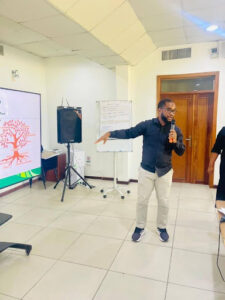
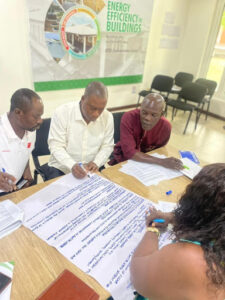
One of the most significant outcomes of the workshop was the emergence of shared development priorities across the participating Trusts. Through collaborative planning sessions, representatives identified shoreline protection and coastal erosion management as a critical regional concern requiring coordinated advocacy and investment. Participants explored strategies for engaging government agencies, development partners, and other stakeholders to secure funding and support for interventions that protect vulnerable coastal communities.
In addition, the Egbema OPUDIS HCDT developed a targeted advocacy framework focused on expanding access to solar-powered energy solutions in underserved riverine communities, reflecting the Trust’s commitment to addressing local infrastructure challenges through strategic engagement.
Advancing Community-Led Development
Beyond strengthening technical skills, the workshop established monitoring frameworks, performance indicators, and action-tracking mechanisms that will enable participating Trusts to measure progress and sustain momentum after the training.
PIND will continue to provide technical support as the Trusts refine their advocacy strategies, finalize issue papers, and strengthen collaboration across communities. The organization will also support efforts to build multi-stakeholder partnerships and monitor how strengthened advocacy systems contribute to improved project implementation, resource mobilization, and socio-economic development outcomes.
By investing in stronger governance structures and advocacy capacity, PIND is helping to position Host Community Development Trusts as effective drivers of community-led development. These efforts contribute to more responsive institutions, stronger stakeholder engagement, and sustainable pathways for improving livelihoods and resilience across the Niger Delta.