
The effectiveness of sustainable community development efforts across the Niger Delta depends not only on project implementation but on the ability to track progress, measure results, and adapt based on evidence. However, for many Host Community Development Trusts (HCDTs), weak monitoring and evaluation systems continue to limit impact, accountability, and long-term sustainability.
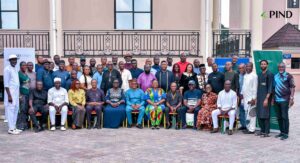
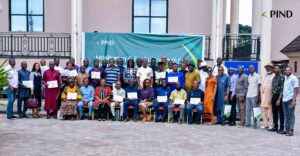
In a bid to address this, the PIND organized an intensive three-day Monitoring and Evaluation Capacity-Building Training for four Chevron Nigeria Limited (CNL)-supported HCDTs: Egbema OPUDIS, Agbonu Ogulagha-Ibe, Ugboland, and Warri Kingdom Coastal HCDT.
Held from March 18-20, 2026, as part of PIND’s institutional strengthening efforts, the training brought together members of the Boards of Trustees, Advisory Committees, and Management Committees, equipping them with the practical knowledge and tools required to build functional, results-driven M&E systems, strengthen how data is collected, analyzed, and used, in carrying out community development efforts.


Addressing the Results Tracking Gap
Recognizing that ineffective M&E systems remain a critical constraint, the training was designed in response to insights from PIND’s 2024 Organizational Capacity Assessment. The findings highlighted significant gaps, including weak result-tracking mechanisms, limited institutionalization of M&E processes, and inadequate use of data for strategic decision-making.
These limitations create a cycle where projects are implemented without clear performance measurement, reducing opportunities for learning, accountability, and improvement. As HCDTs begin to roll out projects under their Community Development Plans, the absence of strong M&E systems poses a direct risk to achieving sustainable outcomes.
Speaking on behalf of PIND’s Executive Director, Sam Ogbemi Daibo, the Monitoring, Evaluation, and Learning (MEL) Manager, Ezekiel Odeh, noted that the three-day training was strategically designed to address regional challenges by embedding a Results-Based Management (RBM) approach within HCDT structures.
He underscored the critical roles and responsibilities of M&E teams in the HCDTs in ensuring that these systems are not only implemented but sustained through robust institutional ownership. By strengthening these internal frameworks, HCDTs are better positioned to deliver projects that are structured, trackable, and meticulously oriented toward measurable impact.

Strengthening Systems for Effective Project Management
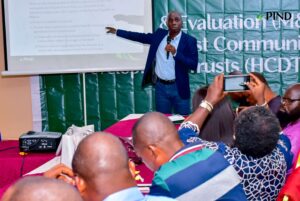
A core component of the training focused on building practical competencies that enable HCDTs to integrate M&E into every stage of a project cycle. Through interactive sessions, case studies, and group exercises, participants developed hands-on experience in:
- Designing results frameworks aligned with development objectives
- Developing indicators to measure outputs, outcomes, and impact
- Creating data collection and reporting tools tailored to HCDT operations
- Integrating M&E into planning, implementation, and review processes
- Applying project management tools to monitor performance effectively
Driving Data Use for Learning and Adaptation
Beyond system design, the training emphasized the importance of transforming data into actionable insights. Participants were guided on how to analyze M&E data to inform decision-making, improve project performance, and adapt strategies in real time.
Sessions on report writing further enhanced participants’ ability to communicate results clearly and consistently, strengthening transparency with stakeholders and reinforcing accountability mechanisms.


Key Outcomes: Strengthening Systems for Impact
This three-day capacity-building initiative represents a critical investment in strengthening HCDTs’ institutional effectiveness. By equipping HCDTs with practical M&E tools, PIND is laying the groundwork for:
- Improved Accountability, ensuring projects are tracked and reported transparently
- Enhanced Performance Tracking, with clear indicators to measure progress and outcomes
- Evidence-Based Decision-Making, driven by reliable and timely data
- Sustainable Development Outcomes, supported by continuous learning and adaptive management
Looking Ahead: Driving Sustainable Impact
As HCDTs move into full implementation of their Community Development Plans, the integration of robust M&E systems will play a defining role in determining the success and sustainability of their interventions. In the coming months, PIND will conduct targeted technical hand-holding sessions to provide ongoing mentorship to the participants.
Following these sessions, the trained personnel will begin the critical task of applying these frameworks within their respective HCDTs. By moving from theory to practice, they will institutionalize internal processes and set a new benchmark for results-driven community development in the Niger Delta.