

As climate volatility, flooding, and food insecurity intensify across many parts of Nigeria, smallholder farmers face mounting pressure to produce more with fewer, increasingly fragile resources. In Nigeria’s Niger Delta, these challenges are especially acute, threatening livelihoods while constraining the region’s agricultural potential.
Against this backdrop, the Foundation for Partnership Initiatives in the Niger Delta (PIND), in its Phase IV strategy, is working with local market actors to demonstrate how climate-smart agriculture can move from concept to practice and from pilots to scalable solutions.
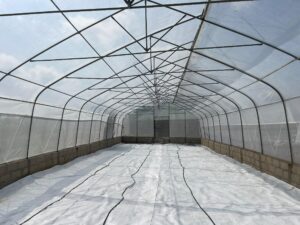
In partnership with Afritropic Farming and Agro Services Ltd., PIND is supporting the establishment of a flood-resilient greenhouse demonstration facility designed to make improved vegetable production systems visible, viable, and adoptable for riverine farming communities.
From Infrastructure to Learning
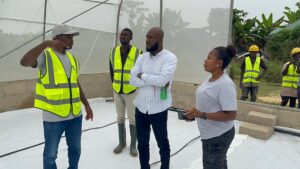
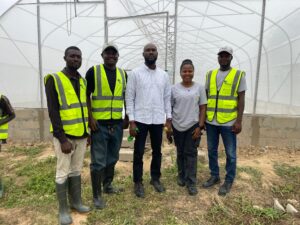
On February 4, 2026, PIND’s Market Systems Development (MSD) team visited Bomadi in Delta State to inspect the progress on the greenhouse under construction. The visit focused not only on physical completion, but on how the design responds to local realities, particularly seasonal flooding, limited access to quality inputs, and the need for farmer-led learning.
The greenhouse’s elevated structure, irrigation system, and input configuration reflect an intentional effort to align technology with current realities. Rather than introducing an off-the-shelf solution, the project adapts protected agriculture to the environmental and economic conditions of riverine communities.
As Engr. Mallum Adamu of Afritropic noted during the visit that the facility is intended to function as more than a production site: it is a learning platform where farmers, agro-dealers, and service providers can observe, test, and refine climate-smart practices in real time.
Key features of the greenhouse include:
- Flood-resilient design, enabling year-round production in riverine environments
- Access to improved seeds and reliable irrigation, supporting higher productivity
- Hands-on learning space, where farmers and market actors engage directly with climate-smart techniques.
Why This Matters
The collaboration between PIND and Afritropic is grounded in a shared commitment to strengthening agricultural systems across the Niger Delta. By combining PIND’s market systems approach with Afritropic’s operational expertise, the initiative seeks to reduce the risks that often prevent smallholders and local businesses from investing in improved technologies.
At its core, the greenhouse serves as a practical demonstration of how climate-smart innovations can generate commercial value while enhancing resilience. Farmers gain confidence in new practices; agro-dealers see demand for improved seeds and inputs; and service providers identify new opportunities across the vegetable value chain.
Beyond its physical footprint, the Bomadi greenhouse represents a strategic investment in agricultural transformation in the Niger Delta. By making innovation tangible and locally relevant, the project helps de-risk adoption for smallholders and signals the commercial viability of protected vegetable farming in flood-prone areas.
Once operational, the initiative is expected to:
- Increase farmer confidence in climate-smart technologies
- Stimulate sustained demand for improved seeds and inputs
- Strengthen local agro-dealer and service provider networks
- Generate a replicable model for similar riverine communities
Looking Ahead
As construction concludes, the greenhouse will transition from infrastructure to impact. Upcoming training and demonstration activities will formally open the facility as a shared learning hub, supporting continuous knowledge exchange among farmers, agro-dealers, and service providers.
With sustained collaboration, PIND and Afritropic aim to position the greenhouse as a catalyst for wider systems change, demonstrating how locally grounded, climate-smart investments can strengthen food systems, expand economic opportunity, and build resilience in some of Nigeria’s most climate-vulnerable regions.