

Our Gender Footprint In The Year
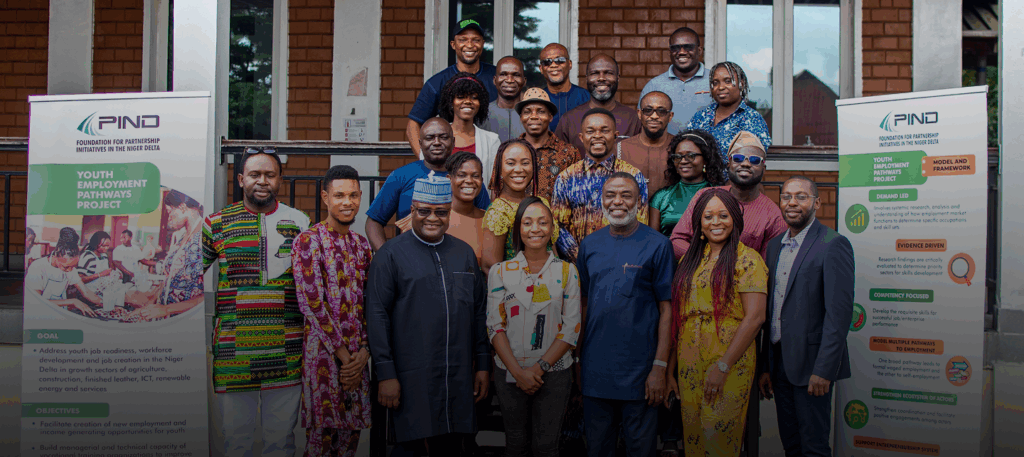
PIND, through gender mainstreaming in all its interventions, seeks to ensure equitable participation of men and women in social and economic development of the Niger Delta.
ANALYSIS AND ADVOCACY PROGRAM
Informed governments can promote inclusive and equitable economic opportunities in the Niger Delta through their decisions, policy and approach.
CAPACITY BUILDING PROGRAM
Back in 2011, stakeholder consultations showed the weak capacity of Niger Delta-based organizations was a major concern as development within the region would be impossible without their engagement and assistance.
PEACE BUILDING PROGRAM
For decades, the Niger Delta has experienced significant conflict across the region that have had severe effects on livelihoods.
Improving Water, Sanitation and Hygiene (WASH) Practices and Facilities through Partnership Investments
Access to safe and clean water resources and good water management practices are huge issues in the Niger Delta that contribute to a high rate of water-borne diseases b with its attendant health and economic impacts.
ATED Demonstration Centre: A Learning Hub for Appropriate Technologies
Use of old fashioned methods for production and processing rather than efficient technologies is a constraint to value chain actors in the region.
BUSINESS LINKAGES: Expert Service Providers, Increased Competitiveness, More Sales for the Region’s Small Businesses
Medium, Small and Micro-sized Enterprises (MSMEs) face myriads of challenges that inhibit their competitiveness.
CASSAVA: Input Companies and Agro-Dealers Increased Adoption of Good Agronomic Practices and Access to Inputs
Common constraints faced by cassava farmers in the Niger Delta include lack of access to and improper use of fertilizers and other crop protective products, poor knowledge of correct weed management practices and improved high yielding stem varieties and poor agronomic practices in general.
PALM OIL: Agro Equipment Dealers and Fabricators Improved Palm Oil Harvesting and Processing Efficiencies
When we forayed into the palm oil sector in 2012, we found palm oil farmers were losing about 50% of their available fresh fruit bunches (FFB) for processing due to shortage of and high cost of hiring climbers who face serious health and safety hazards from climbing the palm trees.
AQUACULTURE: Pool of Aquaculture Service Providers Improved Fish Farmers’ Agronomic & Business Practices
Under aquaculture, PIND’s strategy remains facilitating aquaculture service providers (ASPs) to make a business out of selling services to new and existing fish farmers on business skills and best pond management practices.
